
‘There are so many good people out there’: Windy Manzardo, nurse and baseball mom, says positivity has helped her as she recovers from heart transplant
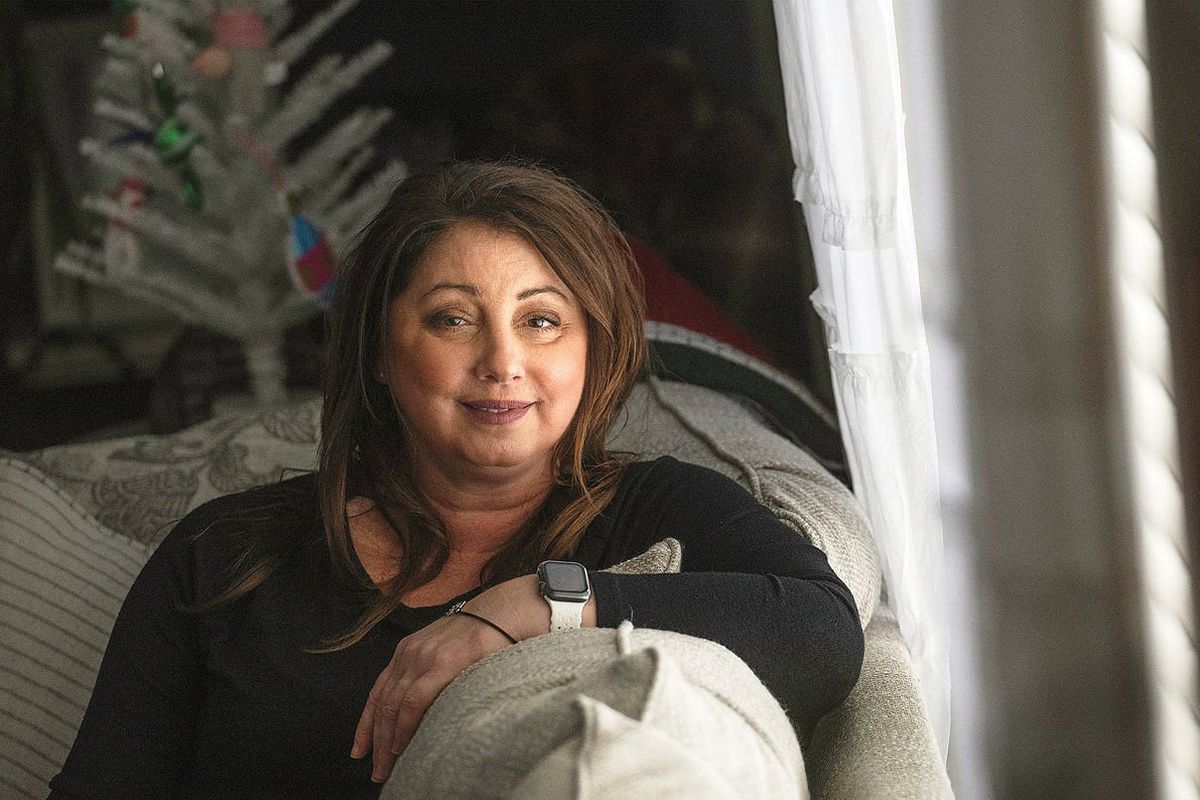
Windy Manzardo and her husband, Paul Manzardo, were at a Sunday church service at St. Pius in Coeur d’Alene when her phone rang. Windy figured the call was unimportant, and church wasn’t over yet, so she ignored it.
Moments later, her husband’s phone rang, and then the text messages began to flood in. He glanced down at a text that declared that after 32 months on the donor waitlist, a heart had become available for Windy.
“It had been so long,” the 51-year-old said. “We hadn’t given up, but at first, you keep your phone on you all the time, you answer every call. After almost three years, you become a little more complacent about it.”
The Manzardos rushed out of church in a state of shock and excitement because Windy was finally going to be able to get a transplant and be free of cardiac sarcoidosis, a condition in which a person’s immune system triggers inflammation that harms heart muscle, interferes with its electric activity and causes abnormal heart rhythms, according to Cleveland Clinic.
After an exhausting couple years that often left Windy feeling depleted , she had a successful heart transplant on July 8.
Paul says Windy’s doctors told them that she now has “a Ferrari for a heart.”
Manzardo’s journey with this illness happens to dovetail with her work as a cardiac nurse at Kootenai Health. And her recovery this summer aligns with the success of her son Kyle Manzardo and the Cleveland Guardians, for which he plays first baseman. He is currently second on the team in home runs, and the Guardians have taken over first place in the AL Central this week as they continue an autumn surge toward the playoffs. He’s also second on the team for RBIs and one of only three of its players with more than 100 hits.
Kyle left the team in early July to be with his family.
“I think he internalized a lot. The mom is basically the glue of any house, and we have two boys, I mean, that idolize her and look up to her,” Paul said. “I think he’s more relaxed now knowing that she’s doing good.”
In November 2021, before learning that she had cardiac sarcoidosis, Windy began experiencing heart palpitations during a work shift. She hooked herself up to a monitor and discovered ventricular tachycardia, an irregular heartbeat. Although she wanted to finish her shift, Windy was advised to go straight to the emergency room.
For months, she and her care team thought it was a type of viral cardiomyopathy. But the medication treatment wasn’t improving Windy’s condition, and finally in May 2022, she was diagnosed.
“My initial sort of investigation was like, ‘Yeah, this isn’t good.’ This isn’t a great thing to have,” Windy said. “Being a cardiac nurse with this kind of cardiac diagnosis … is both a blessing and a curse, because I worked in that department and could hook myself up, and we found there was a problem right away.”
About 92% of people with cardiac sarcoidosis end up needing a transplant. Since the condition is fairly uncommon, there has not been a lot of research, and there are very few other options. Aside from a transplant, a mix of steroids and immunosuppressant therapy is sometimes used.
For Windy, this treatment didn’t seem to be making a huge difference, plus the side effects from the steroids took a toll on her. Despite this, she believes that if she had not started seeking treatment as soon as she did, it could have led to ventricular fibrillation, which has a high mortality rate.
After being diagnosed, Windy continued to work up until one of the scariest moments of the entire process happened in November 2022. She went out to eat with two nurse friends, but was not feeling well, so they called an EMT. Later that day, Windy had to be flown by helicopter from Kootenai Health to Providence Sacred Heart Medical Center. When thinking back to this day, Paul emphasized the importance of life-flight insurance and recommended that everyone look into it.
In the hospital, Windy experienced what’s called a “VT storm,” which led her defibrillator to go off 18 times. Without the defibrillator, she wouldn’t have survived . This incident was what got her placed on the transplant waitlist.
“That’s terrible. That’s a horrible thing. I think we’re all pretty traumatized from that,” Windy said. “That was an awful experience. I was just pretty sick after that. I was just, like, weak and tired, and my heart was just kind of worn out.”
Windy dealt with a lot of hurdles between the point of diagnosis and when she got the call that the heart was available. At one point, her left diaphragm became paralyzed, which caused her left lung to collapse.
The prednisone that Manzardo was taking weakened her bones, which led to her essentially breaking her lower back. This forced her to come off the waitlist for some time, because one of the stipulations of being on the waitlist is to be healthy enough for the procedure.
“That was quite a frustrating time. For me, it seemed like it was one thing after another. That was a big blow,” Windy said. “There were definitely some ups and downs and some challenging times, but you know, you just keep plugging along. I tried to stay in the best shape I could so that if the heart did come, hopefully that would help with my recovery.”
Paul and Kyle were both in the hospital with Windy when she had the VT storm. Paul says he still has nightmares about that day. Despite battling through a taxing recovery process, Windy finds solace in that she no longer has to wake up in the morning concerned that she may have another VT storm.
Although her operation signifies the end of a long, arduous journey with sarcoidosis, Windy says she underestimated how challenging the recovery process would be.
“I tell people, ‘You’re so excited that your heart came, you almost forget that there’s a hard part coming,’ like getting through the surgery and the recovery,” Windy said. “For the most part, I was just excited that the heart had finally come. So, in the hospital, the day after surgery, I felt pretty great. I think that’s fairly typical. I think things must just take a little time to catch up to you.”
When Windy first got home after the operation, she could not really do anything herself without getting dizzy and winded. She struggled with fluid balance, which gave her shortness of breath, forcing her to sleep sitting in a chair for a couple nights. She said she is still experiencing shortness of breath and just generally feeling weak. Windy has acknowledged that there is no way around the struggles of the recovery process, so she has focused on taking small steps each day on the road to rehabilitation.
One of the biggest aspects that helped Windy through this process has been her attitude. Regardless of how tough things get, she maintains a positive outlook, grateful that she even has the opportunity to recover . She does not feel the need to worry herself with things that are out of her control.
“I’m a pretty positive person. I could see how this stuff could just get you down and out, but it’s just how I am. I guess I would say blessed with positivity, right? Like, I think we’re all born with our own sort of attributes or whatever. And thankfully, that’s something that I was blessed with,” Windy said. “I guess I really am kind of just like that, which I’m super grateful for. I think going through something like that without the positivity would be really difficult.”
Paul admires how Windy was always so optimistic throughout the entire process.
“She’s the true example of positivity, strength. I mean, she handled this thing with grace. I’m amazed at how well she handled everything. I don’t think I would have handled it as well as she did. She was so positive, so upbeat,” Paul said. “I mean, it’s an inspiration, to tell you the truth. When you look up the word ‘tough,’ man, you see Windy Manzardo, I mean, she’s tough. There’s no other way to say it.”
Paul recited a similar summary when asked about Windy’s cardiac team, saying, “We’re real fortunate to have an awesome cardiac team. That team there is phenomenal. I can’t say enough about Providence Sacred Heart. Her surgeon, you know, when you look up the word ‘GOAT,’ she’s the GOAT (greatest of all time).”
Paul was very grateful for the support that people showed his family through this tough time.
“We had unbelievable support from people. It takes a village to go through something like that. You really know who your friends are through something like that,” he said. “The gratitude that we feel towards the donor’s family to be able to be given a second chance in life, we don’t take that for granted.”
On the one-year anniversary of her surgery, Windy will be able to write a letter to the donor family, and then the family will be able to decide if they want to reach out.
When asked what advice he would give to families in similar situations, Paul spoke of the mental struggles he endured during this process.
“At times, you doubt the process because you’re just frustrated. I wasn’t positive all the time. I kind of put up a pretty good front around people, but I was pretty pessimistic inside. So, suck it up is basically what I told myself to get through it,” Paul said. “Go day by day and cherish the good days and fight through the bad days. Just listen to what people tell you.”
Paul said a primary reason he was able to be strong for Windy is because he saw how fearless she was.
Windy got emotional talking about how supportive everyone has been.
“I have an amazing community. It still chokes me up a little bit. They were overwhelming the entire time,” Windy said. “You see so much negativity out there on the news and everything, but when you go through something like this and your community and family and friends rally around you, it’s just a whole different perspective. You realize there are so many good people out there.”
Paul says the news of the heart becoming available lifted a big weight off the shoulders of his sons. Marcus Manzardo was an all-conference baseball player at Central Washington University, and his parents were able to attend all of his home games because of his proximity to home.
“We didn’t want them to worry about things. They got their lives to live,” Paul said. “To be able to do what both of those kids did at the level of what they did and be able to keep it together, keep their emotions in check, I’m super proud of both of them and super proud of Windy on the whole thing.”
The next step for Windy is to continue with her cardiac rehab and stay active. She is on medication that keeps her heart rate stable as she continues to push herself physically throughout the rehab process.
“It does give you a little different perspective. You think, life is short, and you want to try to live it the best that you can,” Windy said. “I guess that, you know, tomorrow isn’t promised. Like, we all say that and know that, but I don’t think it’s until you’ve been super sick and experience something like this, you realize, like, yeah, tomorrow really isn’t promised.”