
Has online dating lost the spark? Match Group, Bumble fighting dating app fatigue
DALLAS — Earlier this year Abbey Hagan deleted her dating apps. The 28-year-old sales specialist had been on them — mostly Hinge — for years, ever since she was a new college grad living in San Francisco. She was still swiping in 2022, when she moved to Dallas for a new job and proceeded to go on dozens of first dates in her new city.
“I’ve had many horror stories, and many crazy experiences, and a few good ones,” Hagan says. “But I just felt, especially this past year, so fatigued by them, and kind of like they’re just a waste of my time.”
Then one morning in June, Hagan was on her usual walk on the Katy Trail, a known hotspot for attractive young Dallasites, when a thought struck: “What if there’s a way to combine something that we’re already doing with dating?”
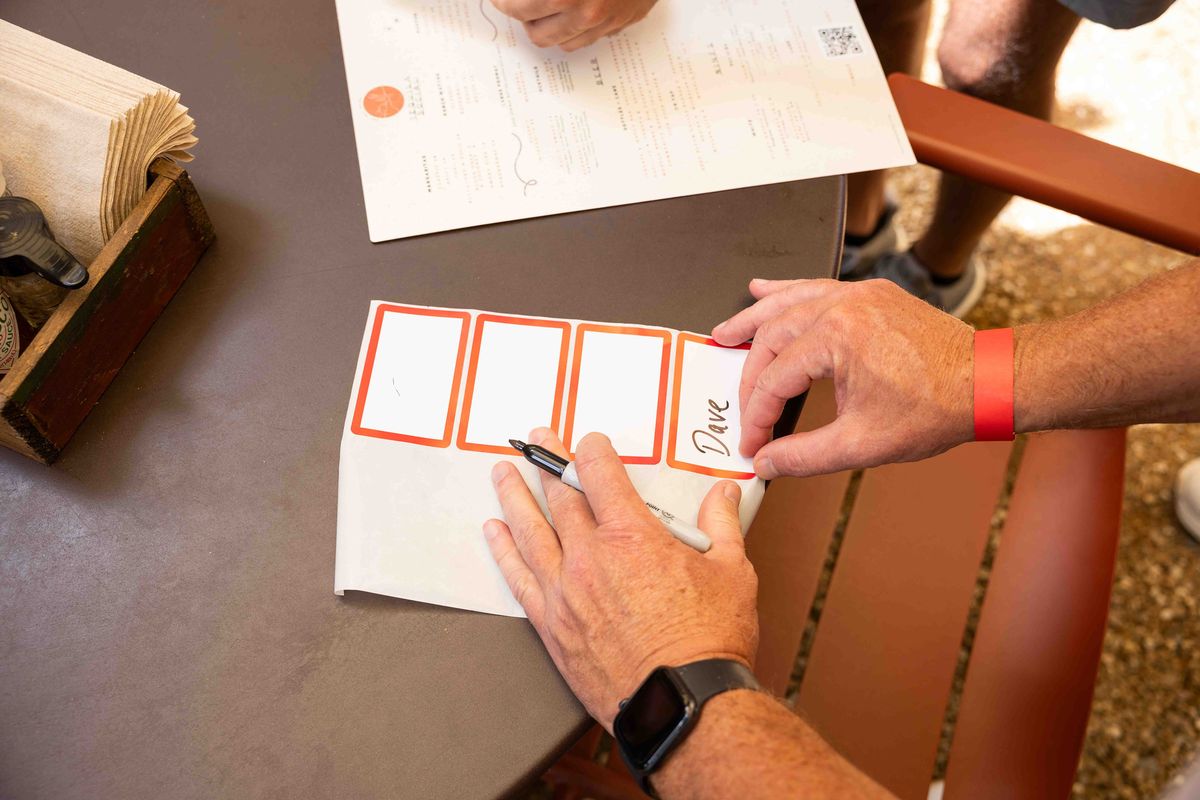
Hagan settled on an idea where Dallas singles would meet up for a casual walk and mingle over happy hour drinks afterwards. One friend suggested a catchy name, “the Date-y Trail,” and another came up with the idea to have participants wear wristbands, to signal they were open to chatting. Hagan got Berkley’s Market to host the happy hour and marketed the event by posting videos on TikTok and Instagram, imagining maybe 100 people would attend.
A couple weeks later, on a 90-degree June evening, she and her friends passed out nearly 800 wristbands, and the line outside Berkley’s wrapped around the corner. “It was absolute madness,” Hagan says. And nobody was talking about dating apps, she says — if only because they didn’t have to.
“If you attended, it’s almost like an unspoken: ‘Ok, we’re all here because the apps aren’t working.’ And there were almost 800 people that acknowledged that.”
More than a decade after Tinder first turned “swipe right” into a global phenomenon, the apps — and the Texas-based companies behind them — are in disarray. Dallas-based Match Group, the parent company of Tinder, Hinge, OK Cupid and dozens of other brands, has seen its total market cap drop by roughly two-thirds since it was spun off into a fully independent company five years ago.
Match Group’s only real competitor, Austin-based Bumble — a company founded by the ambitious SMU liberal arts grad Whitney Wolfe Herd, whose personal story is the subject of a new Hulu biopic starring Lily James — announced in June it would be laying off 30% of its staff amid an even sharper financial drop, and both companies have cycled through CEOs as they’ve sought to right their finances.
Both can point to green shoots: Last month, Match Group’s share price surged after the dating giant reported second-quarter earnings that beat analysts’ expectations, and CEO Spencer Rascoff gushed about one particular brand.
“Simply put, Hinge is crushing it,” he told investors, adding that the app’s success “should put to rest any doubts about whether the online dating category is out of favor among users.” After hitting an all-time low in April, Bumble’s stock price has also seen a modest rebound. (Through a representative, Match Group executives declined to speak with The Dallas Morning News for this story, and Bumble’s press team did not respond to a request.)
Following years of financial woes, the two companies are also attempting broader turnarounds, including by leaning into new AI-driven features, but their brands have been damaged by everything from sexual assault allegations to a proliferation of fake profiles, and their strategic repositioning comes at a time when dating culture writ large has also been shifting away from swiping in favor of more in-person meetups.
“I feel like we’re at kind of a pivotal point when it comes to dating apps,” says Liesel Sharabi, a communications professor at Arizona State University who studies dating and technology.
“I don’t think they’re just going to vanish completely,” she adds, “but I do feel like they’re going to have to change.”
A ‘boldness of vision’
Match.com — the platform that would eventually transform into a multibillion-dollar global dating juggernaut — was born in San Francisco in the early 1990s, when a 30-year-old engineer named Gary Kremen was taking a shower and had the bright idea to use the internet for dating.
Kremen and his business partner ginned up $1.7 million in Silicon Valley funding, then ended up selling their nascent dating site to one conglomerate, the Cendant Corporation, which sold it for $50 million in 1999 to Ticketmaster, a company then controlled by the media and internet mogul Barry Diller.
Diller then set about transforming it into a corporate behemoth. Under his direction, Match.com promptly merged with a newly acquired Dallas-based competitor, the One & Only Network, moved its headquarters to North Texas and launched versions in dozens of countries, including Japan, Italy and Mexico.
It also began snatching up nearly every competitor in sight — including OkCupid in 2011 for $50 million and Plenty of Fish in 2015 for a whopping $575 million — and rebranded as Match Group, to reflect its new status. By 2016, the parent company operated more than 45 brands in 42 languages and boasted an annual revenue of around $1 billion — roughly a third of the revenue of Diller’s entire IAC empire.
And like so many other ambitious companies, it also added a fancy new Dallas headquarters, taking a large office that year inside the gleaming 20-story NorthPark Central tower off North Central Expressway — “a new space,” Match CEO Sam Yagan said at the time, “that is on par with the boldness of our vision.”
It would soon complete its biggest deal yet.
Tinder, the app that would become synonymous with modern dating, was actually born in 2012 from a West Hollywood startup lab founded in part by Diller’s IAC, with a signature feature — a swipe right (I’m interested) or left (Nope) — that was inspired by how people naturally tend to flip through a deck of cards. “We always saw Tinder, the interface, as a game,” co-founder Sean Rad told Time in 2014. “What you’re doing, the motion, the reaction.”
With its gamified design, the app mostly appealed to younger users, a demographic that had largely been untapped by traditional online dating sites; another feature, a chat mechanism that only works if both people show interest, helped to minimize awkwardness and rejection.
“I think it was brilliant in a lot of ways,” says Arizona State’s Sharabi, “because they figured out how to, in a lot of ways, mimic the experience of meeting people face to face, but also take out some of the parts that people didn’t like.”
Within a few years, the app had hundreds of millions of devotees who were swiping more than a billion times per day, effectively laying the groundwork for an entirely new online dating culture built around smartphone swiping instead of web profiles. IAC cashed in. In 2014, Diller’s conglomerate, after initially funding Tinder’s creation, increased its ownership stake, and the next year took a portion of Match Group public in an IPO that valued the parent company at over $4 billion.
In 2017, Match fully acquired Tinder, and in 2019 it fully acquired Hinge — the more relationship-focused, “anti-Tinder” app that was fast becoming the new rage — before Diller’s holding company decided to spin off the entirety of its dating portfolio in 2020. “Build up enterprises,” the mogul said at the time, “and when they deserve independence let them have it.”
The spinoff was Diller’s largest ever. That year lockdowns and new pandemic-born features, like video chats, had sent app usage and revenues soaring: At one point Tinder, which had become the third highest-grossing app in the world, behind only TikTok and YouTube, hit 3 billion swipes in a day, while its parent Match Group had reached a market cap of $30 billion, ranking it among Dallas’ most valuable companies.
Another Texas-based app — Match Group’s only real rival — was also thriving. Wolfe Herd, a former SMU Kappa Kappa Gamma sister, had been a co-founder of Tinder but was fired amid a nasty personal fallout: In a lawsuit, she alleged that after her romantic relationship with another co-founder had ended she was repeatedly called a “whore,” while another woman was referred to as a “liberal lying desperate slut,” amid “a barrage of horrendously sexist, racist and otherwise inappropriate comments, emails and text messages.”
Wolfe Herd’s suit was later settled for $1 million and stock awards, with no admission of wrongdoing by Tinder. And Bumble, the app she founded as a more female-empowered alternative, became a smash hit, amassing millions of users — and a $450 million buyout offer from Match Group — within a couple years of launching. Wolfe Herd rejected the offer, and then took Bumble public in early 2021, when it counted more than 40 million monthly users.
On the first day of trading its share price soared more than 60%, giving Wolfe Herde’s company a valuation of roughly $13 billion. The business of modern dating had never looked better.
‘Awkward, unpleasant, uncomfortable’
Within a few years it had swiped itself into an existential crisis. In late 2024 — about three years after trading at an all time high above $160 per share — Match Group’s stock price was down to around $30, representing a vaporization of tens of billions of dollars. Bumble’s stock price, after trading at over $75 the day of its public debut, was down to around $8.
Revenue at both companies had flattened, and subscriptions were lagging. Match Group, after cycling through several CEOs, was also facing pressure from Elliott Investment Management, the activist hedge notorious for elbowing its way into struggling companies. This spring, after another tough quarter — and three months after naming Rascoff, a co-founder of Zillow, as yet another new CEO — the once high-flying corporation announced it was laying off 325 employees, or 13% of its total workforce. Weeks later Bumble cut 240, or about 30% of its total.
On a conference call announcing the bad news, Wolfe Herd — who had recently returned to lead the company after stepping away a couple years earlier — was frank about the state of the business. “Dating apps,” she told employees, “are feeling like a thing of the past.”
The industry’s financial woes largely stem from a generational divide: Gen Z — whose oldest members are now 28, and who research has shown are generally less romantically engaged than previous generations were at the same age — is simply not using the apps the way Millennials did several years ago, when research found that online dating had overtaken traditional connectors like friends, work and school as the most common way to meet.
Jess Carbino, a sociologist who previously worked for both Tinder and Bumble, believes the companies’ fortunes are likely to improve once more Gen Z mature and intensify their dating pursuits. “I think in 10 years we’ll be having a really different conversation,” she says.
Yet some 13 years after Tinder’s orange flame logo first lit up college campuses, it’s also become abundantly clear that the apps have other problems.
“Anybody who has tried it will tell you that it’s a bit of a hellscape,” says Justin Lehmiller, a social psychologist who studies sexuality at Indiana University’s Kinsey Institute. “There are so many things about it that are just either awkward, unpleasant or uncomfortable.”
The list of complaints is long. On some apps, real users are being crowded out by fake and spam accounts, which only adds to a growing sense of inauthenticity and distrust.
Some daters behave badly, sending aggressive or inappropriate messages. Others bemoan algorithm-driven features — like Hinge’s “rose jail” — that keep the best matches hidden behind paywalls. Millions more have simply grown bored or frustrated by a once exciting activity that can now feel more like a fruitless chore, where hours of effort often leads nowhere and even promising matches routinely end in abruptly abandoned chats or ghosting.
“It’s just too fast paced and it burns you out,” says Ginnie Potts, a 28-year-old pet stylist who lives in Uptown. “You’re just going through people, you match with somebody, you talk for two sentences, you ignore ‘em, and it’s like happening (with) multiple people a day. It doesn’t go anywhere.”
“I’m over it,” Casey Burks, a 47-year-old who lives in East Dallas, told The Dallas Morning News three days after she had redownloaded Tinder. “Where are the normal, non-fake-profile men hanging out?”
Recent research — and the popular culture, where variations of “app fatigue” have been appearing everywhere from HBO’s “Sex and the City” sequel series to the BBC — suggests singles everywhere are swiped out: In one 2024 Forbes Health survey, 78% of respondents who had recently used a dating app reported feeling burned out. Another, conducted this spring by the Kinsey Institute, found that only 22% of Gen Z and Millennials were using the apps as their primary approach to dating.
“I’m not surprised that older adults, like Boomers, reported very low rates of app use, because they just have less uptake of technology,” says Lehmiller. “But you would expect that younger generations would be using them at higher rates.”
And years after Tinder’s allegedly toxic early culture ended up spawning its biggest competitor, the app’s parent company continues to fight off serious allegations, including pending breach of fiduciary duty claims against executives by shareholders. Last month the company settled claims from the FTC over past deceptive practices on Match.com by paying $14 million. Another sweeping class action suit, filed last year, alleged Match Group had violated consumer protection laws by intentionally manipulating users.
“The truth is the apps are designed to be addictive,” the suit stated, adding that Match Group was using “recognized dopamine-manipulating product features” to “transform users into gamblers locked in a search for psychological rewards.”
Match Group denied the allegations, and a judge later dealt the company a partial win by ruling that the plaintiffs had to pursue individual arbitration cases. But early this year the dating giant’s public image took an even bigger hit, when a major investigation by The Dating Apps Reporting Project concluded the company had known for years about users who exploited its platforms to commit sexual abuse but “dithered over what damning information should be hidden” and resisted safety enhancements in an attempt to protect profits.
“The obsession with metrics and having to stick with them is frustrating and potentially dangerous,” the project reported one Match employee wrote internally in 2021. “This is not the way we were meant to work and people’s lives are at risk.”
Match Group responded to the blockbuster report with a short statement defending its safety practices. “We take every report of misconduct seriously,” it said in part, “and vigilantly remove and block accounts that have violated our rules.”
‘This is getting really terrifying’
Last May, at the Bloomberg Technology Summit in San Francisco, Wolfe Herd joined the journalist Emily Chang on a live audience stage for a discussion about the future of Bumble.
When the conversation turned to AI — Chang mentioned how some people had even started falling in love with bots, “like, this is getting really terrifying” — the founder laid out a vision where AI played a more central role for app users, offering advice to help teach them how to date better or even deal with deeper emotional insecurities.
“If you want to get really out there,” Wolfe Herd added, “there is a world where your dating concierge could go and date for you with other dating concierge, and then you don’t have to talk to 600 people — it will go scan all of San Francisco for you and say, ‘These are the three people you really ought to meet.’”
Chang and the summit audience broke into laughter. The internet was not kind, with many pointing out the scenario’s similarity to an episode of “Black Mirror,” the hit “The Twilight Zone”-inspired sci-fi series. “Dystopic,” wrote one commenter on YouTube.
But Wolfe Herd was deadly serious: This year, even as it’s trimmed its overall workforce, Bumble has been hiring AI engineers, and it’s also appointed established AI leaders, including the former Microsoft executive Michael Affronti, to top leadership roles.
Then, in late August, Wolfe Herd revealed that — after months of secret planning — her vision had essentially arrived: Sometime this fall, Bumble plans to release a beta version of an entirely new app that will use generative AI to learn about users’ individual psychologies, create a profile and find matches. The goal, Wolfe Herd told The Wall Street Journal, is to create “the world’s smartest and most emotionally intelligent matchmaker in existence.”
Match Group isn’t far behind. The conglomerate has already been using AI in various ways for years, including to help users choose their most attractive photos. Hinge has introduced an AI-powered match recommendation algorithm and something called Prompt Feedback, an AI-driven “coaching feature” to help tweak users’ replies to profile prompt questions.
Tinder has been testing one AI feature that curates matches, among other ways, through “insights gleaned from (users’) phones’ camera roll,” Rascoff recently told investors. This spring, the app also debuted another feature, The Game Game, that’s designed to “let users practice flirting with an artificial intelligence date.”
“Early signs are promising,” the CEO said.
For consumers, in the parlance of modern dating, it’s complicated: Experts say the reality is that many app users are already relying on AI to create profiles and craft messages — which may help facilitate the experience but can also exacerbate the widespread feeling of inauthenticity that’s become one of the industry’s biggest problems.
“Already people are worried that others are exaggerating themselves, that they’re lying, that they’re being catfished,” says Sharabi. “Now, when you throw in AI, I think it’s going to just be really hard to tell who you’re talking to, how much they’re self-enhancing, and it’s going to lead to a lot of disappointment when you meet someone.”
For both companies, the AI push is also the latest in what’s been a protracted — and often fraught — turnaround effort that’s included various pricing and subscription experiments.
Last year Tinder, as part of its long-running “It starts with a swipe” ad campaign, unveiled a series of humorous ads that directly took on negative perceptions of its brand. Bumble, after facing accusations of women-shaming over one marketing campaign that attempted to poke fun at celibacy, has even turned out a Dallas-specific ad featuring a blur of attractive young people doing things like playing pickleball and making pottery in neighborhoods like Uptown and Knox-Henderson.
Wall Street has been tepid. While both companies’ stock prices have risen in the past several months, a majority of the roughly two dozen analysts covering Match Group — where Rascoff has recently promised to reinvest $50 million into a new “resurgence phase” — rate the stock as a hold. The same is true for Bumble, despite so much recent buzz around AI and Wolfe Herd’s return.
The bigger question may be how successfully the brands that redefined modern dating can, essentially, reinvent themselves as more than dating companies.
Earlier this year Tinder, as part of an effort to expand its user base, launched a Double Date feature, where users can team up for dates with friends. Its parent company has been experimenting with platonic connections, including with a new app geared toward the Asian American community. Bumble has spun off its long-running BFF feature — Bumble For Friends — into a standalone app and acquired the nondating activity app Geneva.
“We will not be a dating app in a few years,” Wolfe Herde added at the San Francisco summit. “Dating will be a component, but we will be a true human connection platform: This is where you will meet anyone that you want to meet — a hiking buddy, a mahjong buddy … anyone that you need to meet for community.”
‘Would you still pick Leonardo DiCaprio?’
They already have plenty of competition. Yubo, one friendship app aimed at Gen Z, now claims 85 million users, while others aimed at sparking group meetups — like Timeleft, which pairs six strangers together for a weekday dinner — are also surging.
While romance isn’t the goal, says the entrepreneur Andy Dunn, the founder of Pie, another buzzy new social app, it is sometimes a bonus side effect: “It’s … the downstream impact of that is making friends, or the downstream impact of that is dating someone.”
“We want people to feel like they’ve met offline, not online,” he adds.
Increasingly, they are. Partly as an outgrowth of a wider backlash against tech, “people are kind of romanticizing the old ways of connecting,” says Lehmiller – which means non-dating app-facilitated IRL meetings are back in vogue, even if some technology may still be involved. Personalized matchmaking businesses are flourishing. Running clubs have become a punchline. Speed dating is back.
“A lot of users — they come and they say, ‘We got tired of swiping,’” says Armen Grigoryan, the founder of The Fun Singles, a startup that now hosts virtual and in-person dating events for hundreds of thousands of users. “They’re looking for something else. And we are [that] something else.”
And Dallasites’ Instagram feeds are also lighting up over another new option. On a Saturday in July, a few weeks after the first “Date-y Trail” event, Hagan put together another one, this time at Tequila Social, a trendy Tex-Mex bar and restaurant with an expansive Southwest-themed patio that backs up against the trail.
The event kicked off at 11 a.m. By 11:15, a minor traffic jam had formed around the intersection of McKinnon and Ivan streets, near the restaurant’s gated parking garage. Inside, where bartenders dished out margarita specials, the line was already several daters deep. Sections of the outdoor area were so packed it was difficult to walk. “This is crazy,” Hagan said from outside the patio fence, where attendees were already spilling over onto the trail. “I mean, I packed 1,000 wristbands. I think we’re almost out.”
Attendees were mostly in their 20s and 30s and casually dressed, with women in athletic skirts and men in t-shirts and baseball hats. One guy carried around a binder full of dating resumes (“Summary: Like a golden retriever but in human form”), and another had taped a piece of paper to his chest declaring he liked Chipotle and stand-up comedy. Away from the sweaty patio throng two tall, athletic-looking guys — recent Peoria, Illinois, transplants — played it cool in the shade, near a group of girlfriends who said they had come to have in-person conversations with men. Another woman, enjoying herself with a friend, revealed she had been trying to get divorced for a year and a half.
The consensus was the apps generally sucked, and the live event was a smash hit: “You’re getting that first date experience without having to swipe on them,” said Paighton Barnes, an outgoing 23-year-old who said she’d already met a few cute guys who said they wanted to join her recreational volleyball games. Others had hit it off with new friends or awkwardly spied past dates. At least one new pair kissed in the parking garage.
And then there was Ryan Stiehler, a burly 35-year-old with a full ginger beard, who was sitting alone across a large patio table from two young women when he decided to seize his own moment. “If you were Rose in “Titanic,” would you still pick Leonardo DiCaprio?” he hollered unprompted at one of the women, a pretty 26-year-old named Kaitlyn McClinton, emphasizing that the character was physically attractive but also a gambler and more or less homeless. “Or would you pick the wealthy multimillionaire?”
Stiehler, another dating app exile, explained a moment later that he had come up with the icebreaker the night before, when he was feeling anxious about the upcoming event. “I was like, you know what, I kind of want to have some one-liners, and go up to some girls and have, like, something to talk about,” he told The News. “Like a rom-com.”
His oddball line got McClinton’s attention, and Stiehler rolled with it, playfully debating McClinton’s response (DiCaprio in the movie, “but in real life no job is a deal breaker”) and then — once a group interview began with McClinton, McClinton’s friend and a reporter — diving into a hypothetical retelling of the meet-cute he was attempting to create.
“It was a wonderful day, it was about 80 degrees. Her wonderful friend Anne Marie was here. Anna Marie or Anne Marie?”
“Anne Marie.”
“Maid-of-honor, likely. And we were just hitting it off with a little bit of tequila.”
A couple minutes later Stiehler dropped the bravado and politely asked for McClinton’s Instagram handle. She gladly offered it and, once Stiehler was out of earshot, left the door open to a future date. “He was so funny,” she said. “Maybe.”