
Love pours in for a dying octopus as she tends to eggs that will never hatch
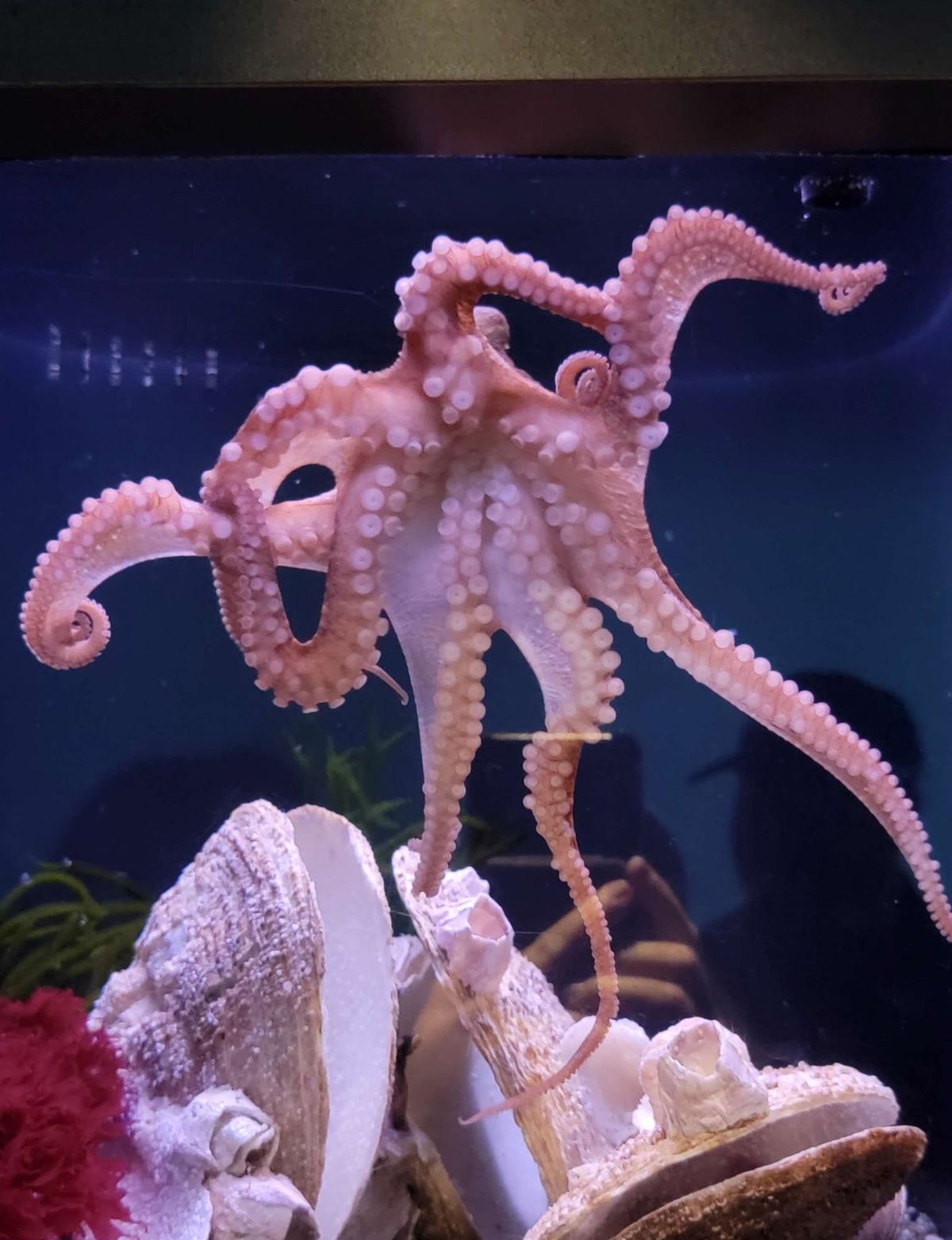
Ghost always knew when it was showtime.
Stretching her eight arms across the tank, the octopus would glide midwater almost as if she were dancing, leaving admirers on the other side of the glass transfixed and wide-eyed. Her fans and caretakers at the Aquarium of the Pacific in Long Beach, California, say she’s intelligent, outgoing and strikingly beautiful.
These days, her public-facing tank is empty. Ghost is dying, and her last act will be privately tending to her unfertilized eggs that will never hatch. Her fans reacted to the news with an outpouring of grief and love.
“I hope she knows that she’s greatly loved, and she’ll be greatly missed,” said Josie Li, who visited Ghost in January. “She’s doing what any other female octopus would: lay her eggs and protect them. I know she’d do a good job doing her motherly duties.”
Ghost is a giant Pacific octopus, a species that lives just three to five years. Females lay eggs just before they die, said Nate Jaros, the aquarium’s vice president of animal care, fish and invertebrates. In that last phase of life, called senescence, the animals begin to gradually deteriorate.
So far, signs of Ghost’s senescence have been subtle, Jaros said. She has small wounds that no longer heal as quickly. But she remains devoted to her eggs, even if it means neglecting her own well-being, such as with regard to eating.
Because octopus are territorial animals, Jaros said it would be inappropriate for the aquarium to pair Ghost with a male to fertilize the eggs now, at the end of her life.
Ghost arrived to the aquarium in May 2024 as a three-pound octopus from a vetted collector in British Columbia, Jaros said. Her moniker follows the aquarium’s tradition of octopus names starting with a G – Goji, Grindylow, Groot and Gumball, to note a few.
The now-50 pound Ghost stands out in a few ways, Jaros and her fans said. She has vibrant coloration, is extremely active and can quickly solve tough puzzles. Behind the scenes, Jaros said, Ghost would push her food out of the way and instead put her arms around her caregivers, almost akin to a hug.
Several of Ghost’s fans described their special connection with her.
Marla Husovsky, who has a membership with the aquarium, said she always felt like Ghost knew when visitors were there to see her. The octopus would spread her tentacles, occasionally turning her head toward the glass.
Li, the visitor from January, was able to meet Ghost on a behind-the-scenes tour. There, she saw a desk filled with hand-painted enrichment toys for the octopus, who swam upward to greet her visitors. Ghost wrapped her arms around their hands, smelling them curiously, Li said.
Nicole Marie Whiting said Ghost is her 5-year-old daughter Aurora’s favorite animal at the aquarium. “She’s like a very, very pretty strawberry,” said Aurora, the proud owner of two stuffed octopuses from the gift shop.
Whiting and her family won’t be able to see Ghost during their scheduled visit in October. It is disappointing, but Whiting noted it is important to recognize death as a part of life.
“It’s not always a sad thing, even though it is hard to say goodbye,” she said.