
Ask Dr. Universe: Moon’s cycle determines what time of day you can see it
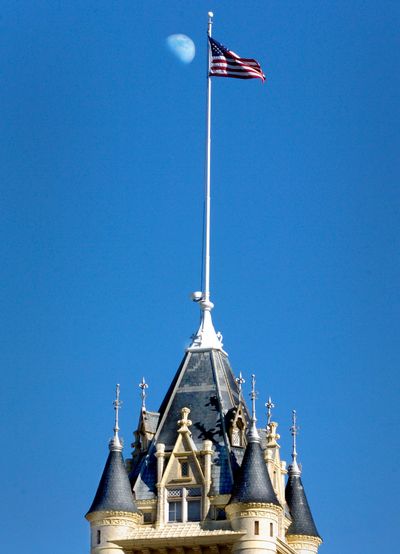
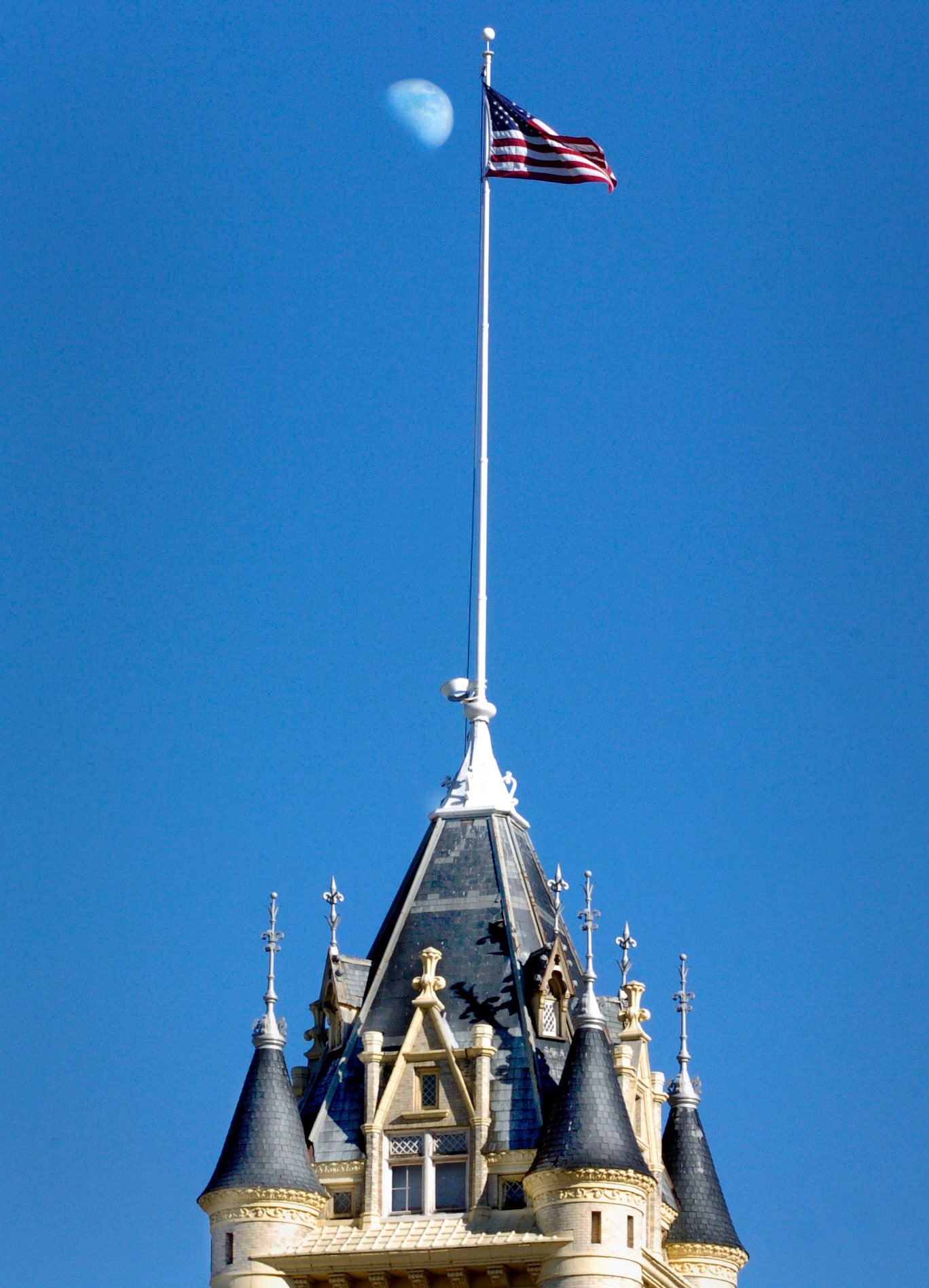
Dr. Universe: Why can we sometimes see the moon during the day? – Eli, 7, Texas
Dear Eli,
I love to go for a walk with my dog. Sometimes we see the moon in the sky–even though it’s daytime.
I asked my friend Michael Allen why that happens. He’s an astronomer at Washington State University.
He told me that we have to ask “What is a day?” to answer your question.
“The sun lights up the Earth,” Allen said. “Since the Earth is a round ball, only half of the ball can ever be lit up at any one time.”
The side of the Earth that the sun shines on experiences day. The side that faces away from the sun experiences night.
The earth spins on its axis over the 24 hours that make one day.
So, let’s imagine I’m stuck to the Earth in one spot. Allen calls me a “prisoner of gravity.” At midnight, my spot faces away from the sun. Its light can’t reach me. So, it’s dark. I’m probably sleeping.
As the Earth rotates, my spot moves toward the sun. Morning comes. More and more of the sun’s light reaches my spot. By noon, my spot faces the sun, and it’s super bright.
While all that’s happening, the moon orbits around the earth.
The moon doesn’t make its own light. It reflects the light of the sun shining on it. So, if the sun’s light can’t reach part of the moon, that part will be dark. We can only see the lit-up part of the moon that faces us.
So, the whole moon is always there. Whether we can see it or not depends on where it is in its orbit and where we are on Earth. We can only see some or all the moon when it’s in the right part of the sky and reflecting enough light.
That’s true at night and during the day.
The shape of the lit-up part of the moon depends on the moon’s phase. The moon goes through eight phases over its 28-day trip around the Earth.
When the moon is full, its whole face is lit up. At midnight, I can see it in the sky. Or I may see a nearly full moon.
But I can’t see the other phases at midnight because they’re below the horizon. The Earth blocks them from my view. I might be able to see them at other times.
I can’t see any of the moon during the new moon–no matter what time it is. The lit side faces away from the Earth.
But I may be able to see the moon during the day just before or after the new moon.
“This all assumes clear skies,” Allen said. “But, otherwise, all the moon phasing and visibility is due to one word: geometry.”
If you want to see the moon during the day, follow the moon’s phases on a calendar. Or start at the new moon and count. Look for the first quarter moon in the afternoon about one week after the new moon. Or the third quarter moon in the morning about one week after the full moon.
Hopefully you’ll find it illuminating.
Sincerely,
Dr. Universe
Adults can help kids submit a question at askdruniverse.wsu.edu/ask.