
Cool Critters: Hoppin’ down the jackalope trail
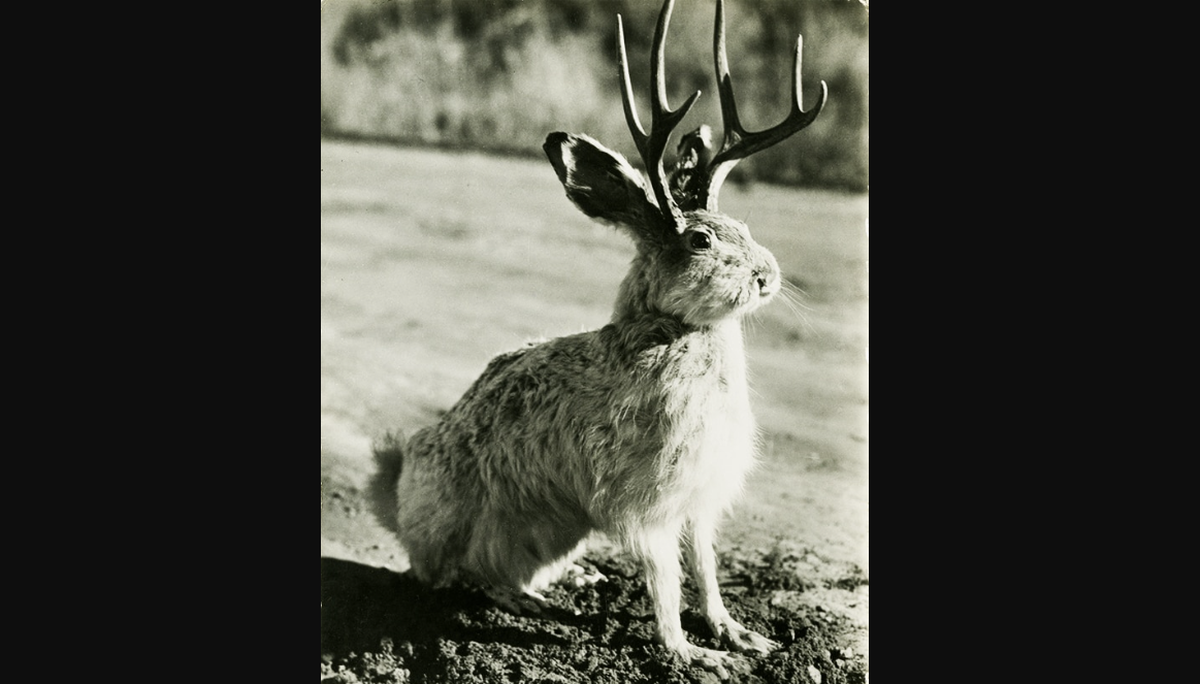
Chances are, you’ve never seen a jackalope in the wild. Or tasted a milk-chocolate version retrieved from an Easter basket. Hippity, hoppity, there are horns atop his head.
A cross between a jackrabbit and an antelope, the jackalope is a tall tale of the American West mixed with some scientific truth. According to legend, it runs as fast as 90 mph, mimics human voices and sings at night. It only mates during lightning storms, which explains the species’ scarcity.
Pull up a chair and hear the rest of the story.
Spokane naturalist Carl Barrentine encountered a jackalope at a roadside bar and grill, just the kind of place where these hybrid animals tend to hang out.
As Barrentine recalls, it was 1979 or ’80. He was driving his car while on break from teaching zoology at Treasure Valley Community College in Eastern Oregon. Shortly after crossing the Idaho border, he stopped for a bite to eat north of the small town of Payette.
“The owners had a stuffed ‘jackalope’ – a taxidermy mount of the posed, dusty lagomorph on a cluttered shelf, along with the half-dozen, half-filled bottles of hard liquor beyond arm’s reach beyond my barstool,” Barrentine recounted.
Although Barrentine’s expertise was in vertebrate zoology – and he would eventually earn his doctorate degree in biology at Idaho State University – he’d never heard of a jackalope. But there he was, peering at the crossbreed mammal on display not far from where he sat.
“I admired the mount and snorted a short guffaw in appreciation for the taxidermist’s sense of humor of wedding the horns of a pronghorn with the skull of a black-tailed jackrabbit,” he said.
So a mythological jackalope hops into a bar. How did it get there?
Historical records suggest the first stuffed jackalope was created nearly a half-century before Barrentine encountered one in rural Idaho.
Its origins are traced to the Great Depression, when teenage brothers Douglas and Ralph Herrick of Douglas, Wyoming, grafted a pair of antlers to the body of a jackrabbit, according to the 2022 book, “On the Trail of the Jackalope,” by Michael P. Branch. After a hotel owner bought their taxidermy mount for $10, it became a popular local attraction, Branch wrote.
Well, the brothers’ idea multiplied like rabbits. Word of the curious critter’s existence quickly spread beyond Wyoming, the book explains.
Years later, the jackalope remains a popular Western souvenir. Besides the mounts, its image is found on post cards, key rings and shot glasses, to name a few. You’ll even find the Jackalope Bar and Grill in Kennewick, proudly billed as a “modern-day dive bar” on its website.
And now for the scientific connection. Jackalope-like creatures appear in artwork and literature going back several centuries. So besides the imaginative invention of two teenage brothers, researchers say the fabled jackalope may also have been inspired by sightings of rabbits afflicted with a rare virus that produces horn-like protuberances. It’s called the Shope papilloma virus. Thank goodness it’s rare.
Whatever spawned the folklore, it persists. The residents of Douglas, Wyoming, know Jack. For more than five decades, the city has been issuing free jackalope hunting permits. And not surprisingly, it is the official Jackalope Capital of the World.