
Data centers replace fruit orchards in changing Central WA
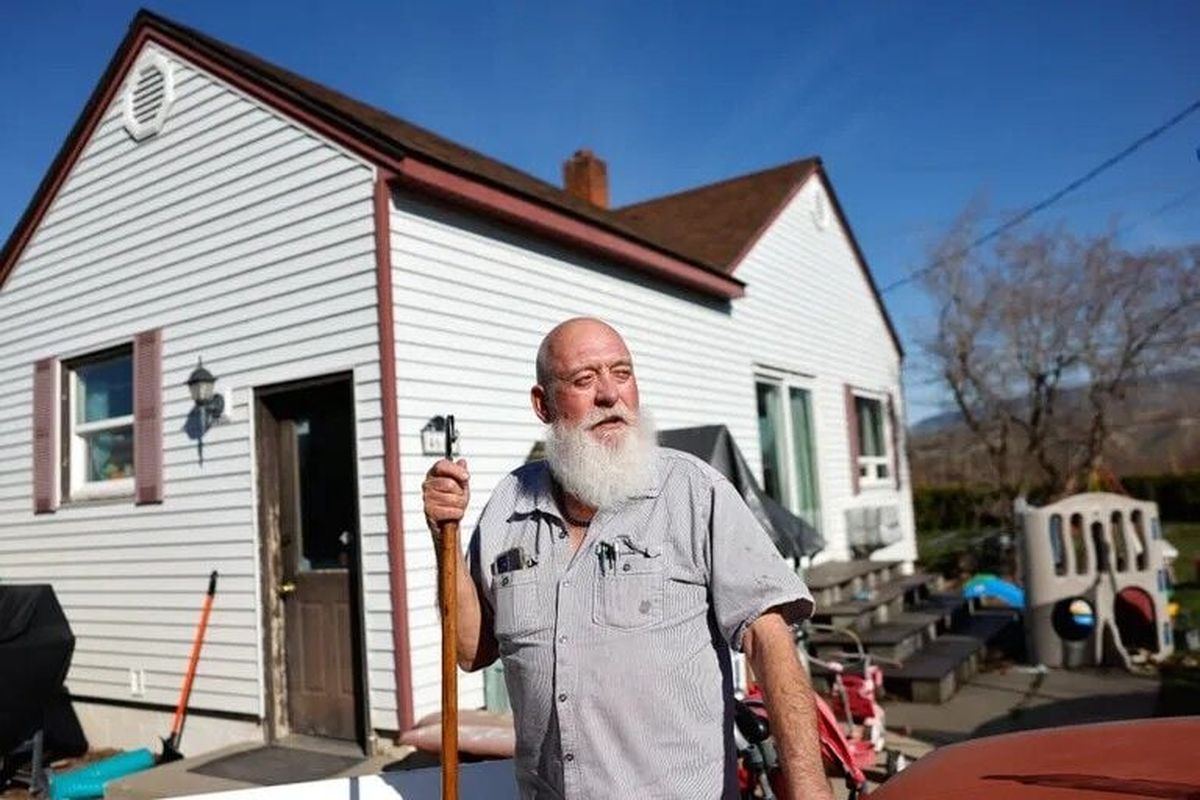
MALAGA, Chelan County – Sabey, a Tukwila-based company, bought about 80 acres next to the Malaga fire station last year, where a cherry orchard was torn out for the company’s planned data center campus.
Dan Richmond, a longtime Malaga orchardist, said his friends who used to harvest fruit or prune trees there had to find new jobs.
“That’s the part that I felt bad about,” Richmond said. “Of course I don’t want to see people lose their jobs, but there’s nothing I can do about it.”
Long known for its farms and fruit trees, central Washington has transformed into the state’s hub for data centers as companies rapidly build out infrastructure for artificial intelligence and cloud computing. Nearby Grant and Douglas counties saw changes first. Now, Microsoft is expanding into Chelan County, with a long line of developers looking to follow.
While Microsoft and the local utility agreed to new terms to soothe electricity concerns, data centers are still causing unease among local orchardists who see the region’s economy shifting from an agricultural base toward an industrial one.
Some say the region desperately needs the economic benefits the facilities bring, while others are concerned about a potential competition for land with the giant concrete structures.
Richmond said he’s hoping one day his children will take over his orchard, where he’s grown apples for more than three decades.
“But the closer that Microsoft gets, it might become difficult,” Richmond said. “They’re not very far away. They took out an orchard up here that was there for years.”
But he says the industry was struggling well before Microsoft’s data centers, and he sees potential benefits, too.
Decline in agriculture
Sitting on his tractor on a sunny afternoon in March, Dillon Luebber, a Malaga orchardist growing mostly cherries and pears, said he wasn’t a fan of the new developments in town.
“I’m not excited about it at all,” Luebber said.
He said Microsoft’s construction project is already disrupting the quiet vibes of the several-thousand-person town.
“The traffic is crazy on the highway whenever those workers get off,” Luebber said. “Just hundreds and hundreds of cars, bumper-to-bumper from Malaga to Wenatchee.”
Even once it’s finished, he said the buildings, which could take up more than 24 football fields of land, will change one of the things he loves most about Malaga: the expansive, natural views of the Wenatchee Valley between the foothills of the Cascades and the Columbia River.
“And now it’s kind of slowly growing to just a lot more concrete and big facility buildings that kind of takes the ambience of this place away,” he said.
Luebber’s family has owned orchards since the 1950s in the Malaga region, where he continues the tradition. Nowadays, he fields five to 10 calls per week from developers asking to buy his land, he said, which he thinks are data center companies looking to expand their footprint. Luebber said he feels a tension between the growing technology sector and orchardists for limited land.
Chelan County Commissioner Kevin Overbay, whose grandparents were orchardists in Chelan County, said that companies like Microsoft are not causing agriculture’s decline – they are arriving after the fact.
“Ag has been under attack for years now,” Overbay said.
Chelan and Douglas counties lost nearly a quarter of agricultural jobs from 2018 to 2023 because of an aging workforce of farmers, consolidation of farms and automation, according to a report developed for the state workforce training board.
And Chelan County has lost 15% of its farmland since 2017, much of it from small farms under 50 acres, according to the 2022 U.S. Department of Agriculture’s Census of Agriculture. And as the population continues to grow, with people attracted to the area’s nature and recreation, much of that land has been converted into housing, like when a 42-acre pear orchard was converted into a 134-lot housing development in Peshastin in 2019.
For Overbay, Microsoft’s data centers offer one way the region can chart an economic future despite the decline in the region’s tree-fruit industry.
“Any community that does not make adjustments and grow is going to die,” Overbay said.
Emerging benefits
There are 650 to 700 construction workers building Microsoft’s data centers in Malaga, according to the company. And although data centers require fewer employees to maintain them, Microsoft still plans to hire around 250 full-time workers long-term.
Overbay said that helps fulfill a request he heard repeatedly from families when he was running for office a decade ago.
“They wanted their kids to be able to have family wage jobs here, out of high school, not have to move away,” Overbay said.
Plus, he said that the data centers, which will cost billions of dollars to build, should bring in millions per year in property tax revenue. And Microsoft is contributing $1.5 million to help renovate and reopen the only fire station in Malaga, which benefits its data centers and the town’s residents.
Other growers in Malaga think existing farms and the emerging technology industry can share resources and thrive alongside each other.
“I feel good about it,” said Al Mathews, who owns a winery in Malaga where he grows grapes, including a Spanish variety he believes the town was named after.
When Mathews first started attending community meetings about Microsoft’s data center project, he expected to see the hostile opposition that data center projects in some other parts of the country have been met with.
“It wasn’t at all what I expected it to be,” Mathews said. “It actually ended up being quite positive – neutral to quite positive.”
In those meetings, the local utility explained how Microsoft would be “bringing its own power” and be put on separate rates and grid infrastructure. So why would anyone be against it, Mathews asked, “if it’s not going to impact your pocketbook and the reliability of your electric supply?”
Plus, he said he’s excited about Microsoft’s deal with Helion, a company building what it hopes will be the world’s first fusion power plant in Malaga, although nuclear experts are skeptical that will happen any time soon.
“Fusion power is probably the salvation of the human race,” Mathews said. “And it’s happening in our backyard.”
Mathews’ biggest concern is water, which the county commissioner agrees is probably the most precious resource we have. While Microsoft has provided more than $51 million to dig two new wells, add reservoirs and extend water lines, Mathews says questions remain for him whether there will always be enough for everyone.