
His detainment sparked 30 arrests in Spokane. After 7 months, judge ruled asylum seeker’s imprisonment was illegal
A Venezuelan immigrant, whose June 11 detention in downtown Spokane by masked U.S. Immigration and Customs Enforcement agents ignited a protest involving 1,800 people and led to 30 arrests, has been freed.
U.S. District Judge James Robart ruled last week that the U.S. government illegally detained 29-year-old Joswar Slater Rodriguez Torres and denied him his right to due process when he showed up at the Spokane ICE facility that day for a regular check-in, but was detained by agents instead, calling the arrest an “abuse” of discretion from the Department of Homeland Security.
His counterpart, Cesar Alvarez Perez, was also in the country legally and arrested that day.
ICE agents eventually whisked the two to the Northwest ICE Processing Center in Tacoma where Rodriguez Torres was detained for seven months. Alvarez Perez chose to self-deport instead of staying in custody.
Former Spokane City Council President Ben Stuckart, who was a sponsor of Alvarez Perez, was arrested and later pleaded guilty for his role in temporarily blocking the ICE agents from leaving. Shelly O’Quinn, a former Spokane County commissioner who now works as executive director of the Innovia foundation and sponsored Rodriguez Torres, kept fighting for his release.
They didn’t know how long it was going to be until they could hug Rodriguez Torres again. It happened last Thursday when he left the Tacoma facility, straight into the arms of O’Quinn, who continues to guide him through the asylum process.
She refers to him as “Randy,” a nickname he picked for himself.
“It was joyous. It was so joyous. I gave Randy a great big hug. It was so great to see him, and to see him on this side,” O’Quinn, a former Republican county commissioner, said during a phone call Tuesday. “I’ve been to visit him, but it’s so different when there is a wall between us.”
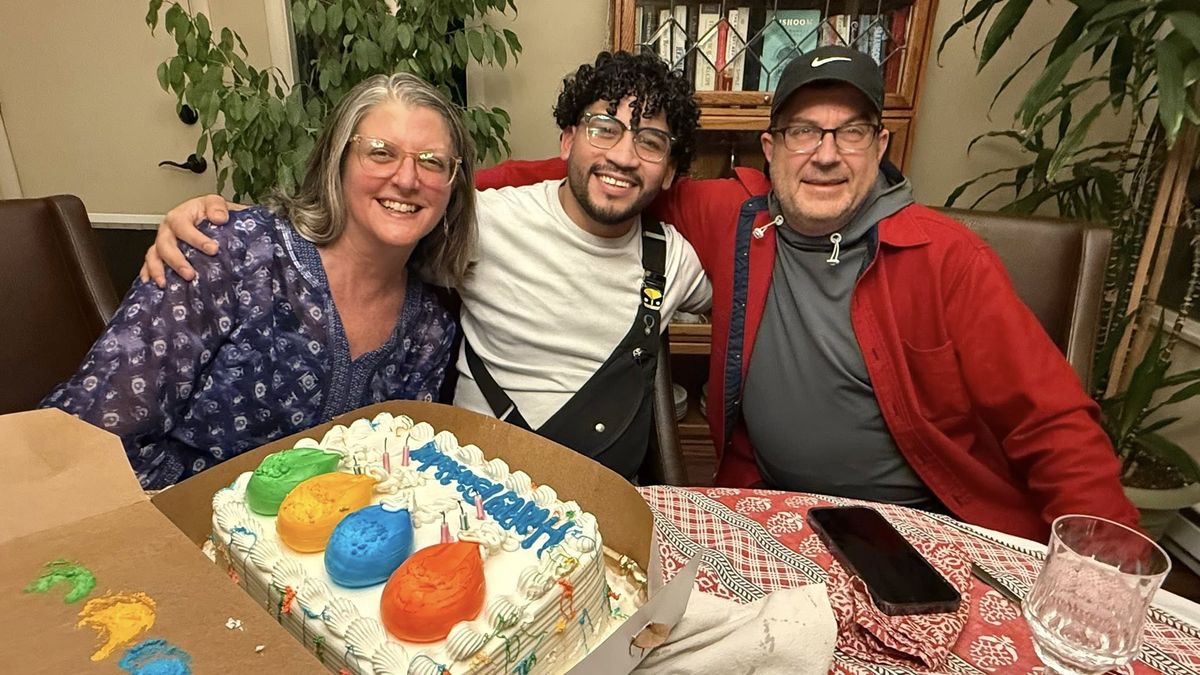
After friends across Washington found a way to get Rodriguez Torres back to Spokane, he wound up in Stuckart’s home on Sunday. Stuckart and his wife, Ann, whipped him up a plate of beef ragout with some local bread fresh from the Grain Shed.
“He is a smiley guy. He is so personable. He is very religious and started preaching while in the facility to keep a good attitude,” Stuckart said. “But he was depressed the last couple months. After being wrongfully detained, I am now hoping he can rest and get a good night’s sleep.”
The ruling
Rodriguez Torres is in the country legally as part of a government program known as the Venezuelan Humanitarian Parole Program, or the “CHNV” program for Cubans, Haitians, Nicaraguans and Venezuelans. The humanitarian parolee program allows for immigrants facing persecution to legally live and work in the United States “under parole.”
Rodriguez Torres sought entry into the U.S. in 2024, was granted his parole and later filed an asylum claim with the Seattle Immigration Court.
He has no criminal history in the U.S., all of his court filings have been filed on time, and he was seeking an appeal for his asylum claim, according to the judge’s ruling. But none of that mattered – the government decided to revoke his parole and gave no explanation as to why, according to court records.
Federal law states DHS is only allowed to revoke an immigrant’s parole if the purposes of the parole have been served, and that should only be executed on a case-by-case basis.
None of that applies to Rodriguez Torres, the judge implied in his ruling. The government never took into account the individualized circumstances of Rodriguez Torres’ parole and only argued that he was subject to “mandatory” detention, court records say.
“He has diligently complied with all conditions ICE has imposed on him as a parolee,” Robart wrote. Robart became a judge for the Western District of Washington in 2004 after his appointment by former Republican President George W. Bush.
Robart called the decision to detain him “an abuse of DHS’s discretion.”
“All persons, regardless of their immigration status, are entitled to due process under the Fifth Amendment,” Robart wrote. “The Due Process clause applies to all ‘persons’ within the United States, including non citizens, whether their presence here is lawful, unlawful, temporary or permanent.”
Rodriguez Torres is not the first legal immigrant to be detained during President Donald Trump’s immigration crackdown. Both Trump and his DHS Secretary Kristi Noem have made it a point to reiterate they are detaining and deporting violent criminals with no legal status, but many legal immigrants and some refugees have been caught up in the wave of detentions and deportations. DHS has also detained more than 170 American citizens, ProPublica reported.
‘Life takes a village’
When Rodriguez Torres and Alvarez Perez were detained on June 11, Stuckart posted a call to action on Facebook. Residents swarmed the ICE office off West Cataldo Avenue in North Spokane and were accused of trying to stop the transport van from leaving for Tacoma.
The protest lasted throughout the evening as federal agents pushed back.
While the story of the protest made national news, the story of the two Spokane immigrants touched people inside the community. Many donated to assist the two in obtaining legal representation, something that is not required in immigration cases, even though it is often more complicated than the regular justice system and can be harder to navigate because of potential language barriers.
“Randy is one of thousands that have been illegally detained. It’s easy to think that the people getting picked up are criminals, and that isn’t a true story. There is so much misinformation and hatred out there right now. I would encourage our community to recognize that there is a person and a family and loved ones behind every single individual that is detained,” O’Quinn said. “So many people stepped up to support him … We couldn’t have done this without the community. It’s a powerful reminder that life takes a village and everyone has an opportunity to support their neighbors.
“There are others in the facility that don’t have the same support. Other people need villages, too.”
Stuckart said Tuesday there are many people still inside the Tacoma detention center facing circumstances similar to Rodriguez Torres but who have little to no resources.
“It’s horrendous. There are a lot of people suffering right now,” Stuckart said. “Had all those people not shown up … We wouldn’t have raised a single dollar. And he would still be in there.”
During Rodriguez Torres’ time in detention, he was relatively quiet about his experience. Since being out, he’s shared stories with Stuckart about what goes on inside the Tacoma detention center’s walls. Moldy bread or uncooked chicken was a frequent problem, he said, but so was medical attention. People who had medical emergencies often waited two hours to see a doctor, Stuckart said. Sometimes detainees wouldn’t eat dinner in the evening at all, but would instead be woken up around midnight to eat.
“He didn’t really want to talk about it,” Stuckart said. “But he has a good attitude. He didn’t have food choices for seven months, so we got him a cake to celebrate his birthday from December, and we gave him a present.”
For now, Rodriguez Torres will be living with a friend who he was renting a room from before he was detained. He is awaiting another court hearing for his asylum appeal, but was told that immigration courts are so “backed up” right now that it could be two years until the next hearing, Stuckart said. He will still be required to check in with ICE and has another check-in scheduled for March.
“The people that stepped up to support him, that is the lemonade,” O’Quinn said. “We made lemonade out of lemons. We made something positive out of this terrible experience.”