
Jesse Jackson, charismatic champion of civil rights, dies at 84
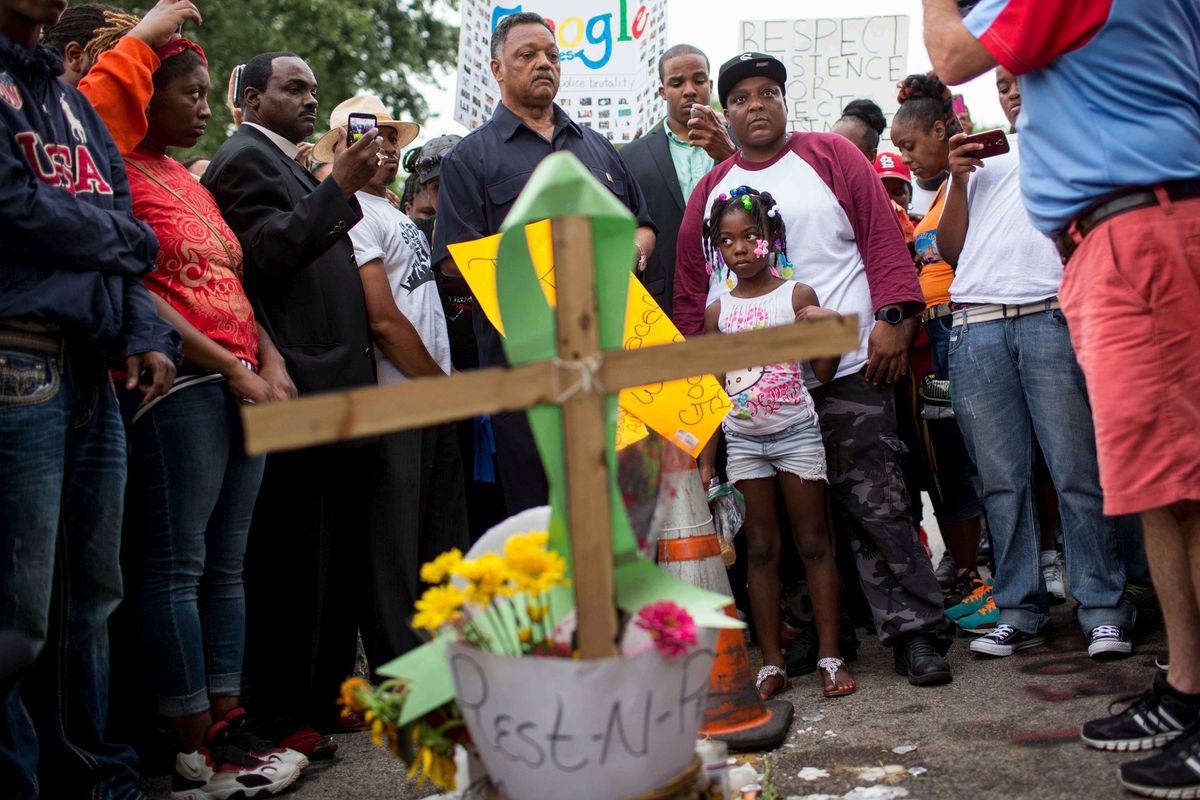
The Rev. Jesse Jackson, whose impassioned oratory and populist vision of a “rainbow coalition” of the poor and forgotten made him the nation’s most influential Black figure in the years between the civil rights crusades of the Rev. Martin Luther King Jr. and the election of Barack Obama, died on Tuesday at his home in Chicago. He was 84.
His death was confirmed by his family in a statement, which said that Jackson “died peacefully,” but it did not give a cause.
Jackson was hospitalized in November for treatment of a rare and particularly severe neurodegenerative condition, progressive supranuclear palsy, according to the advocacy organization he founded, the Rainbow PUSH Coalition. In 2017, he announced that he had Parkinson’s disease.
Jackson picked up the mantle of King after his assassination in 1968 and ran for president twice, long before Obama’s election in 2008. But he never achieved either the commanding moral stature of King or the ultimate political triumph attained by Obama.
Instead, through the power of his language and his preternatural energy and ambition, he became a moral and political force in a racially ambiguous era, when Jim Crow was still a vivid memory and Black political power more an aspiration than a reality.
With his gospel of seeking common ground, his pleas to “keep hope alive” and his demands for respect for those seldom accorded it, Jackson, particularly in his galvanizing speeches at the Democratic conventions in 1984 and 1988, enunciated a progressive vision that defined the soul of the Democratic Party, if not necessarily its policies, in the last decades of the 20th century.
It was a vision, animated by the civil rights era, in which an inclusive coalition of people of color and others who had been at the periphery of American life would now move to the forefront and transform it.
“My constituency is the desperate, the damned, the disinherited, the disrespected and the despised,” Jackson said in the rolling cadences of the pulpit at the 1984 Democratic National Convention in San Francisco. “They are restless and seek relief.”
His idea of a multiracial coalition empowered by an activist government to confront rampant inequality in American life remains central to the progressive wing of the Democratic Party and has inspired groups like Black Lives Matter.
He was born Jesse Louis Burns on Oct. 8, 1941, in Greenville, South Carolina. His mother, Helen Burns, was 16 at the time. His father, Noah Louis Robinson, was a 33-year-old former boxer who lived next door, married to another woman.
In 1943, his mother married Charles Jackson before he joined the Army. Jackson did not adopt Jesse until 14 years later. When the couple had a son of their own, Jesse was sent to live with his maternal grandmother in a shotgun shack around the corner.
After graduating from high school in 1959, Jackson enrolled at the University of Illinois Urbana-Champaign on a football scholarship, an opportunity that allowed him to escape Jim Crow for the first time.
He transferred after his freshman year to what is now North Carolina Agricultural and Technical State University, a historically Black institution in Greensboro. He became a leader in his fraternity and eventually president of the student body. And he fell in love with a vibrant, high-energy student named Jacqueline Lavinia Brown, known as Jackie.
They married on New Year’s Eve in 1962. Soon, their first child was born, a daughter they named Santita. Four more children followed.
After graduating from college in 1964, he enrolled at the Chicago Theological Seminary.
It was an impossible time for someone with Jackson’s passions to be lost in scholarly contemplation. Stunned by the beatings of Black demonstrators in Selma, Alabama, in March 1965, he climbed atop a table in the seminary’s cafeteria and challenged other students to join him on a trip there.
About 20 students and a third of the faculty took him up on the call, and they all headed South. There, Jackson offered his services to members of King’s inner circle in the Southern Christian Leadership Conference, irking a few of them by acting as if he were in a position of authority. He met King and went home transformed.
Six months after Selma, while still pursuing his studies, Jackson became, at 24, the youngest SCLC staff member. He was chosen to head the Chicago chapter of the SCLC’s Operation Breadbasket, a national economic development campaign whose goal was to use boycotts as a way to pressure white businesses to hire Black workers and to purchase goods and services from Black contractors.
By 1967, he was gaining a national reputation. Six months before graduating, he quit his seminary studies to plunge into the civil rights movement full time. (He was later ordained by the minister of a Chicago church after he went to work for King.)
King became an intellectual and a spiritual model for Jackson, as well as a father figure. “Jesse,” said the Rev. Ralph David Abernathy, perhaps King’s closest associate, “wanted to be Martin.”
For all his zeal, Jackson became the most controversial member of King’s inner circle. Though he was part of the leadership, he was also, with his base in Chicago, almost an independent actor. His ego, charisma and ability to generate press for himself left others in the SCLC suspicious of his ambitions and led to clashes, even with King.
It all came to a climax in April 1968, when King went to Memphis, Tennessee, to show support for striking garbage workers. King was outside his second-floor room at the Lorraine Motel bantering with SCLC colleagues in the parking lot below before going out to dinner when a single rifle shot shattered the moment.
What happened next shadowed the way Jackson was viewed for decades. He was one of several aides who rushed toward King after he was shot. Later that night, Jackson hurried back to Chicago, parts of which were in flames in the unrest that followed the assassination. The next morning, he appeared on the “Today” show wearing the olive turtleneck sweater, blotted with blood, that he had worn the day before in Memphis. At a memorial convocation of the Chicago City Council that day, he declared, “I come here with a heavy heart because on my chest is the stain of blood from Dr. King’s head.” He added: “He went through, literally, a crucifixion. I was there. And I’ll be there for the resurrection.”
At least once publicly, he indicated that he was the last person to speak with King and that he had held his bloodied head as King lay dying. Others who were there said it never happened. Jackson’s account changed over time, from cradling King’s head to reaching toward it.
After King’s death, Jackson repeatedly clashed with Abernathy, the new head of the SCLC. In late 1971, their relationship fell apart entirely after Abernathy suspended Jackson for 60 days for “administrative improprieties and repeated acts of violation of organizational policy.”
Freed from the institutional hierarchy of the SCLC, Jackson became a ubiquitous presence in American life, promoting social justice causes. Before long, his focus had shifted almost inevitably to a new area: politics.
As early as 1971, he flirted with the idea of starting a new political party. In 1980, he became a tireless campaigner for President Jimmy Carter in his unsuccessful reelection bid. It set the stage for his becoming invaluable to the Democratic Party for his success in registering Black voters.
In 1984, Jackson decided it was time to campaign for himself — as the second Black candidate from a major party to run for president, after Shirley Chisholm, the former Congress member from Brooklyn, New York, in 1972. He established the National Rainbow Coalition as a vehicle for a populist campaign.
Three weeks after launching his presidential campaign, in informal conversations with Black reporters, he used the offensive terms “Hymie” and “Hymietown” to describe the Jewish population in New York City. The words, reported 37 paragraphs deep in an analytical article in The Washington Post, set off a furor that would hang over him for years.
Still, fueled by Black voters, particularly in the South, whom he had helped register in historic numbers, Jackson stunned many political observers with the strength he showed in the 1984 race for the Democratic presidential nomination, emerging as the first Black candidate to become a serious contender in a national contest.
Jackson’s dramatic 50-minute speech to the convention in San Francisco was perhaps the emotional high point of the doomed Democratic campaign against the popular incumbent, Ronald Reagan.
He tried again in 1988, and this time he began as a party heavyweight. In the Super Tuesday primary on March 8, he ran first or second in 16 of the 21 primaries and caucuses. Party leaders, fearing they could not win a general election with an assertively left-wing Black presidential candidate, desperately looked for an alternative. In the end, Gov. Michael Dukakis of Massachusetts won the nomination, even though Jackson had earned almost 7 million primary votes — 29% of the total.
The party’s convention, in Atlanta, was bittersweet. Jackson campaigned hard for the vice-presidential nomination and was disappointed not to be picked. But again, a televised speech he delivered electrified the convention.
The speech, which he concluded by four times shouting out “Keep hope alive!,” was immediately hailed as an American political classic.
Jackson decided against a third presidential run in 1992, when Democrats took back the White House behind Bill Clinton. Clinton made him a special envoy to Africa and, in 2000, awarded him the Presidential Medal of Freedom, the nation’s highest civilian honor.
As the Democratic Party struggled to adjust to a nation moving to the right, Jackson became a voice of the marginalized American left, pushing back at the prevailing political winds in speaking out for anti-war and social justice causes.
He also faced personal controversies and crises. In 2001, it was revealed that he had fathered a child, Ashley Jackson, in 1999 with a woman who had worked for his advocacy group, now called, after a merger, the Rainbow PUSH Coalition. During Obama’s presidential run in 2008, Jackson had to apologize and was rebuked by his own son, Rep. Jesse Jackson Jr., for derisive remarks he had made about Obama that were picked up by an open microphone.
In addition to his son Jesse Jr., Jackson’s survivors include his wife; his other children, Santita, Jonathan, Yusef, Jacqueline and Ashley; and a number of grandchildren.
This article originally appeared in The New York Times.