
Greenland refocuses on tourism as Trump’s takeover threats wane
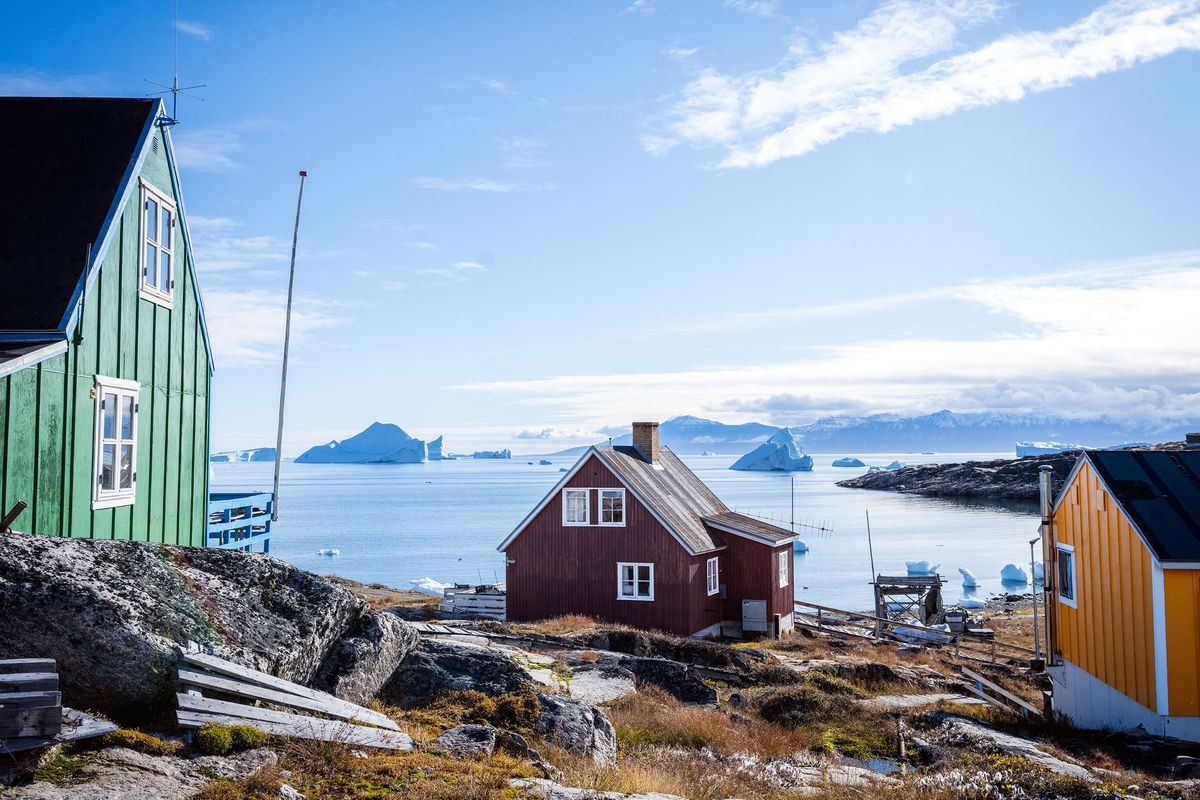
Not long before Greenland became a geopolitical talking point, it was a hot topic for avid travelers – particularly, Americans.
In June 2025, United Airlines introduced the first-ever direct flights from the U.S., bringing more than 300 passengers weekly to the capital city of Nuuk. Throughout the busy summer season, those flights deposited some 4,500 Americans into a city whose population is around 20,000. That, plus new flights from Copenhagen, helped the Danish territory achieve an unprecedented year for tourism, notching twice as many international arrivals as it did in 2024.
Interest in Greenland – for tourists and, because of President Donald Trump, for world leaders – has never been higher. After the first months of 2026 saw Trump threaten to take possession of the territory, the geopolitical standoff ended with an agreement to pursue a “framework” for a future deal.
As the geopolitical front has quieted, Greenland has returned focus to its other headline-generating storyline: the tourism boom that started last summer. It’s preparing for the seasonal resumption of those United Airlines direct flights from Newark Liberty International Airport, in New Jersey, which this year will begin earlier than last, kicking off in May.
April will see the opening of a new regional airport in Qaqortoq – the largest settlement in the south. That will be followed in October by a new transatlantic airport in Ilulissat, a jumping-off point for adventures in Disko Bay. Both will bring in more travelers and spread tourism further beyond Nuuk.
But the territory’s first big summer season came with ups and downs that can inform Greenlanders and travelers about what lies ahead.
Greenland may share a profusion of fjord-filled landscapes and vivid nightly displays of the aurora borealis with popular neighboring Iceland, but the two destinations are drastically different. Whereas the latter has its Ring Road for easy drives and resorts with thermal baths, 80% of Greenland is effectively a large sheet of ice. Getting around often requires boat or helicopter access. Even on pleasant days, the boat rides can be a challenge, requiring full-body fleece, dry suits and ski goggles. There are precious few roads, and nothing is impervious to the whims of weather.
Greenland’s extreme isolation and infrastructural challenges make for an expensive place to visit. Nearly everything – food, fuel, building materials – must be shipped in. It’s easy to pay 57 Danish krone ($9) for a simple latte, whereas in also-pricey Iceland it can cost closer to 738 Icelandic króna ($6). Even a bottle of water can go for more than 25 krone.
Harder to swallow still, an overnight at Hotel Hans Egede – generally considered Nuuk’s best stay, though firmly in the three-star category by international standards – typically exceeds $350 per night during high season. And that’s just where you stay in the main city before you head farther out, as most people do, to the much more rugged and remote surrounds of the fjord-lined coast or the Arctic Circle, where it’s easy to pay $1,400 per person per night for a glammed-up tented camp.
The tradeoff is a sense of adventure akin to a wintery safari, a unique style of Arctic hospitality and a wild natural bounty. There’s the thrill of catching fresh halibut within seconds of dropping a line into the frigid Atlantic waters. And kaffemik rituals often have you mingling with Inuit families over cake and coffee.
And yet, before last summer had even ended, the intrepid adventurism that brought the nation’s first big wave of tourism was supplanted with grousing and gripes. It didn’t help that in August, Nuuk International Airport suddenly shut down after security screening protocols were deemed insufficient by Danish Transit Authority standards. When the news broke, a United Airlines flight from Newark carrying more than 100 passengers was required to make an abrupt U-turn midair.
Then bad weather – a force to be reckoned with in Greenland, no matter the time of year – caused dozens of other cancellations. Hundreds of travelers were marooned in Nuuk without a place to stay. Several times during the high season, which runs from June to early September, Air Greenland created makeshift hostels inside airports to compensate for a lack of proper accommodations. (According to a widely cited Visit Greenland report, the places to stay in and around the capital city were limited to 586 hotel beds, 357 hotel apartment beds and 96 hostel beds in late 2024, and nothing new opened to welcome travelers in 2025.)
Early adopters are generally the most intrepid among us. Their curiosity and exploratory nature lead them to embrace new, often untested technologies, whether it’s cryptocurrency, biohacking or the Cybertruck. But when it comes to travel, a similar tolerance for ambiguity and risk can be much lower. In the case of Greenland, these not-so-minor hiccups proved a bridge too far for many.
“Being an early adopter in travel means you have to accept that there can be some rough edges,” says Tom Marchant, co-founder of Black Tomato, a U.S.-based travel company that specializes in off-the-beaten-path itineraries. In his experience, those kinks are “all part of exploring a place way before the masses.”
Marchant witnessed the growing pains in Greenland last year – flight delays, logistical complications and unpredictable weather included. Black Tomato was among the first luxury outfitters to enter the territory, having launched trips there in 2016. Over the last decade, Marchant and his team have seen marginal improvements in the tourism proposition – a small number of luxurious new accommodations, better transportation options and improved culinary offerings among them. The cost of a trip, however, has remained expensive: Black Tomato’s eight-night itineraries start at $19,500 per person.
Despite the record tourism numbers, Greenland is a hard place to build additional hotels; plans to add more than 500 beds in Nuuk aren’t expected to bear fruit until 2030. With most of the local workforce gainfully employed in government or commercial fishing, it’s also hard to fill tourism jobs; they’re largely outsourced to seasonal international workers.
Anika Krogh, a Greenland native who owns the glamping outfit Nomad Greenland, says, “This product is not for everyone. It is not a big chain five-star hotel where everything is perfect. We have had some private-jet clients that didn’t really fit in.”
One of Krogh’s two camps is located in the Kiattua Valley, a 90-minute boat ride from Nuuk; the other is in Saqqaq, a fishing village in iceberg-strewn Disko Bay that was recently named the most beautiful settlement in all of Greenland. (Stays costs upwards of $2,234, per night.)
In both, spacious glamping tents have room for king-size beds and sitting areas, all strewn with fur throws. In central dining tents, more blankets and furs make for a comfortable and cozy atmosphere. And multicourse meals of freshly caught fish and mussels with local herbs and vegetables are provided. You’d never guess there is no oven – everything is grilled – though Krogh still winces at the memory of a guest who insisted on cake for his birthday. (It was boated in from Ilulissat, two hours away, and barely survived the journey.) “There is no Amazon Prime here,” Krogh says.
Most of Nomad Greenland’s early adopters are happy to take the lows with the highs. In September, when the weather turned cold early and the pipes froze, Krogh personally delivered thermoses of hot water to each tent – enough for each guest to wash their face. And when high winds canceled boat service, forcing unexpected overnights in Nuuk on a night when hotels were fully booked, Krogh called on a colleague with an Airbnb to provide accommodations. For most guests who’ve made the journey this far, she says, it’s all part of the adventure.
As much as Marchant of Black Tomato caters to the 0.1%, he also says anyone expecting vacation perfection in a place like Greenland is missing the point. “When everything is prepolished or box-ticking, you lose that sense of connection and discovery,” he says. “It’s dramatic, it’s raw, it’s humbling. That’s part of the deal when you’re ahead of the curve.”
Wrinkles or not, Marchant and Krogh consider Greenland’s unofficial debut summer a success. They are both fine-tuning their offerings for the upcoming one – the priorities are logistical improvements like covered boats. “We are not Iceland,” Krogh says. “And we don’t want to be Iceland.”