
Papers passed down in history may have value. But who determines it?
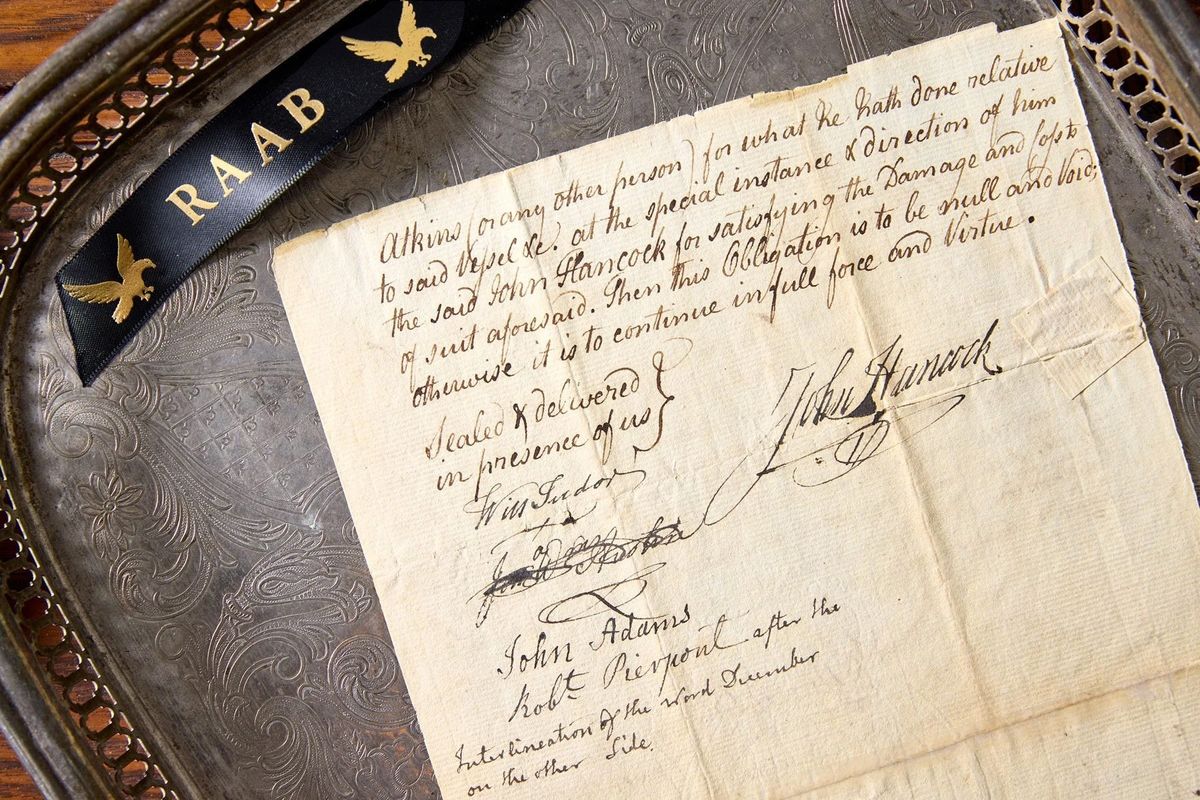
The papers might have seemed ordinary in their time: letters, invoices, receipts, logs, diary entries. But their contents, signatories or ties to milestone events turned them, over the centuries, into objects of great value.
A letter from George Washington to one of his colonels warning of a raid during the Revolutionary War. Legal writings by Abraham Lincoln before he became president. A note from Thomas Jefferson written as he prepared to leave Europe and return to Monticello.
Objects like this have been passed down through generations, discovered among a departed loved one’s belongings or uncovered in dusty attics or safe deposit boxes. But what are they worth to strangers? How do experts verify such relics are authentic? How is their monetary and historic value determined? And where do they belong: in the hands of private collectors or on public view?
Real vs. fake
Nathan Raab wrote the book, or at least a book, on the process of authenticating historic documents.
The co-author of “The Hunt for History: On the Trail of the World’s Lost Treasures,” Raab, a second-generation rare documents dealer, has held letters from Abraham Lincoln and Winston Churchill and handled documents signed by George Washington and John Hancock, perhaps the most famous signer in American history.
So when he or his father Steven, who founded the Raab Collection in 1989 after a career as a lawyer, spot a fake, they know it.
“The short answer is experience,” Raab said. “Like any profession, to be really good at something, you need repetition and experience. Once you’ve seen hundreds of letters by someone, anything that’s off will jump out.”
His father honed his own skills over a lifetime of interest in history and a passion for collecting rare pieces of it. After a short post-college stint in political consulting, the younger Raab joined the firm.
Spotting a fake takes more than an eye for handwriting, he explained. “It’s not just looking at a signature and a line here and there. It’s understanding the context of the piece, the ink used, the format. … If one (item in a collection) fails the sniff test, they all do.”
Most people Raab has encountered who possess fakes aren’t looking to fool anyone; on the contrary, they’ve usually been fooled, or at least misinformed, themselves.
He once had to break the sad news to a woman who’d hoped her inherited document would bring enough to finance her grandkids’ college educations.
But he also got to tell a man who thought letters from Abraham Lincoln weren’t worth much, until Raab saw that the 16th President wrote in them of his wish for divine intervention on behalf of the Union cause.
Public view or
private collections?
Raab’s company has a financial interest in buying and selling of documents with historic ties to private collectors. But, he said, the distinction is blurrier than many would think between what is publicly owned and what is publicly available.
The Raab Collection often sells items to public-facing institutions like the Library of Congress, university libraries and museums, like the Rosenbach Museum and Library, Raab said. Many private collectors loan items to museums and libraries, or donate or bequeath them.
“The market and institutions are different,” he said, “but the line between them is a faded, subtle one, not a strict one. Some of the greatest collectors are also the greatest philanthropists.”
“Most artifacts and documents are moving between public and private status over the course of their lives,” said Whitney Martinko, a professor of history at Villanova University. “Sometimes they’re on permanent loan, or a temporary display in a museum. And then there are many items that are in public hands that are totally inaccessible to the public, like records sitting in courthouse attics.”
She also cautioned that not all public-facing institutions have the wherewithal, facilities or resources to keep large or sprawling collections indefinitely.
“We think of archives as ‘forever,’ but that’s not always the case.” She pointed to the Atwater Kent Museum in Philadelphia, which closed after years of financial difficulties; its collection is now in the hands of Drexel University. “Sometimes there’s a false sense of what’s public, and what’s forever.”
Michelle Krowl said researchers at the Library of Congress, where she oversees the papers of presidents from James Polk to Theodore Roosevelt, ask themselves whether a potential acquisition fills a gap in their collections or whether it might complement what they already have.
A specialist in the Civil War, Krowl said that era is particularly rich because soldiers wrote to their families frequently and many of those letters were saved and preserved.
The Library of Congress accepts donations, but also has to take into consideration what researchers who use the library might need or want, the condition of the item(s), the costs for restoration, storage or preservation, and whether it’s better suited to a state or local library or archives.
She recalled a letter she came across from a Civil War soldier who wrote about the cost of his uniforms and how they wore out quickly while he was on “picket duty.”
“We recognize the blockbuster names,” she said. “But in my job, sometimes it’s the smaller stories that offer something different and I can’t anticipate how a researcher might use that information.”
Evaluating what should or should not be for sale
Raab said his company does its due diligence when checking on the provenance of items it might buy or sell ‒ an area where his father’s legal experience is helpful.
“Anything where we have a doubt we walk away,” he said. They take into consideration the best potential home for an item as well, and while he acknowledges they may sometimes have historical value, Nazi-related items are a definite “no” for the Raabs, who are Jewish.
Martinko, the Villanova professor, said anyone dealing in historic artifacts or documents has to make ethical determinations around an item’s provenance and history.
“That’s especially important around colonized or marginalized groups or people who’ve been oppressed,” she said. The looting of Indigenous peoples’ graves, items stolen by Nazis, profiting off the unpaid or unrecognized labor of enslaved people ‒ dealers, academics, curators and collectors all have to take these questions into consideration, she said.
“There are people who agree that there are all sorts of things that should not be sold,” she said. “What should and should not be for sale is a reflection of social values in our society.”