
This day in history: Before Spokane was an entertainment destination, some blamed union salaries

From 1976: Was the local stagehands union causing entertainment acts to skip Spokane?
Promoters said yes. Some complained that Spokane’s stagehands were overpaid and that “the local union sometimes used more men than needed for setting up a show.”
A new report, prepared by city staff, refuted these arguments. The stagehands’ wages had increased by 10 % recently, “but the wages are not, taken as a total, higher than Seattle wages.”
The report concluded that “there is little to support any allegations of nonprofessional work standards within the stagehands’ union.’
The report did find that one particular circumstance fueled some of the complaints. The stage manager of the Opera House and the stage manager of the Coliseum were brothers. Both were the sons of the former Coliseum stage manager, who was now business manager of the firm that handled stagehand and projectionist bookings.
The report said it could find no “abuses of this dual role,” but admitted the “situation is undesirable from the point of view of the city’s image.”
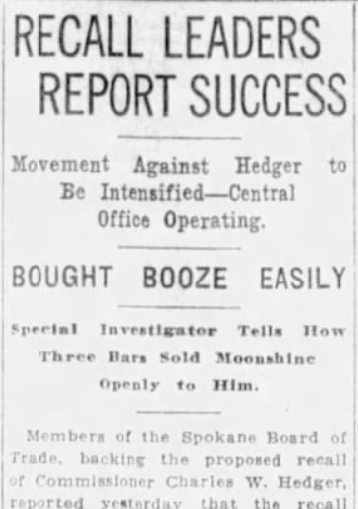
From 1926: How easy was it to buy booze in Prohibition-era Spokane?
Ridiculously easy. You didn’t even need to ask for it.
At least that’s what one reformer reported after staging an experiment in downtown Spokane.
He said he walked into the Oregon Bar on West Main Avenue, ordered two drinks, without specifying the contents. He tasted them and – sure enough – it was “moonshine whisky.”
He did the same thing at the nearby Garni Bar. He slapped $1 on the counter, without saying a word, and received a glass of moonshine.