
Newport School District proposes $46 million bond; a replacement levy is also on the ballot
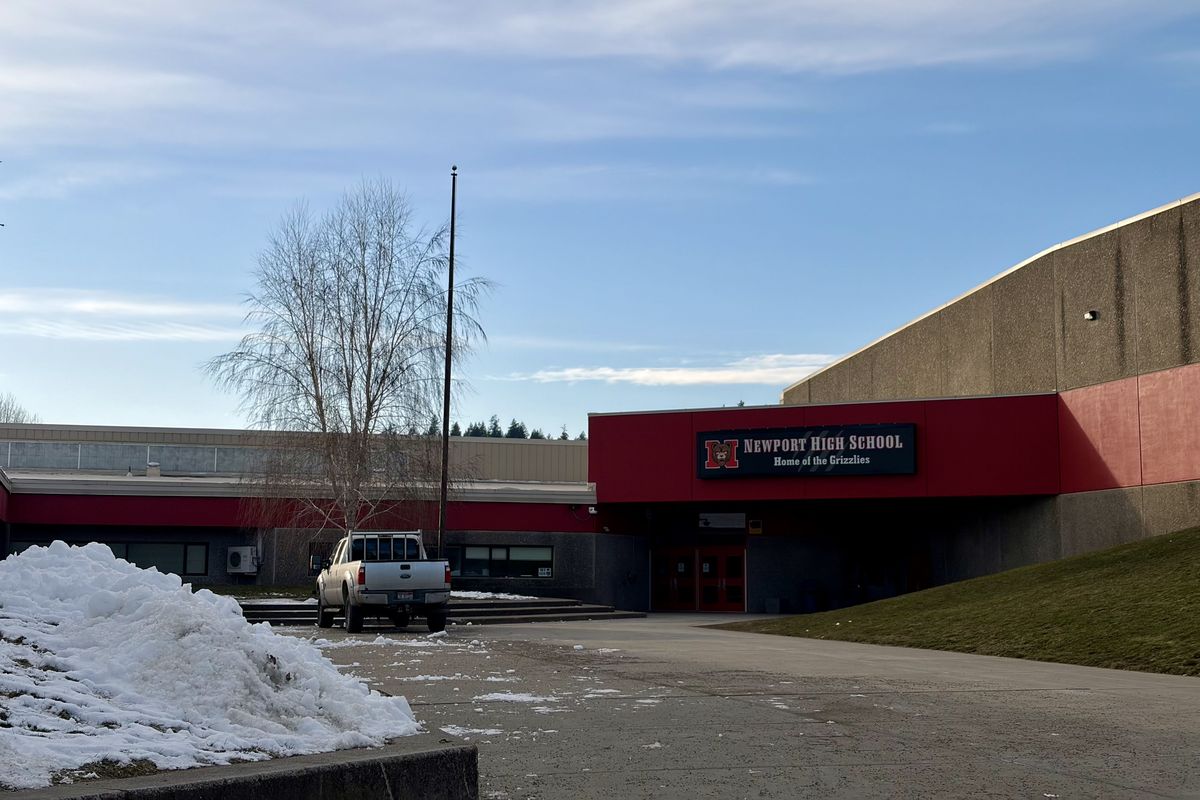
A heating coil broke inside one of Newport High School’s classroom walls this week and flooded the room with an inch of water and sent water into neighboring rooms.
School district officials are hoping voters will approve a $46.3 million bond on the Feb. 10 ballot to upgrade the school’s failing heating, ventilation and air conditioning system along with building an auxiliary gym, replacing the roof and improving science labs along with career and technical education areas.
The bond would tax property owners at a rate of $1.75 per $1,000 in assessed property value for up to 22 years. The district also would qualify for an estimated $17.7 million in state grant assistance. The school district’s last bond was approved in 2004 for Sadie Halstead Middle School.
Along with the bond, district officials are asking voters to approve a replacement levy in February. They said it would help maintain smaller elementary class sizes, athletics, nursing and counseling support, career and technical and alternative programs and classroom technology. It also includes funding for additional substitute teachers for the district – a key need in rural schools that the state does not fully cover, said Newport Superintendent Dave Smith said.
The proposed three-year, $8.8 million levy would cost property owners an estimated $1.45 per $1,000 in assessed property value, about 5 cents less than the current levy rate.
“I don’t know if you’ve heard it in schools, but it’s tough to get substitutes. In rural schools, it’s even more difficult,” he said.
During a community forum hosted Saturday at the Pend Oreille Public Utility District, Scott Armstrong, the district’s maintenance manager, said the school’s heating system is essentially a 45-year-old boiler that pumps hot water through rusting coils throughout the building.
The forum went over the bond and replacement levy to more than 30 constituents who were present.
“They’re all corroding out and failing,” Armstrong said during the forum, just days before the coil failed .
Photos shared with The Spokesman-Review show broken ceiling tiles scattered across a flooded classroom floor.
“We had three rooms that were affected and we are hoping we will have kids in two of the three tomorrow,” Smith said of the incident. “We did have one room available that is used partially during the day and we had teachers share rooms on prep times.”
Additionally, Smith said during the winter, classrooms can get cold, despite the use of their heating system and “pumping up the heat as much as we can.”
Stormie Tucker, a sophomore at the high school, said many students wear a jacket or a hoodie to stay warm throughout the day.
“The school does get fairly cold in the winter but nothing unbearable,” she said. “Some staff buy space heaters to keep their rooms at a more comfortable temperature and that helps a lot.”
Grace Newland, a senior, said it’s a normal occurrence for students to sit around the heater most days and do their homework.
“Granted, we can be dramatic, but it’s still cold enough that it causes an effect and disrupts our learning,” Newland said.
During warmer temperatures, Smith said the school relies on outside air to cool the building, since the school doesn’t have air conditioning. Teachers also put fans in their classrooms to help keep it cool, he said.
Newland said classrooms can get hotter than 75 degrees, causing students to strip down to tank tops to cool off.
She added that in the past, classrooms will open the windows. Several bees will make their way into the classrooms, a concern for her because she is allergic.
“That’s considered a hazard,” Newland said.
She also said graduation ceremonies can get unbearably hot, explaining more than 1,000 people are crammed into the gym.
Smith said he hopes residents will support the bond and replacement levy. He said postponing upgrades and insufficient funding for school resources could cost the district and taxpayers more over time.
“It’s hard because we have a lot of people retired up here,” Smith said.
“We’re trying to do the work now because the more you wait, the less you’re going to be able to do it. I mean, we’re in a rural area. You can only ask your voters for so much,” he said.
In order to pass, the bond needs support from 60% of voters. The levy requires only a majority.