
Spokane faith leaders visit Minneapolis amid ICE unrest, returning with call for local action against the ‘wrong or inhumane or unjust’
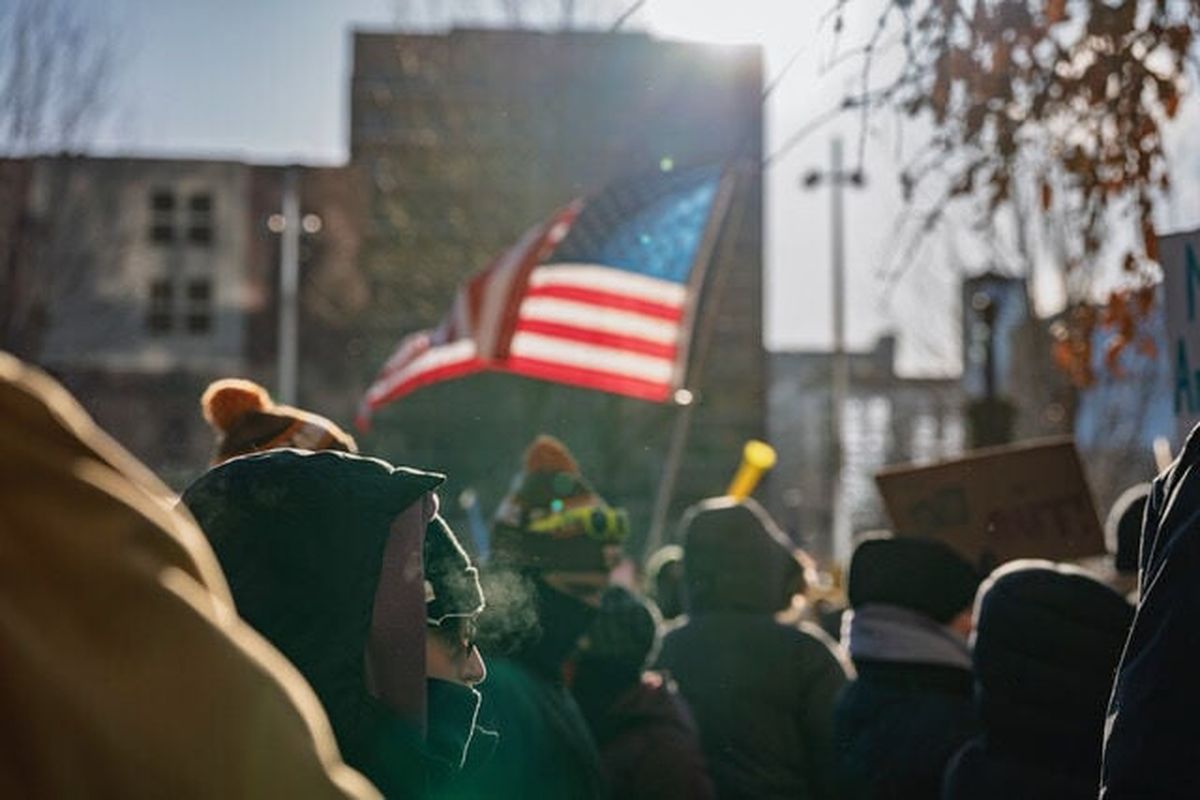
When a Minnesota faith group issued a call for religious leaders across the country to come and support the Minneapolis community, at least 11 of Eastern Washington’s clergy were among the thousand who poured in.
“They asked us to come,” said Rev. Gen Heywood, of Spokane Valley’s Veradale United Church of Christ, “because of what they’re going through.”
The organizing faith group, MARCH – an acronym for Multifaith, Antiracism, Change and Healing , posted a call for action in mid-January, following the killing of 37-year-old U.S. citizen Renee Good by a federal immigration enforcement officer.
While Good’s death played a role in the gathering, it was not the sole driving force, said Meredith McKay, Gonzaga University’s ministry director. MARCH itself harkened back to Martin Luther King Jr.’s 1965 call for clergy support following “Bloody Sunday” in Selma, Alabama, which saw local law enforcement charge on hundreds of unarmed, peaceful protesters seeking equal voting rights for Black people.
“(Good’s death) was only one small piece of what we were really seeing in the overarching narrative of our neighbors being harmed, and they’re hiding,” said McKay, who grew up in the Twin Cities. “And we need to do our best to stand with them and protect them.”
Though she has wanted to go to Minnesota and “be with my people” for a time now, McKay felt that there was not much reason for her to go specifically. When she caught wind of MARCH’s request through others in the local clergy community, she cleared her schedule.
Nine faith leaders, including McKay, flew to Minnesota on Jan. 21. The next day, McKay participated in training by MARCH and went to neighborhoods in Minneapolis most impacted by immigration enforcement to observe and record federal officers’ activity and the community’s response.
“It wasn’t just, ‘Go walk around,’ it was, ‘This is how to do it well and safely and to actually help us instead of just getting in the way,’ ” said Lin Preiss, a hospital chaplain in Spokane.
Preiss was one of the nine in McKay’s group. A mother of two, she said one of her daughters was concerned for her mother’s safety. She said, “But mom, they’re shooting people there.”
“I was just aware of that vulnerability in a way that I know my Black and brown kin generationally have had to carry in their bodies,” Preiss said. She saw the trip as “a way for me to step into that in a way that is rare for a white person – to actually have my body be a little bit vulnerable, but also one that can relieve some of the exhaustion of the people in Minneapolis.
“They don’t need white saviors, and we don’t want to be white saviors,” she added, “but they certainly need allies to put some skin in the game.”
Businesses were open, but with locked doors in Minneapolis neighborhoods, McKay said. Chaplains visited with workers and others in between trainings, and ate out at immigrant-owned restaurants, hoping to help owners make ends meet while in hiding.
Friday was minus 20 degrees, but McKay’s clergy group “geared up and headed to downtown Minneapolis,” where they did a singing sit-in at Target headquarters and joined the 50,000-person march to protest ICE operations in the state.
“There’s a moral clarity or moral authority that goes with the role of a faith leader or a clergy person,” said Pastor of Shadle Park Presbyterian, Jonathan Cornell. “That’s something that we can do, is witness with our eyes, and call out, and say what we see to be wrong or inhumane or unjust.”
Around 100 clergy members were arrested Friday at the Minneapolis-Saint Paul International Airport while protesting deportation flights, all reportedly given misdemeanor citations and released.
As the crew was rolling through the airport Saturday on their way home, they got news that another U.S. citizen, 37-year-old Alex Pretti, had been shot.
“I would say at least for me, it really presented a challenge of, ‘Am I really going to get on this plane right now?’ And I think if the timing had been slightly different, I might not have,” McKay said. “We had talked about the possibility of there being backlash for the really big showing of support and resistance on Friday, and it felt really sudden to see that.”
But bringing what they learned about peaceful protest and supporting immigrant communities back to Spokane was also a priority.
“A lot of this is already happening in our community here, both in the ICE fear and threats,” Preiss said.
The trip left Cornell with a “stark awareness” that Spokane faith communities need to get involved with those existing support organizations.
“I think for many of us that lead congregations of people who generally look like us,” he said, “we can be sort of bridge builders, or a through line, to connect and educate and inform and spark that fire of involvement among our congregations, who have – for the most part – the luxury and the privilege of being able to be somewhat distant if they want to be from this issue.”
Local organizations need to work together, selflessly, to be effective for the region, Heywood said.
“We have a lot of groups doing a lot of things – we need to have more collaboration between the groups,” she said. “We need to have a lot less ego and a lot more, ‘Let’s look at what we do. What are the specialties? Let’s support and come and help those who are doing these different specialties. Let’s not need to get all the credit – let’s show up for each other.’ ”
Minneapolis was “uniquely prepared” for ICE and Border Patrol activity in its neighborhoods, Cornell said, due to its strong pride and connectivity in the community.
“What I am feeling really compelled to do in my own, like, one-block radius is just continue to do the work of building community and knowing my neighbors,” he said. “Knowing their needs, knowing the things that they’re worried about, that they’re struggling with.
“Spokane does have a lot of that community, but I think those are reminders that we can always dig deeper.”