
Gardening: Native plants can help attract lady beetles to your yard
Many of us will remember the little ditty about lady bugs. “Lady bug, lady bug, fly away home, your house is on fire and your children are gone.” I think about whenever I find a lady bug in the garden.
Lady bugs, or properly, lady beetles are a very beneficial insect in the garden. Both the adults and the larvae are very fond of aphids and can eat several dozen a day. They also eat mites, thrips, insect eggs, scale insects and mealybugs.
The Pacific Northwest is home to about 90 different species of lady beetles. The most commonly found are the transverse, convergent, seven-spot, multicolored and mite-eating lady beetles with the convergent beetles, the most common in this area.
Convergent lady beetles (Hippodamia convergens) are approximately one-quarter inch in length and more oval-shaped than round. The spotted shell on their backs covers their wings and is what we usually see the wing covers range in color from orange to red with typically 12 to 13 black spots. The number of spots can vary quite a bit, and some individuals have none. The head shield, or pronotum, at the head of the beetle has two converging white stripes and white edges on a black background.
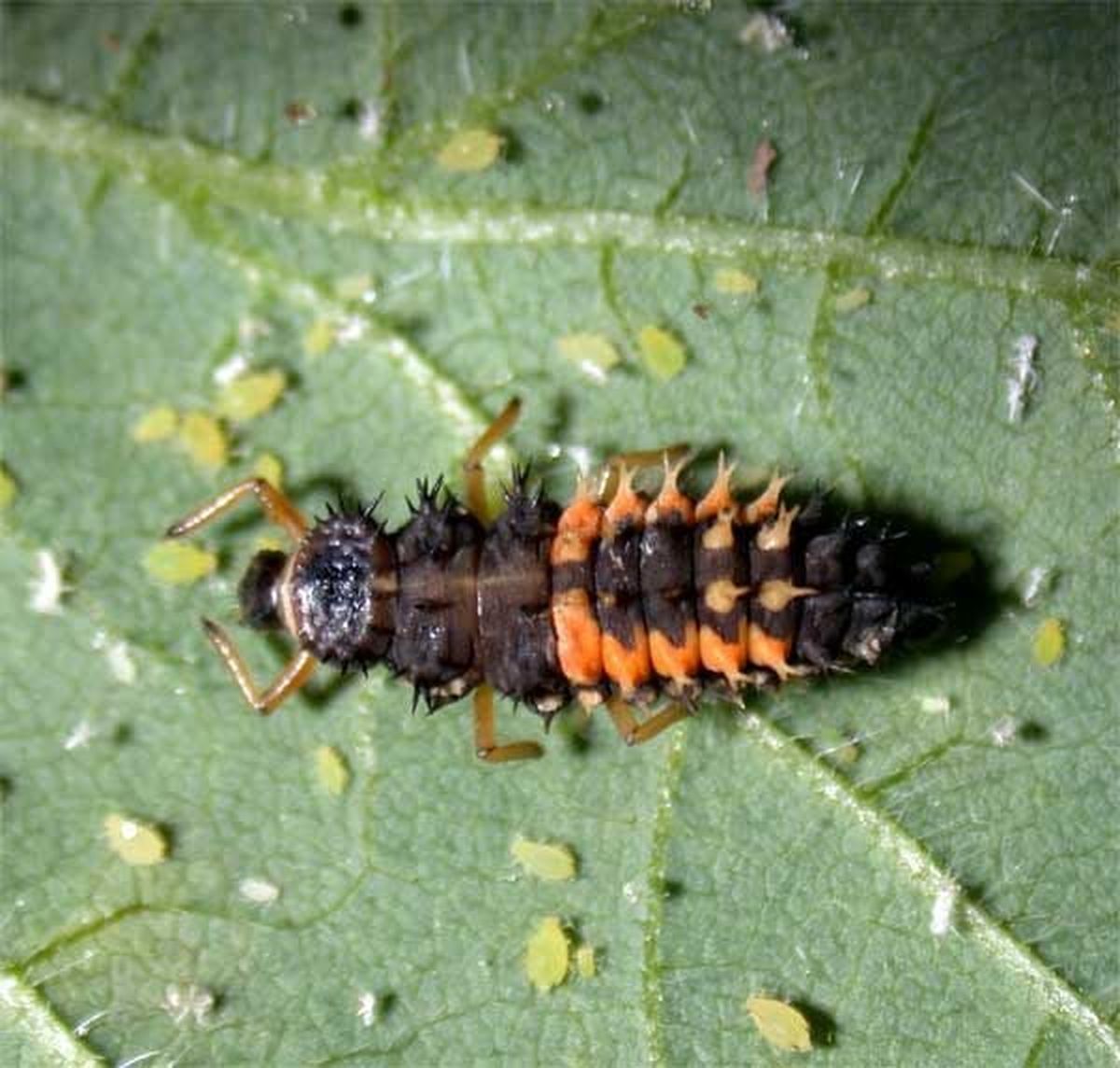
Lady beetle larvae are as voracious as the adults when it comes to eating aphids and other bugs and go by the name of aphid lions. They look somewhat like an alligator and are dark gray-blackish blue with two small, indistinct orange spots near the head and four larger ones on the back. The pupa stage between the larval and adult stage is orange and black and often found on the upper surface of a leaf.
The insects are most active in the spring before the heat of summer drives them to cooler mountains and hills. They overwinter as tight clusters in mountainous areas before flying back to lower elevations in the spring to breed.
Attracting and keeping lady beetles around your garden requires some planning. As native insects, they are drawn to native plantings for food, shelter and breeding. So, incorporating native plants into your garden will go a long way to creating habitat for them. Being able to identify the different development stages will help you preserve them. They also feed on pollen and other insects if aphids are in short supply.
Purchasing live lady beetles seems like an easy way to introduce them to your garden, but it has its drawbacks. Lady beetles are harvested in the wild while they are dormant and kept under cold conditions until they end up at your local nursery. Once in your garden, they come out of dormancy and as is their instinct, fly to other areas.
If you choose to purchase them, there needs to be a strong aphid infestation already in the garden to provide them with food. Keep them in the refrigerator until you are ready to put them out. Wait until late evening then lightly mist the target area and release them.