
Cool Critters: This male bird resembles Bond, James Bond
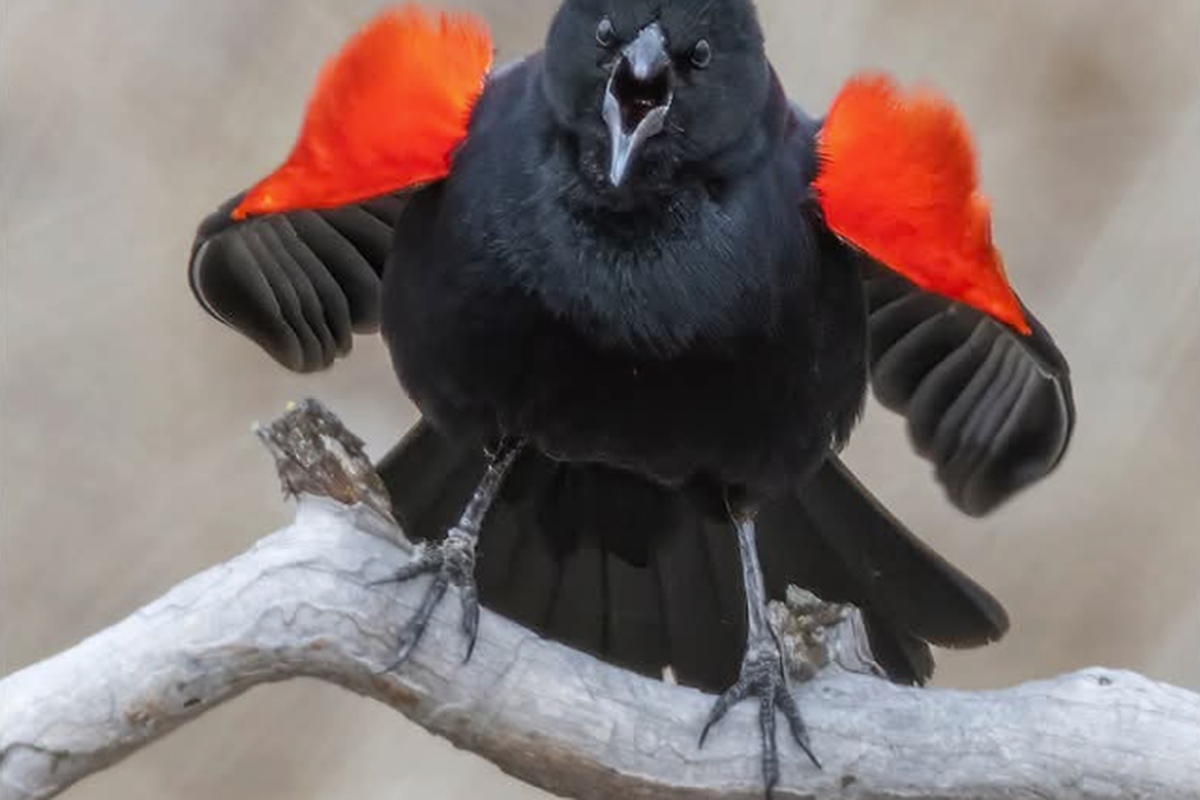
Male red-winged blackbirds demand to be noticed. With their loud, proud calls and studly physical displays, they proclaim, “Look at me!”
If you haven’t noticed them so far this year, you soon will. Among the most abundant and fashionable birds in North America, red-wings are back. Never mind that our region’s tree buds are still furled and the tulips barely awake, this early bird gets more than the worm.
“We’ve already got a lot of them in our area. With all their vocalizing and wing-flashing, it’s hard to miss them,” said Bea Harrison, Spokane Audubon Society board member and a lifelong birder who lives northeast of Cheney.
Why the flurry of activity now? After all, most bird species don’t rev up until well into spring.
“They’re eating food to fuel up for the breeding season,” Harrison said. “At the same time, they’re staking out the best mating territories” that provide easy access to food, water and protection from intruders, she added.
Female red-winged blackbirds show up several weeks later than the males, according to Audubon magazine, looking for a mate with a good lodging pad. Typically, those are found in marshes, fields and meadows and along edges of water – locations with dense stands of tall grasses, cattails and sedges.
Let’s say you’re a female red-winged blackbird that has just arrived in search of a mate. Not only are you not black, but you don’t have a red patch on each of your wings. Instead, you resemble a large sparrow, streaked in brown and creamy white.
There, atop a tall cattail, is a male. He looks so confident and his plumage is so black and lustrous that it brings to mind James Bond dressed in a tailored silk-blend dinner suit. He turns his head and your eyes meet. He unfolds his wings, displaying his namesake red shoulder patches bordered in bright yellow. Called epaulets, they grow larger and more brilliant as the male ages, signifying experience and maturity, according to Audubon.
He sings a loud “conk-la-ree” followed by a long trill. Meanwhile, you assess the digs he picked for breeding grounds: a quiet creek surrounded by reeds and cattails. Insects galore. Plenty of shrubs.
“Conk-la-ree!” he repeats. You seal the deal.
Anchored to shrub branches or plant stalks, you weave a cup-shaped nest using grasses, plant fibers and strips of bark. Whenever another male red-wing enters the territory, your mate is quick to chase it off, epaulets flaring and puffing.
Back to the nest. As you wait for your four eggs to hatch, it’s clear that your mate has multiple love interests. Red-winged blackbirds are not monogamous. Far from it.
“Up to 15 females have been observed nesting in the territory of a single male, making it one of the most highly polygynous of all bird species,” according to “Birds of the World,” the Cornell Lab of Ornithology’s online bird guide.
Being that today is the first day of March, it will be several weeks before the mating frenzy begins. Nonetheless, the males are noisily trilling and showcasing their epaulets. Back at Harrison’s property, their dominance is being played out at the bird feeders. “The males have a pecking order,” she said.
“There’s one in particular. He’s big and shiny. He’ll land on the feeder and flash his epaulets to the other males,” Harrison explained. “It’s as if he’s saying, ‘I’m in charge here. Back off.’ And you know what? The other birds keep their epaulets tucked in.”