
‘Sue is the real deal’: Author details perseverance through outdoors and beyond in ‘North of Ordinary’
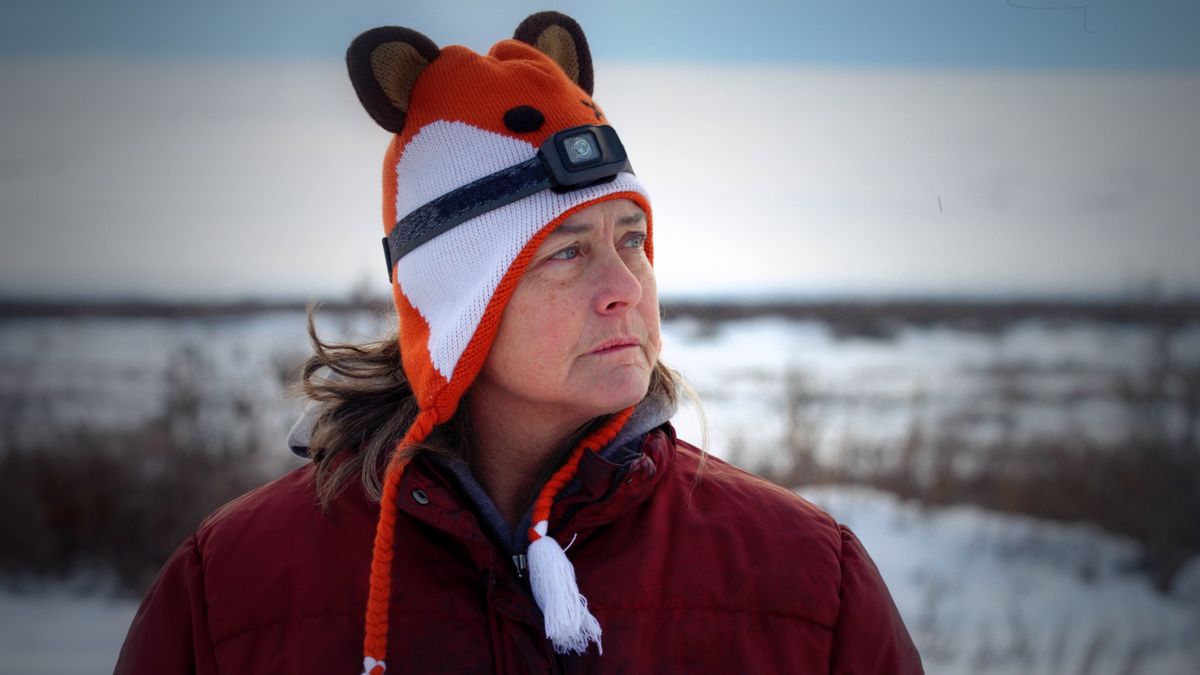
It is impossible to tell whether the stain on Sue Aikens gray hoodie is diesel or coffee. There is what looks like an entire taxidermic bear standing in the middle of her cabin, which is to say, the middle of her bedroom-kitchen-living-room. Oddly, it isn’t out of place.
Not far off, antlers are shoved up against the pillows of her bed, and a number of preserved game heads stare down upon the room like consenting, curious ghosts, entertained by watching Aikens in her natural habitat. Aiken has been watched before.
For 12 years, Sue Aikens’ life was viewed by the nation on the National Geographic show, “Life Below Zero,” in her other home, the Kavik River Camp. The camp is 500 miles from the nearest city in the arctic wilderness of Alaska. Aikens has spent over 20 years there, battling everything from vermin to bears (literally), and weather to wayward diesel engines.
Now Aikens has collaborated with Canadian writer Michael Vlessides to write a book about the stories that answered the question most sane people would ask: Why would a woman want to live alone – in what could be defined as “a sturdy tent” – in the impossibly harsh and often life-threatening terrain of northern Alaska?
The answer is in the memoir’s title, “North of Ordinary.” Aikens definitely does not dabble in ordinary.
At the age of 12, Aikens’ mother, in the midst of what may have been a mental health crisis, left the adolescent on a bare piece of property, nearly 50 miles from Fairbanks. The family had no prior life of homesteading proclivities. Mother and daughter had just driven from Chicago, where the young Sue avoided the flying fists and drunken debauchery of her family by playing outside as much as possible. As the family baby, and of questionable parentage, she existed as an afterthought, but for her mother’s propensity for beration.
“Cruelty was her love language,” said Aikens, without a hint of emotion. “Knocking people down a peg was her currency.”
Aikens herself could be described as an emotional pragmatist, though tears form in her eyes when she speaks. They mostly seem to be for other people. She doesn’t know why her mother abandoned her alone as a child, but guesses she had her reasons. Aikens doesn’t purport to know what it is like to walk in anyone else’s shoes.
“There was a kind of freedom in the abandonment,” said Aikens, of how she no longer had to worry about violence and rants, or wondering what she’d done to deserve either.
She set about to provide for herself with the resource of a young and able mind, from finding shelter in a creekside cabin, to parking near other humans for the first winter, to getting herself registered for school (equal parts desire for education and a need for regular meals). If her story ever seems unbelievable, it is.
When Aikens connected to Vlessides to begin working on the book, even an author who’d written survival manuals for life in the north and spent time in the Canadian arctic was incredulous. Then he went to Alaska.
“Sue is the real deal,” said Vlessides, describing his experiences at Kavik River Camp and the tiny cabin in which Aikens had sheltered as a young girl. “Her initials are right there, carved in the wall.”
Vlessides says this book took him markedly longer than anything else he’s ever worked on. “Kavik is the seventh circle of hell,” he says, referring to the challenges of communication and the lifestyle Aikens lived. Between isolation and frozen equipment, every tool was used to share information. At times, Aikens scribbled notes on paper and then sent a picture, other times they talked on the phone until the connection was interrupted. Once, he even sent her a recording device.
“I would have sent homing pigeons, but Sue would’ve probably eaten them,” Vlessides said.
Over years, the stories of Sue Aikens’ journey to and through Alaska distilled into a singular body of work with purpose; to connect with others authentically through story. Maybe it will help someone else, she hopes.
When asked if she’d ever considered professional therapy as an alternative to living in remote Alaska, Aikens notes that life is a full-contact sport. “It’s only luggage if you choose to pick it up.”
The Aikens we meet in the book is unapologetic about her rough edges, her curse words, and her contradictions.
“I’m 14 personalities, and I’ve only met 10 of them,” she said, laughing.
Aikens answers each pointed question with a weaving of stories that seem to demonstrate an answer, rather than give it. Waxing philosophically in terms true and decipherable to the average citizen, she talks about her own purpose being in helping others, in protecting the plants, animals, and children, who cannot protect themselves. Philanthropy is her personal hobby when she has a break from surviving.
In the midst of a long and winding side-note, Aikens cracks a smile, showing the small gap in her teeth, the practiced wrinkles of her eyes crinkle in solidarity, her eyebrows lift in wonder. In the yard, a bird has just done the cutest thing. Her whole body shrugs in upon itself, trying to contain a childlike joy, and Aikens lets out a long “Awwwww.”
For a moment, one sees a glimpse of the little girl she never got to be. Her memoir is a testament to the triumph of a woman she remains.
“North of Ordinary” will be released on March 10.