
Longtime Spokane resident from Iran fears for family – and troops – amid turmoil
As part of the world spirals into conflict, a Spokane developer clings to a cellphone, hoping for messages from a relative living under the oppression that drove him to flee Iran four decades ago.
Text messages are the only communication method linking Manoochehre “Mike” Gahvarehchee, 63, of Spokane, and his 21-year-old nephew in Iran.
But those contacts are infrequent.
Since the bombs began falling last weekend, Iranian officials shut down the country’s internet, preventing information from flowing either way.
And yet a text came through Monday afternoon.
“My nephew asked for Americans to pray for us,” Gahvarehchee said. “He said they are OK for now. Fear is part of their life for now.”
The situation is fraught, said the Washington State University graduate who came to the United States in 1985 and settled in Spokane in 2004.
“I’ve gone beyond the status of fear,” he said. “I hope and pray for the best outcome for the Iranian people and for the American people.”
The U.S. and Israel launched air strikes Saturday that killed Iran’s supreme leader, Ayatollah Ali Khamenei, and targeted Iran’s military capability to wage war.
More than 800 people have been killed in the conflict across the Middle East since Saturday, according to the New York Times. The war has prompted a global market sell-off that intensified on Tuesday, with stocks and bonds slipping and oil and gas prices surging because of attacks on production facilities and tankers, and Iran’s threats to close the Strait of Hormuz.
The strikes followed messages last month from President Donald Trump, who encouraged protesters to take back their country from the regime that has ruled the country since the 1979 Islamic Revolution when Iranian students stormed the American Embassy and took 52 Americans hostage for 444 days.
Gahvarehchee’s nephew witnessed some of those recent protests from which Khamenei publicly acknowledged several thousand protesters and others died. The late Khamenei last month blamed the unrest on the United States, Israel and what he called “seditionists.”
“We don’t know exactly what went on,” Gahvarehchee said. “Some people claim they know, but I can guarantee you, nobody knows exactly what happened and how many thousands of people died.”
Families who lost loved ones in those protests had to suffer more than just their grief. The bodies of the slain protesters were held by the government.
“People had to go pay a bullet price to take their loved ones,” Gahvarehchee said. “If you wanted to bury your sons or daughters, they had to pay for the bullet that killed” them.
Repeating pressures
Gahvarehchee’s nephew, whom he did not name for security reasons, faces the same quandary that he did more than 40 years ago after the architect of the 1979 revolution, Ayatollah Ruhollah Khomeini, ascended to power.
“I can tell you honestly, the Ayatollahs are very sneaky and clever,” Gahvarehchee said. “Ayatollahs can lie like many politicians here. They can lie to your face and pretend they are telling the truth.”
In his childhood, Iran was governed by the Pahlavi dynasty and Reza Shah Pahlavi, who operated a secular monarchy that was overthrown by the 1979 revolution.
Growing up at a time when Iran had close ties to the U.S., Gahvarehchee became acquainted with a family from Oklahoma who was living in his neighborhood.
“I used to hang around with John” from Oklahoma, he said. “We could see a variety of programs on our TV, which was made by the U.S. We had a lot of tourism. I was very much exposed to American culture and people, like John.”
The American couldn’t speak Farsi, so Gahvarehchee taught him.
“He would teach me English,” Gahvarehchee said. “We would go and buy groceries together and play soccer in the streets.”
All that changed with the clerics’ revolution, which sought to erase all traces of the shah’s government.
Not long after the Ayatollah Khomeini took over, Gahvarehchee’s family got a visit in Iran from a cousin who had fled to the United States.
“He came by our house. We were having dinner. He used the right words,” he said. “ ‘OK, sign me up.’ I asked him, ‘Can you sponsor me to come to the U.S.?’ So he did.”
But Gahvarehchee had two problems: convince his father and find a way to America.
Crossing the border
Still technically a teenager, Gahvarehchee took his case to his father.
“I said, ‘I don’t want to stay here. I’m in a cage. I can’t even breathe,’ ” he said. “Freedom to someone like me, it’s a very important part of my life. Even though he didn’t like it, he came all the way to the border.”
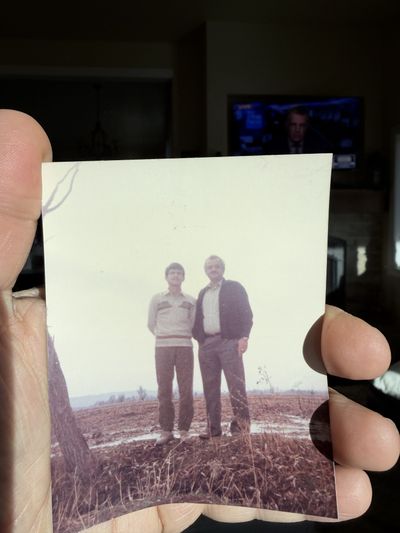
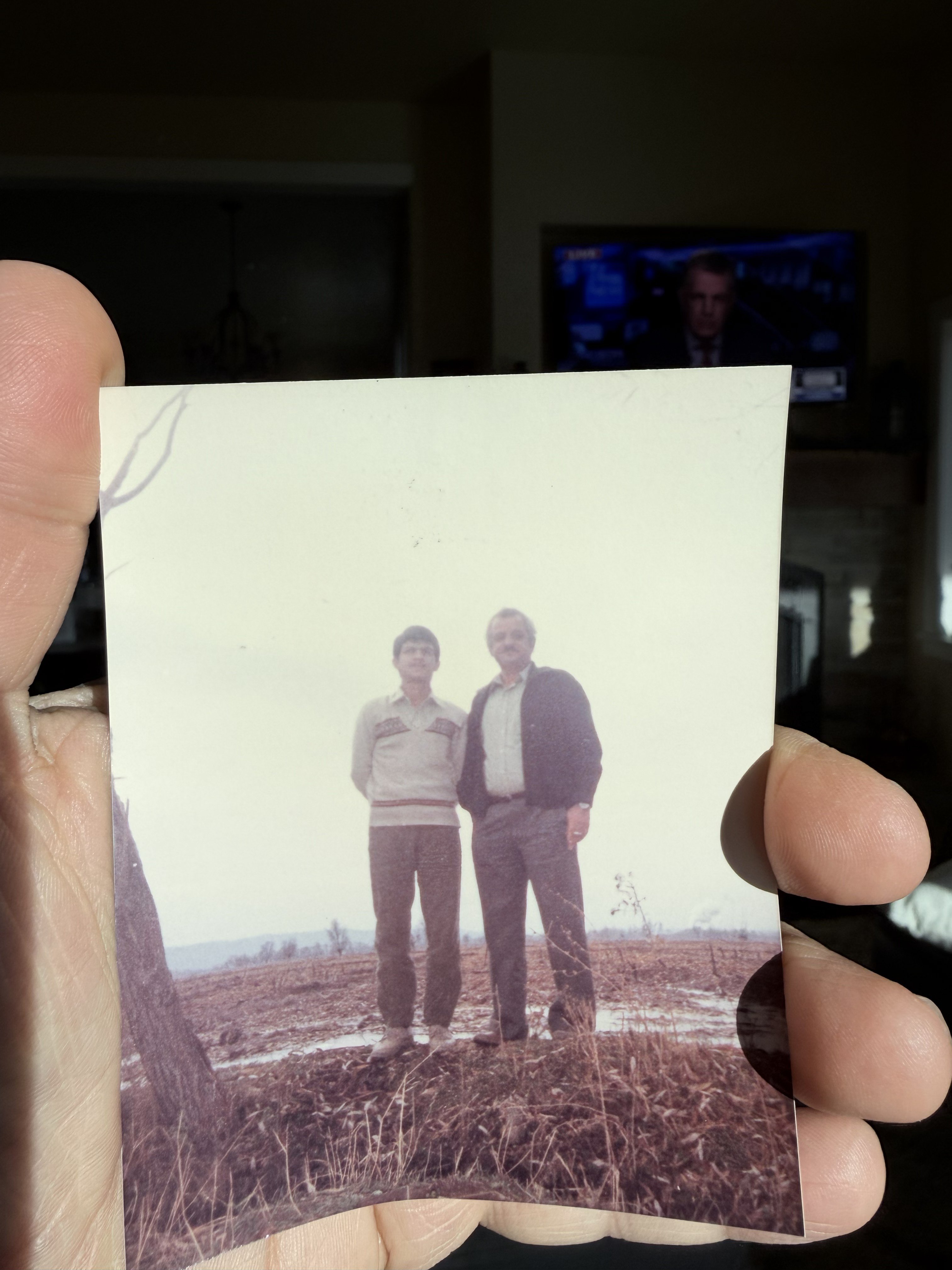
Gahvarehchee still keeps a photo of the moment his father, Mahmoud Gahvarehchee, left him at the border town of Khoy, Iran, in November 1983.
“I said goodbye and left through the mountains. It took me three days of walking and riding a mule and a horse” before arriving in the Turkish town of Van, he said. “It took me a week for me to call them and say, ‘I’m safe and I’m on this side.’ ”
While he had a goal, Gahvarehchee was still two years away from reaching the U.S.
“ I told myself, ‘From here on, I am only looking to the future,’ ” he said. “It was not easy to leave my loved ones, my family, my mom. But I did what I did. I don’t regret it. I do want to see what I can do to make America a better nation.”
New home
After his snowy trek through the mountains, Gahvarehchee spent two years in Turkey and Italy as a refugee while he worked with United Nations and Catholic institutions to secure his asylum status in the U.S.
He arrived in New York in 1985 and then traveled to live with his cousin in San Jose. He was the cousin who visited him in Iran.
Gahvarehchee worked and attended school, where he obtained his Associate of Arts degree before traveling to the Palouse and finishing his bachelor’s degree at WSU.
“I went back to California and started my business in the semiconductor industry,” Gahvarehchee said. “It was a pretty interesting field to be in at the time.”
It was there he met his wife, who currently works as a surgical oncologist at Cancer Care Northwest. Like Gahvarehchee, she left Iran when she was 8, some 50 years ago.
“We moved to Spokane in 2004. My son was a year old. He’s now 23,” he said.
Now a real estate developer, Gahvarehchee and his family live on the South Hill just outside Spokane city limits.
“What I experienced in international business and selling our products across the nation, I kind of see how all this stuff unfolded, as far as economically, politically and socially,” Gahvarehchee said. “It’s been a very interesting 40 years for me.
“I achieved my American dream. I’ve been very fortunate. I’m very blessed to be where I am.”
At the same time, he laments how his home country has struggled under the rule of the ayatollahs.
“I could not have tolerated it,” he said. “I probably would have been hanged or jailed. That’s why I decided to leave.”
Beyond the conflict
While his wife has not, Gahvarehchee has traveled back to Iran a few times over the years.
“The last time I went was almost 15 years ago. My dad passed away. I had to take care of the ceremonial thing,” he said.
But through his business, he also got to see much of Asia and Europe.
“The world has changed. So has Iran. But the ayatollahs could have governed the country way differently than they have,” Gahvarehchee said.
Like many current U.S. officials, he’s not sure how a new Iran should look.
“I don’t see how the freedom and values that we have here as Americans would necessarily fit a nation like Iran,” Gahvarehchee said. “But we could have some basic democracy and freedoms for average Iranians so they can enjoy life.”
He blames a government that forced its ideology on a people.
“The ayatollahs are the ones who caused this suffering and pressure from the inside and outside,” Gahvarehchee said. “The Iranian people are stuck between foreign forces and domestic forces. Suicide is huge because there is no hope.”
Shooting war
Gahvarehchee said it’s telling that his 21-year-old nephew supports the military intervention to topple the Iran government.
“I love America. This is my home, even though all this stuff is going on with immigration and (Immigration and Customs Enforcement). I do care for the wellbeing of our soldiers and our military,” Gahvarehchee said.
The Lilac City transplant has two brothers-in-law who are veterans and served in branches of the U.S. military.
“I really don’t want to see any of our young American soldiers losing their lives for the Iranian cause,” he said. “How does this war help the average American? That is my concern.”
In the meantime, Gahvarehchee said he has received messages from both sides of his life.
And, he stays glued to his phone for messages from a nephew who is living in conditions that once prompted Gahvarehchee to travel across the world to find a new life.
“I am in favor of regime change. But how do we get it done?” he said.
“It is very emotional for someone like myself. I don’t know if I should be happy or sad. But I would like to hold myself strong. I pray for a good outcome for this situation.”