
New and former KSPS PBS managers reflect on past, present and future of public media
Born in 1957 Philadelphia, Gary Stokes grew up in a world where “public media” meant “Sesame Street” and “Mister Rogers’ Neighborhood.”
He remembers watching television every day, and by the time he was old enough, he was assigned to channel -changing duty by his father.
“I was the little remote,” he said. “And it still makes me laugh, because he would sit down on his chair and he’d have me next to the TV, it’s like, ‘No, what’s on Channel 6? No, no, no – how about Channel 10? Yeah, let’s wait a few minutes and see how it goes.’ ”
It was the beginning of a lifelong love of television for Stokes, who would become the general manager for Spokane’s KSPS PBS broadcasting station in 2013 after two years as the fundraising director. But before that, he worked “twosies and threesies” in television stations across the country.
“After years and years of two years here, three years there, one and a half years here – you finally find a place that’s home,” he said. “And that’s what this place has been for me over a really long but interesting ride.”
Stokes oversaw the organization through the growth of streaming and livestreaming, a strategic planning process and the coronavirus pandemic, the KSPS website says. He led the creation of Career Explore NW and Civics Bowl, and served on the national PBS board before his retirement in August 2025.
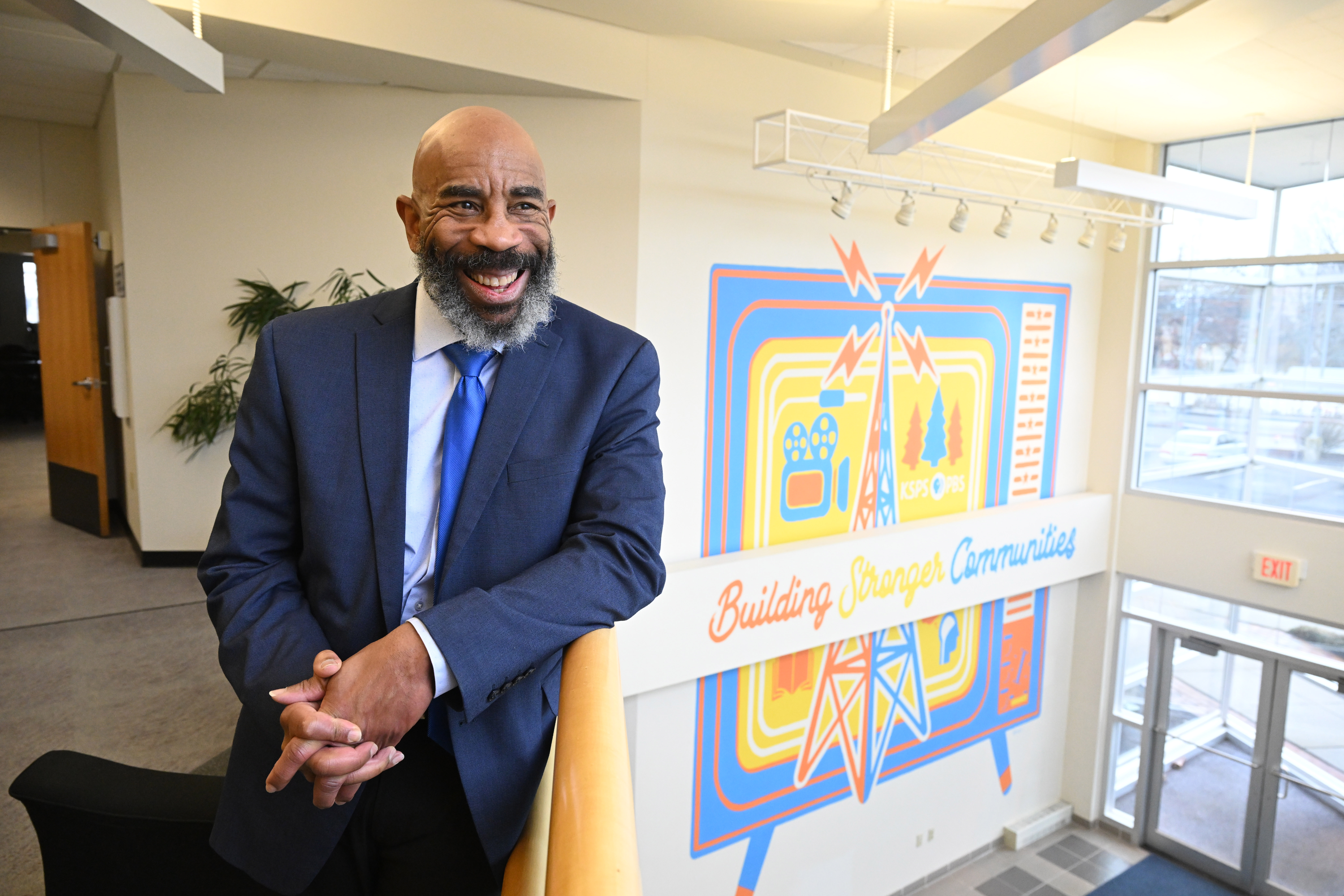
In addition to being a “transformative leader,” Stokes “also is 100% responsible for the fact that KSPS PBS punches way above its weight on the national scale of public media stations,” his successor, Skyler Reep, said.
Assigned interim manager at the time of Stokes’ retirement, Reep officially took the manager’s title on Feb. 19 following a national search. The keys Stokes handed down to Reep were far different from the ones he picked up in 2013.
“I haven’t seen anything like this in my time,” Stokes said. “And a lot of it’s because people are – they don’t understand what our value is.”
Effective Jan. 1, Congress rescinded $1.1 billion in funding for the Corporation for Public Broadcasting following an executive order signed by President Donald Trump. The White House posted that the Public Broadcasting Service and National Public Radio fuel “partisanship and left-wing propaganda with taxpayer dollars.”
The loss resulted in the dissolution of the corporation and no more pass -down funds for local broadcasting stations – an amount of money that often just covered membership costs to the larger PBS and NPR organizations, Reep said. For KSPS PBS, this meant $1.2 million less of its annual revenue - about 18%.
“This is really, really important stuff,” Stokes said of PBS content, which is largely free to view and variable in content. For example, “you can sit down for an hour and watch a documentary and go, ‘I never knew that.’ ” Public broadcasting equipment is also used in most emergency alert systems across the country.
“Gary and I have shared a laugh about how funny that it is for him to part literally 28 days after losing federal funding,” Reep said, referencing the summer 2025 decision by Congress. “And he’s like, ‘Sorry,’ but the way I see it, I’ve got an incredible opportunity here. There has not been – since the ’60s – there’s not been a moment this transformative during which to make it or break it basically.”
Reep was born in Idaho Falls and attended Whitworth University in 2001, attaining a degree in international business and Spanish. He worked in hospitality and marketing before joining KSPS PBS in 2017. Before his promotion, he acted as the fundraising director for the station. Sesame Street taught him to count and speak his first words of Spanish as a child. He heard public radio broadcast for the first time while working as a ski bum in Jackson Hole, Wyoming.
“I was like, ‘What is this?’ ” he said. “It’s so cool to just have, like, this blend of arts and music … news …. and science.”
KSPS took a chance hiring him, Reep said, since his background focused largely on private -sector marketing.
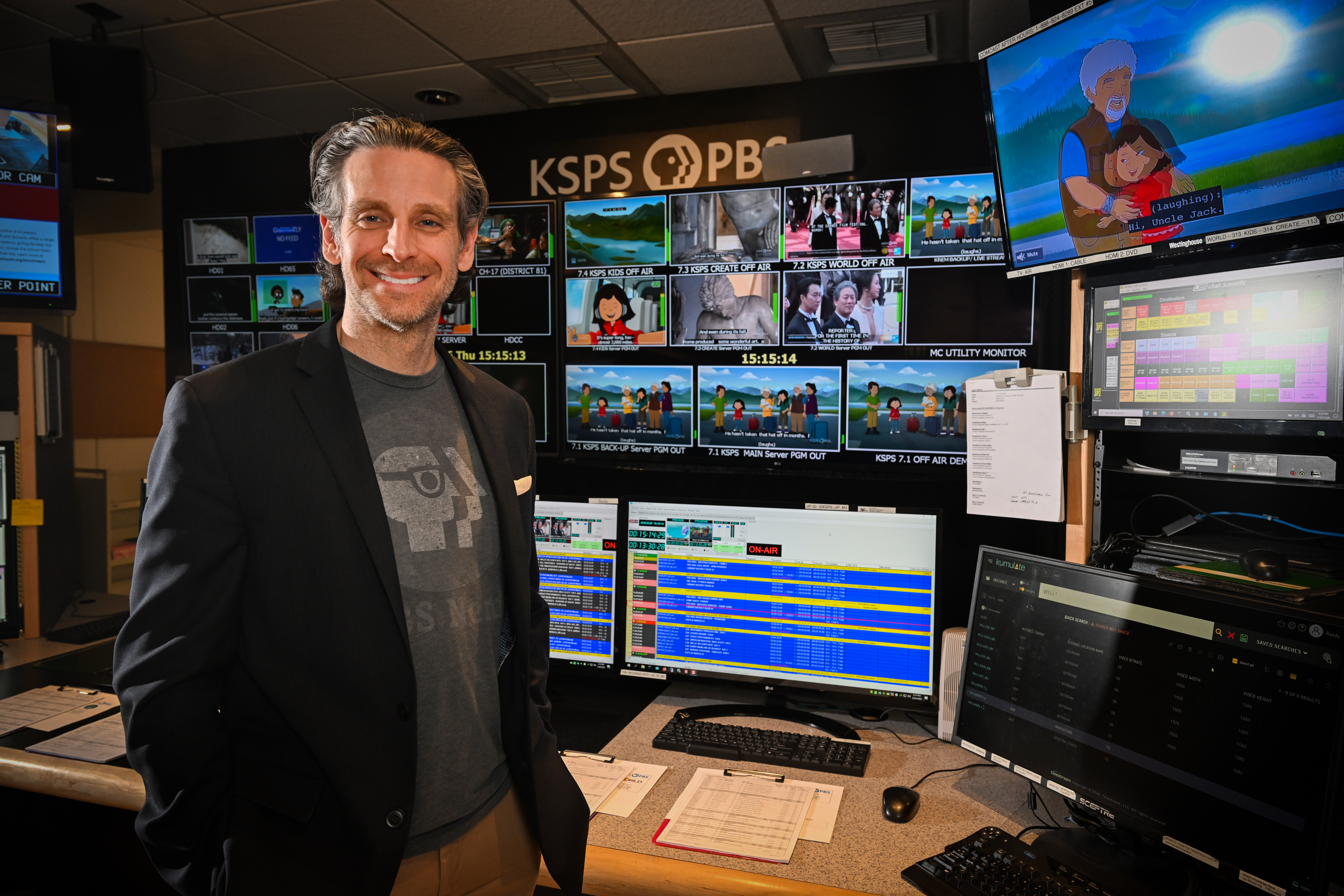
“They liked my values alignment with the organization and my passion for public media,” he said of his initial hire. “I was an NPR listener and a PBS nerd for sure, and they figured they could teach me the rest of it.”
Though he thought he would be bringing private -sector expertise, “what really ended up happening was I just learned a ton about fundraising.”
After becoming more established in the field, he realized his grandfather had also worked in fundraising for his alma mater.
“It never was deliberate that I would end up in the same field, but once I did,” Reep said, “ he felt pretty proud of having raised somebody who ended up in fundraising.”
Kristine Meyer, board chair for the Friends of KSPS nonprofit, said Reep “was able to show us that he had a deep understanding of our community and our culture” during his interim period.
“Gary set a standard for us and a strong foundation that the board, foundation and staff, as a team, enjoy,” she said. “The foundation we have with Skyler is one we know we are well-positioned to move ahead and succeed.”
The first of Reep’s tasks as interim manager was “the hardest stuff”: laying off six station staffers, cutting compensation for six others, and ending select youth outreach programs to address loss of federal funds.
“And so now we’ve been operating with a leaner budget, but kind of rethinking who we are and how we can achieve our mission most effectively with less money,” he said.
Specifically, Reep and Meyer said that maintaining program quality is of utmost importance. Donors are filling the gap for now, but Reep, along with managers from other public broadcasting stations across the state, have attempted to secure legislative funding for their organizations. Washington is one of a few states in the country without built -in state support already. Reep said funding likely won’t come through in this legislative session, but they “got good feedback that the grassroots support was there” for next year.
Like Stokes, Reep circles back to communicating the value of public media to consumers as the ultimate solution.
“PBS is consumed by a population-representative audience. It is not right or left. It’s not poor or rich. It’s just Americans,” he said. “The reason I kind of maintain my optimism is that the case for public media is so strong. And we can make that case to our individual donors, to major donors, to corporate underwriters – and yes, to state and federal agencies as well.”
Stokes, 68, plans to move back to Pennsylvania to be with family .
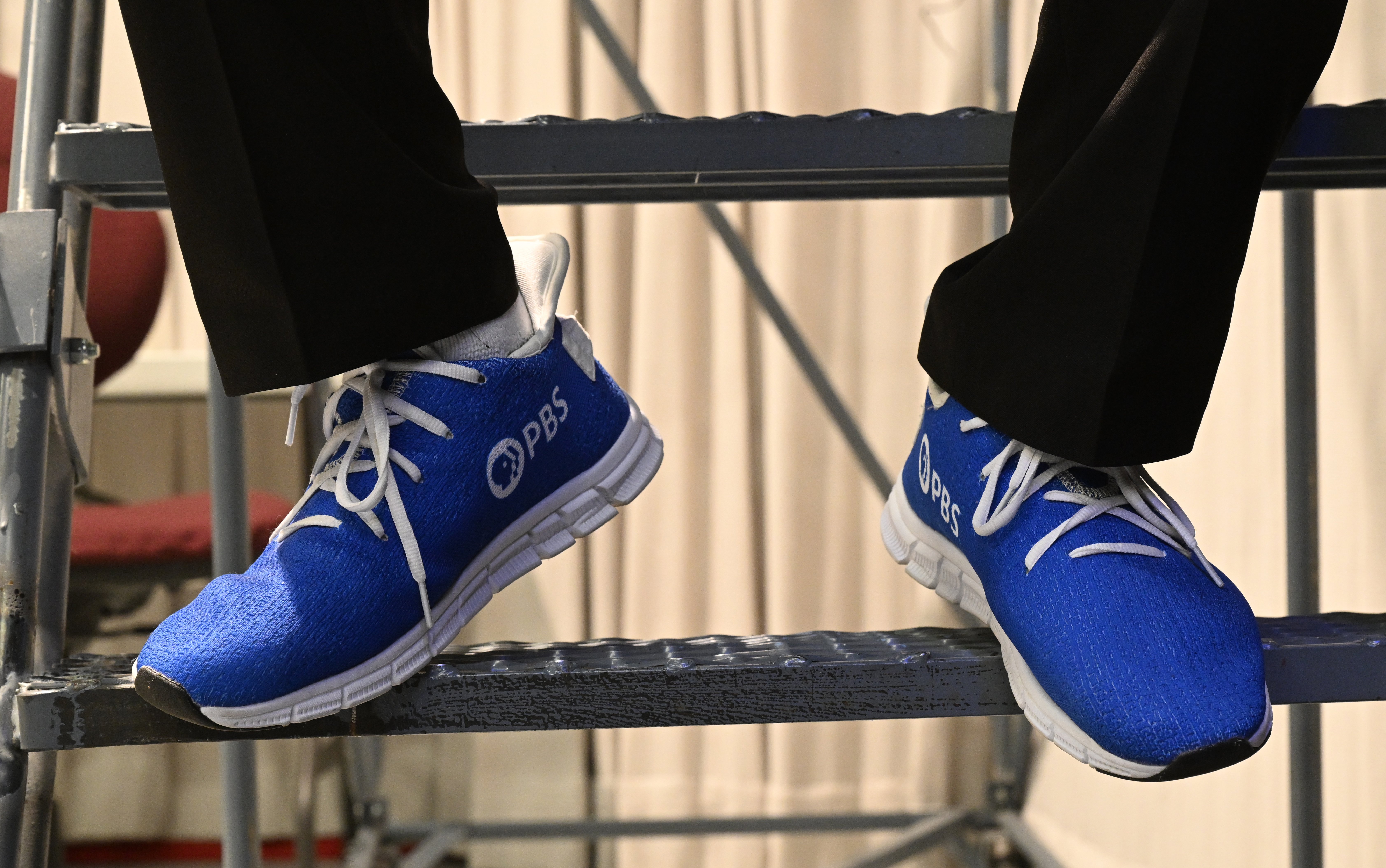
“If I still had the ability, 20 years back, I would be right in the trenches with everybody else and doing as much as I can with as many things as I possibly can,” Stokes said. “The upshot to all of this is we’ve got to figure out what we can do nationally and globally to let people know this is more than just Sesame Street.”
PBS and NPR stations have been collaborating to learn how to support one another to “make sure that the system stays robust” without combining smaller, local stations into bigger ones.
“Moving that direction kind of erodes one of the chief benefits of public media, which is that local voice,” he said. “So, we really want to try to keep as many of these stations open and operating as we possibly can.”
Instead, Reep hopes to change the messaging surrounding PBS. It isn’t comparable to a commercial streaming service like Netflix or Paramount, he said.
“In a perfect world, I want people to think of PBS and NPR, their local public media stations as their local convener of incredible content,” he said. “We’re imagining a future where people visit their public broadcasting stations as a way to connect with their neighbors. And I’m talking about like touching the loneliness epidemic, and the lack of third spaces to bring people around the hearth of public discourse.
“It’s just that we need to communicate better to people that it’s not just something that you used to watch when you were a kid, and it’s not just something that old people watch when they’re retired and bored. It’s a real community asset that’s happening right now for people of all ages, and you can be a part of what that looks like.”