
Ruby Ridge standoff negotiator Bo Gritz dies in Nevada
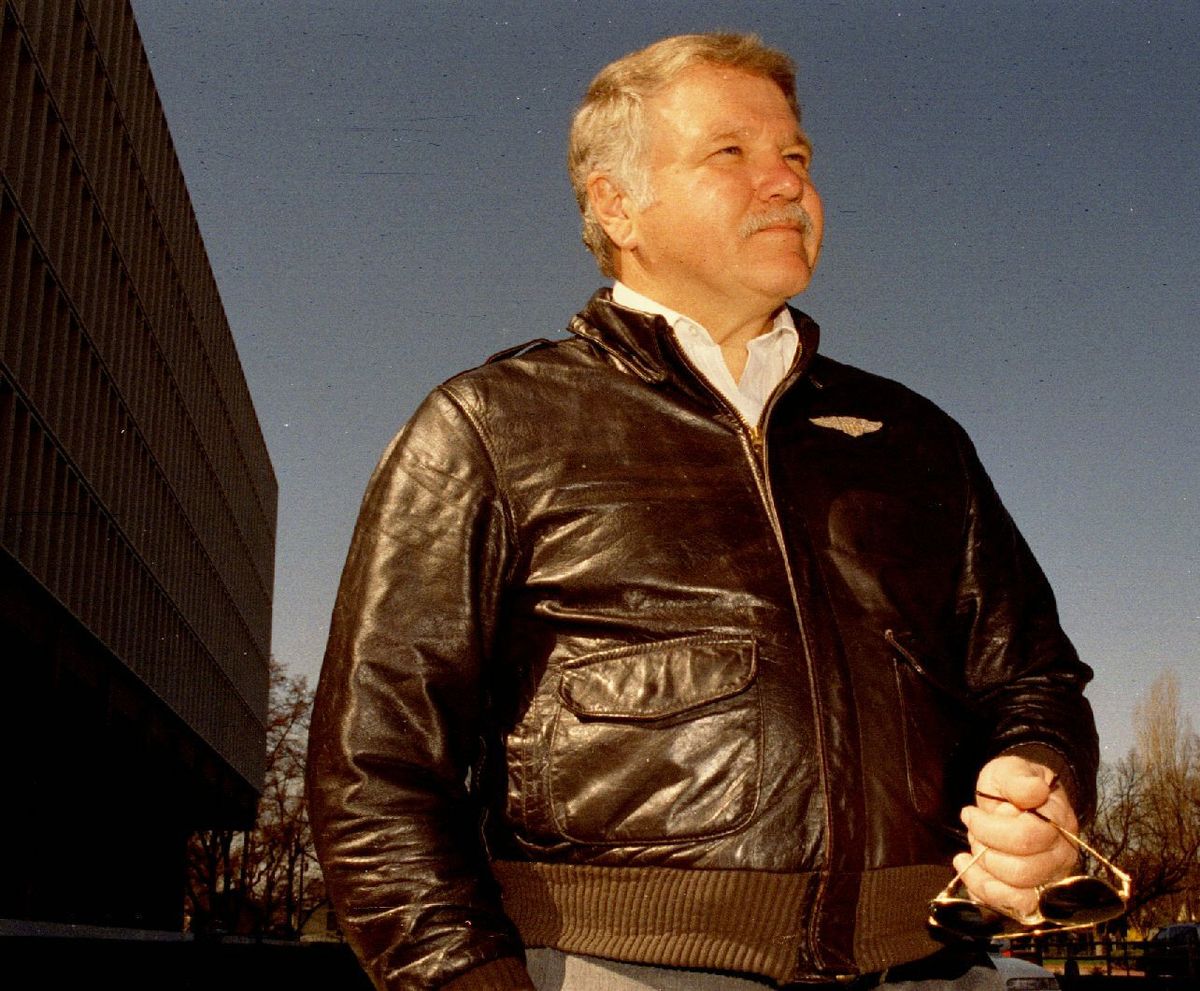
James “Bo” Gritz, a decorated Special Forces officer who helped negotiate an end to the deadly Ruby Ridge standoff 34 years ago in North Idaho, will be laid to rest on Friday. He was 87.
Gritz, who also founded a short-lived effort to create a constitutionalist covenant community north of Kamiah called “Almost Heaven,” died on Feb. 27, according to a social media post from his wife, Judy Kirsch Gritz. They lived in Sandy Valley, Nevada, a few miles southwest of Las Vegas.
Gritz posted that her husband’s service would be 11:30 a.m. Friday at the Sandy Valley Cemetery, with a salute by the Nevada Army Honor Guard.
Efforts to reach Judy Gritz were not immediately successful this week.
Spokane author Jess Walter interviewed Gritz, whose name rhymes with “rights,” in 1992 as part of The Spokesman-Review’s coverage of Ruby Ridge outside of Naples, Idaho, that captivated a nation.
“He walked around like he was in his own movie all the time,” Walter said of Gritz. “He didn’t really talk as much as make pronouncements. He bought into his own mythology.”
And Gritz’s mythology went deep.
He led an attempt in Southeast Asia to locate American prisoners of war that was financed by actors Clint Eastwood and William Shatner, became a semisuccessful negotiator for fringe groups and ran a failed campaign in 1992 for U.S. president with promises to end trade deals, crack down on illegal immigration and cut foreign aid.
“He was a strange, larger-than-life, blustery guy,” said Walter, who in 1995 published the book “Every Knee Shall Bow” that was later re-released as “Ruby Ridge,” documenting the events for which Gritz intervened.
James Gordon Gritz was born on Jan. 18, 1939, in Enid, Oklahoma, according to an obituary in the New York Times.
Both of Gritz’s parents were pilots in World War II. His father, Roy, flew B-17 bombers, and his mother, Leona, flew aircraft as part of the Women Airforce Service Pilots.
Neither of them came back to Bo. Roy Gritz was killed in action, and Leona remarried and stayed in Europe.
As a child, Gritz spent hours playing soldier on the family farm as he was raised by his maternal grandparents.
At age 14, Gritz used some of the proceeds from his father’s life insurance settlement to enroll at Fork Union Military Academy in Virginia.
Soon after graduating, Gritz saw a flier for the Green Berets, a branch of the U.S. Army assigned to unconventional warfare. He joined and later qualified as a pilot, parachutist and underwater demolitions expert.
The birth of a soldier
The young man from Oklahoma, who grew up hearing stories of heroic soldiers and pilots, went to fight in Vietnam in 1964.
In one of his best-documented missions, Gritz and his men were sent in 1966 to recover the black box from a top-secret U-2 surveillance plane that had crashed in Laos.
Gritz later said that when his team located the wreckage, the black box was missing. Believing it had been found by Viet Cong forces and taken to a nearby camp, the team attacked it, killing dozens and liberating the black box.
The U.S. commander in South Vietnam, Gen. William Westmoreland, recounted the Gritz mission at length in his 1976 memoir “A Soldier Reports.” But questions remained about the details. One of the American officers, who had accompanied the Laos mission, said no fire fight took place and that the black box had been found at the crash site.
Regardless of the conflicting reports, Gritz is known to have served four tours in Vietnam as a Green Beret.
During most of that time, he led a contingent of mostly Cambodian guerrillas deep behind enemy lines. Through his actions, Gritz received more than 60 medals and commendations for his service.
However, former comrades and journalists later raised questions about his record. In some cases, they said, Gritz’s awards had come from his own recommendations.
The decorated soldier came home from the war in 1969 and later obtained a degree in law and corrections from the University of Nebraska at Omaha. He also earned a master’s in military science and a master’s in communications, both from American University in Washington, D.C.
After leaving the Army in 1978, Gritz worked for several years as a consultant for Hughes Aircraft.
But the pull of Southeast Asia never left, along with the belief that the U.S. had left dozens of soldiers behind.
Rambo before Rambo
Acting on those beliefs, Gritz sought out Special Forces veterans in 1981 to join him on a private rescue mission.
They trained at a cheerleading camp in central Florida under the guidance of a psychic, according to the New York Times. The plan fell apart.
But in 1982, with funding from Eastwood and Shatner, Gritz led a group of American civilians to Thailand where they, along with a team of Lao guerillas, crossed the border into Laos.
A few days into the operation, forces with the Laotian government attacked and killed two of the guerrillas and captured one of the Americans.
Gritz fled but later returned to Thailand and paid a ransom to free the American. Gritz also turned himself in to Thai authorities, who charged him with a series of crimes. While he was later convicted, the authorities let Gritz leave on the promise that he would not return.
Arriving home as heroes, Gritz claimed he found evidence that some American servicemen had never returned. He produced photographs of what he said were prisoner-of-war remains.
Gritz was invited to testify before the U.S. Congress. During that testimony, it was revealed that Gritz’s photos of remains actually depicted those of an Asian man and a chicken.
Under questioning, Gritz conceded that his “evidence” showed nothing. But he remained unmoved in his beliefs.
“I have the same evidence that might be presented to a convention of clergymen that God exists,” he told Congress in 1983.
As a result, politicians and news media turned on him, and government officials blocked Gritz from meeting President Ronald Reagan.
“There’s no question about his skills as a soldier,” one former Green Beret, William P. Yarborough, told the Washington Post in 1983. “But his former incarnation as a Green Beret has gotten him a little out of phase with reality.”
Second act
After his national rebuke, Gritz gravitated toward anti-government fringe groups.
In the mid-1980s, Gritz developed a second career training clients in how to survive in the wilderness or be prepared if society collapsed.
Then in 1988, on the platform of abolishing trade deals, halting immigration and cutting foreign aid, Gritz ran as the vice presidential candidate for the Populist Party.
However, Gritz backed out of the election after the party nominated David Duke, a former grand wizard for the Ku Klux Klan, as its presidential nominee.
But Gritz rejoined the Populist Party in 1992 for a run for president under the banner of “God, Guns and Gritz,” receiving more than 106,000 votes, or about 0.1% of the national tally.
But it was the actions that Gritz took a few months before that November 1992 election that most people remember.
He arrived outside the barrier on a dirt road near Naples, Idaho, where federal authorities built a perimeter to keep out protesters and media a few miles from the cabin where Randy Weaver, his family and friend Kevin Harris holed up during an 11-day siege.
It started after Weaver refused to surrender to federal authorities to answer for an illegal weapons charge.
Then on Aug. 21, 1992, six U.S. marshals were surveilling Weaver’s cabin when they encountered 14-year-old Sammy Weaver and Harris. The encounter led to a shootout that left Sammy and U.S. Marshal William Degan dead.
The next day, an FBI sniper shot and killed Vicki Weaver and injured Harris. Amidst that chaos, Gritz arrived outside the barrier.
“His trips to Vietnam were his first act,” Walter said. “Ruby Ridge was his second act as a right-wing Pied Piper.”
Gritz’s brash style somehow cut through the stalemate.
“They were having no progress at all,” Walter said of federal negotiators. Gritz “walked past the place he was supposed to go” with a bullhorn and began talking with Weaver.
Gritz convinced Weaver to allow him to remove his wife’s body and later was credited with helping convince Weaver and the injured Harris to leave the cabin.
“He did all kinds of stuff the FBI didn’t love,” Walter said of Gritz. “But they were stuck. You do have to give him credit that there weren’t more deaths up there.”
During the standoff, the FBI tightly controlled information.
“Then all of the sudden, Bo Gritz would show up and give these impromptu press conferences,” Walter said. “He kind of played both sides. His beliefs spoke to the family, but he was also able to talk to law enforcement in a way that they respected.
“I can’t imagine anyone else who could have done a better job negotiating the end of Ruby Ridge.”
Four years later, Gritz again inserted himself into a standoff.
This time it was in Jordan, Montana. But he gave up in frustration after five days of trying to negotiate the surrender of the Montana Freemen who held out for 81 days.
Later that same year, in 1996, Gritz announced in a letter that he was moving to a project he titled “Almost Heaven.” It was a property near Kamiah, Idaho, which is a small community on the Clearwater River southeast of Lewiston.
In the letter, Gritz said he would not allow extremist militia organizations to stay at Almost Heaven.
“We do have a fringe element on the outskirts of Almost Heaven,” he wrote in part. “I guarantee you that at the first real suspicion, or evidence that this is true, I will personally call the ATF-FBI-sheriff.”
But his effort to create an enclave for those holding anti-government views never became much more than RVs parked in a field.
After leaving Idaho for Nevada in 2000, Gritz largely fell out of the public view.
His last news-making event occurred in 2005 when Gritz and four others traveled to Pinellas Park, Florida, and tried to conduct a citizen’s arrest of Michael Schiavo, who at the time was seeking court approval to remove the feeding tube from his wife, Terri Schiavo, who had for years lived in a vegetative state.
Gritz and his cohorts, who brought bread and water that Terri Schiavo could not physically have eaten, were initially charged with trespassing, but those misdemeanors were later dismissed.
As for his politics, Walter said Gritz’s push against immigration, trade deals and foreign aid may just have been ahead of his time.
“I think he was a fringe candidate when he ran for president (in 1992). In all ways, our politics have moved to the fringe,” Walter said. “I think he would fit much better now than he did 30 years ago.”
The New York Times contributed to this article.