
Cool Critters: Lords of the dance have landed in Eastern Washington
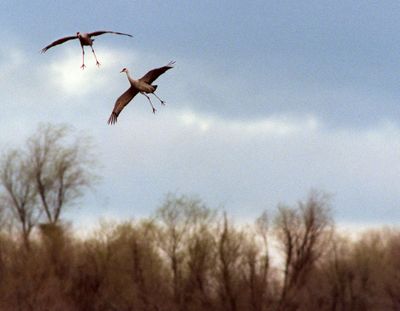
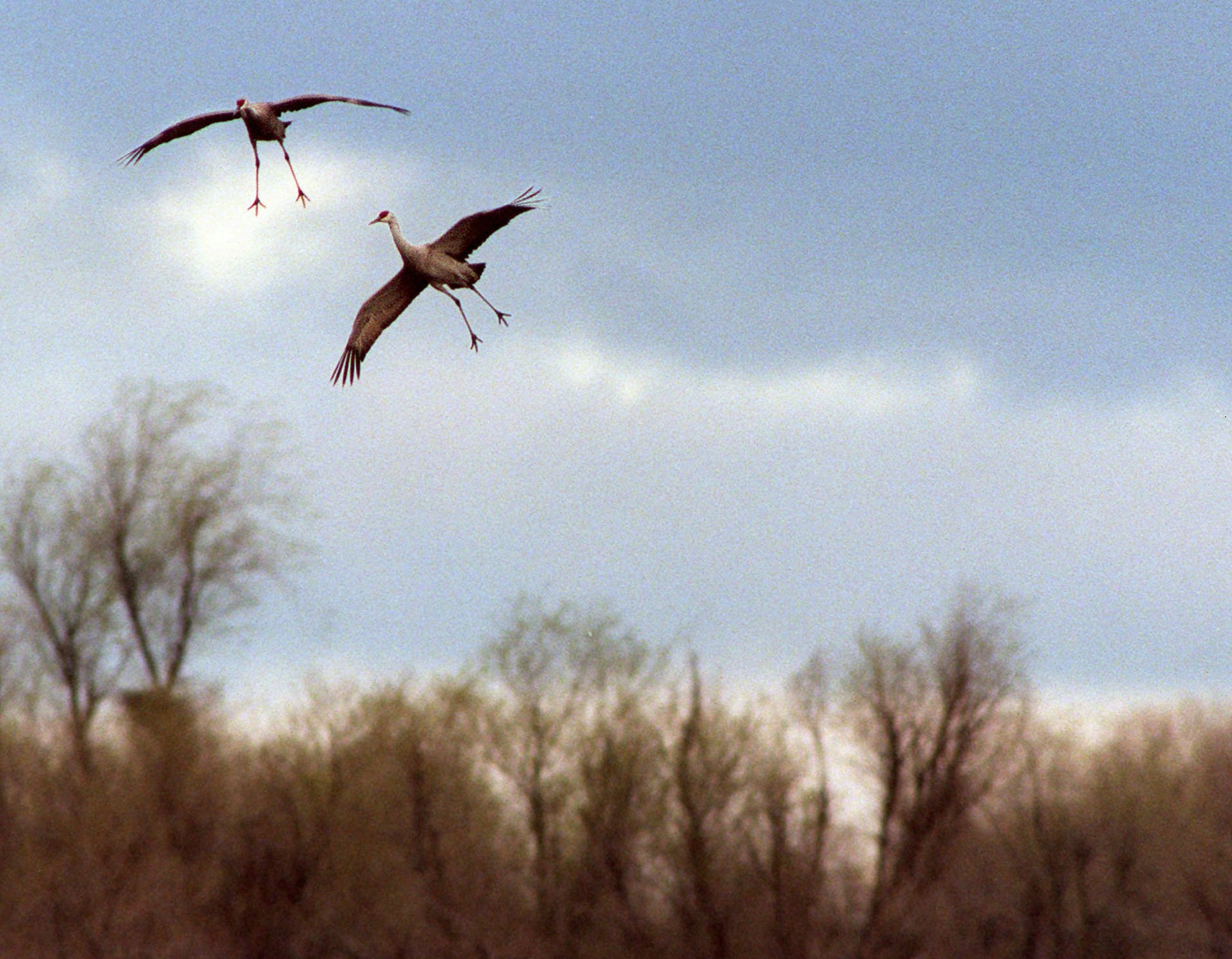
Standing 4 feet tall, covered in stately gray feathers and wearing a red skull-cap, some 30,000 sandhill cranes have converged in Eastern Washington, just as they do each spring. While here, they fatten up and rest before continuing their northward migration.
And they also dance and bugle.
Each year like clockwork, sandhill cranes spend about a month in the Columbia Basin, especially in and around the Columbia National Wildlife Refuge near the town of Othello. After wintering in California’s Sacramento Valley, they start to arrive in Eastern Washington in early March to refuel before flying north to breed in Alaska and Canada.
Their stopover to our region is a form of avian March magic. Heavily bodied with long beaks, necks and legs, sandhills are graceful and gangly at the same time. From a distance, they resemble bobbing bowling pins topped with a dab of red. Aim your binoculars and you’ll see something much different.
“The sandhill cranes’ most famous behavior is their dancing,” according to The Nature Conservancy, referring to the birds’ on-the-ground movements of leaps, pirouettes, wing-flaps, twists and turns. And though dance is most common during summer’s breeding season, they perform year-round to strengthen bonds, play and display aggression, the conservancy says on its website.
Birdwatchers are treated to a spectacle of dance moves during the cranes’ annual layovers in our region. Oh, and the noise! The Cornell Lab of Ornithology describes it as “loud rattling bugle calls, each lasting a couple of seconds and often strung together,” and heard up to 2.5 miles away.
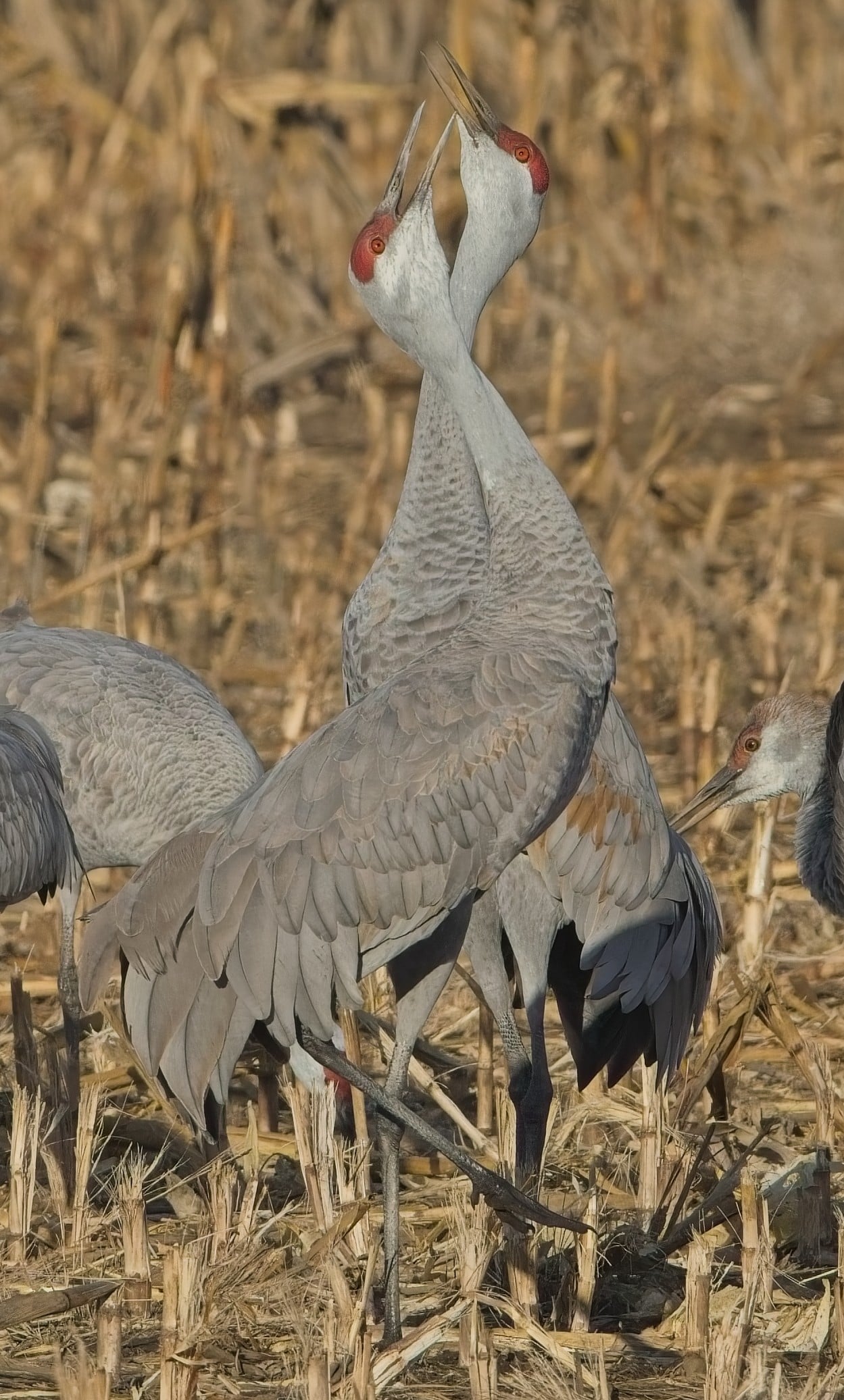
The sandhill’s trachea, or windpipe, helps produce these loud, resonant calls. Six times longer than that of a human adult, it coils inside the bird’s chest like the curve of a brass horn. As air flows through, the trachea vibrates and increases the sound’s volume.
“Their vocalizations are super loud and identifiable,” said Allison Anholt, coastal birds lead biologist for the Washington Department of Fish and Wildlife.
Sandhill cranes have been using our region as a migratory stopover site for thousands of years in what used to be natural grassland and wetland environments, Anholt said. As humans altered landscapes for agriculture, development and irrigation, the birds shifted their attention to the area’s farm fields and adjacent wetlands.
“They stage in these areas largely because the spent grain and corn crops provide a lot of their energetic demand needed for migration,” Anholt explained.
In turn, thousands of humans flock to see them each spring. Lynne Nelson of Palouse recalls a trip she made several years ago to a designated viewing area at the Columbia National Wildlife Refuge.
“It was quiet when we got there,” said Nelson, a veterinary biologist at Washington State University. “Then, over the range comes this black cloud of squawking birds, their long necks aiming straight forward and their long legs streaming behind.”
The cranes drew closer, drifting and tilting as they lowered toward earth, she recalled. Once near the ground, they sprouted their large wings and touched down on chopstick legs. The birds landed in waves, as if in slow motion.
Even for an animal scientist, the spectacle was surreal, Nelson said.
Mid-March is typically when sandhill numbers peak, according to biologist Anholt of the WDFW. Once our avian visitors are rested and well-fed, they’ll resume their journey north – not all at once, but in phases, she added.
Which means there’s still time to witness this annual phenomenon. This weekend’s 2026 Sandhill Crane Festival in Othello, which wraps up Sunday, provides helpful viewing information on its website.