
How Texas seized momentum, impact of Huff’s injury on GU’s season | Zags Insiders Podcast
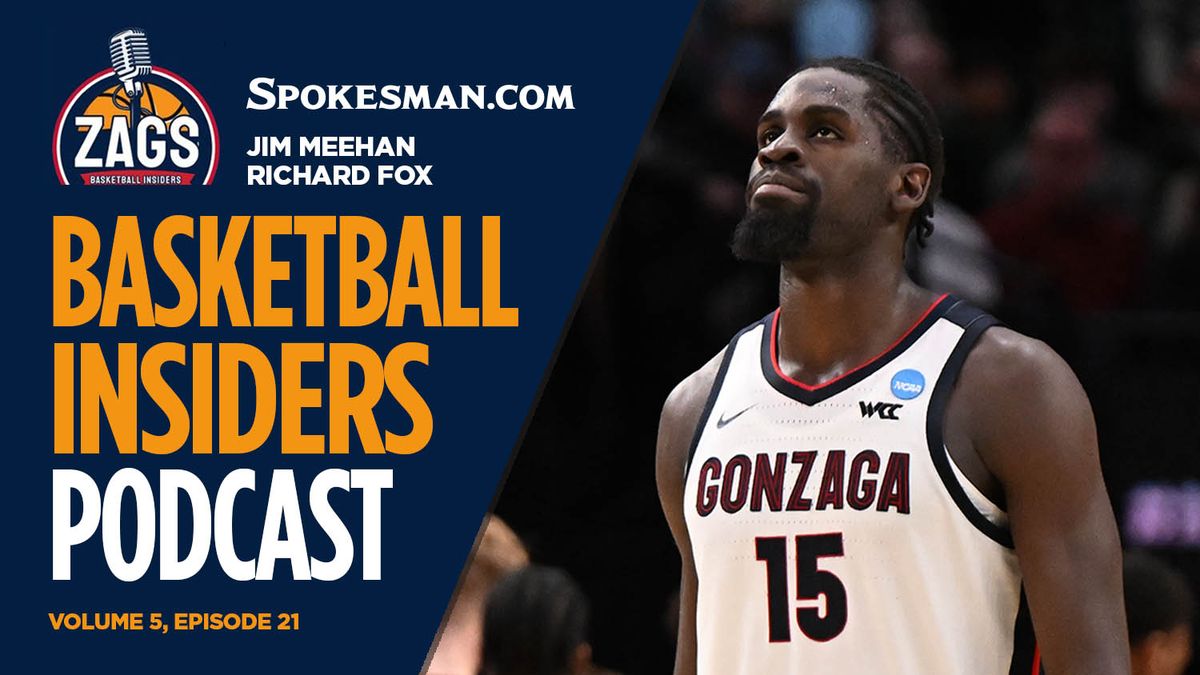
Richard Fox and yours truly brought statistics to the last Zags Insiders Podcast of the season, centered around the impact of Braden Huff’s injury on Gonzaga’s 31-4 season.
The numbers reflected what our eyes told us, but they were eye-opening, nonetheless.
With Huff through the first 18 games, GU was 17-1, averaged 91.4 points, 36.9% on 3-pointers, yielded 67.9 points with a scoring margin of plus-23.5. Without Huff over the last 17 games, GU was 14-3, averaged 76.7 points, 29.2% on 3s, yielded 64.4 points with a scoring margin of plus-13.3.
We discussed Gonzaga pre- and post-Huff injury, the momentum-shifting sequence in the round-of-32 loss to Texas and offered perspectives on the Zags’ season.
Here are some excerpts from Monday’s show. Find the entire 69-minute podcast at https://bit.ly/40OgIay or www.spokesman.com/podcasts/zags-basketball-insiders/.
With, without Huff
Fox: The last five games, GU averaged 68.8 points. That’s a 22.6-point difference between what you’re averaging before the Huff injury and what you could produce in the last five games.
When we talk about how they struggled to score, we’re not making it up. It’ s not just a little bit, it is dramatic. When Huff is on the floor, the imperfections of (Jalen) Warley and (Tyon) Grant-Foster offensively doesn’t matter as much. When (Adam) Miller has a bad shooting game, when (Davis) Fogle and (Mario) Saint-Supery are freshmen and have an off night, it doesn’t matter as much.
But when your scoring is so concentrated not only on two people (Graham Ike and Huff) that effectively play the same position and play together, the margin for error is effectively zero. If I’m Huff’s agent, this is like Exhibit A for me this offseason.
Their offense fell off a cliff. They had to reimagine what they were and how they wanted to play. They tried reinventing themselves but they could just never create the offense or find the additional production because the inconsistencies from the others was as dramatic as I can remember.
Meehan: Couple more numbers for you. One I was curious about – I remember talking about this during the nonconference because the Zags started out shooting 3s and they had a real low percentage and it was, ‘Are they going to turn this around?’ They did. They were shooting 36.9% from 3. Afterwards (in the final) 17 games, 29.2%.
That very clearly shows how (Huff) impacted the whole offense. When you had two primary scorers that could draw all the attention, that made for even more space around them.
Here’s the other thing: Their strength of schedule in the first 18 games (Oklahoma, Creighton, Arizona State, Alabama, Maryland, Michigan, Kentucky, UCLA, Oregon) is way (harder) compared to the last 17 games.
The whole season changed (after Huff’s injury). Before they were an offensive-minded team that could insert defensive guys and play that way. They became defensive-minded and let’s try to get 75, 80 points and the defense will win it.
Texas snags momentum late in first half
Meehan: I asked (Longhorns coach) Sean Miller about (the 15-5 run to close the half and take a 35-33 lead) after the game. He made a concerted effort to get (center) Matas Vokietaitis involved. The kid had barely touched the ball or made any impact at all to that point. They ran some specific plays for him, lob plays, and it paid off with a couple buckets, a couple (assists for) easy buckets. They made their last seven shots.
Now, the game was up in the air all the way though the second half, but the way it was going (GU up 28-20) and the way it flipped was totally different.
The more important thing is they got the big kid going. He was very good the rest of the way. He didn’t quite have Ike’s numbers, especially the points, but the other stuff was very solid. It got the rest of (the Longhorns) going. It opened up some other things for the iso drives. They hit five 3s and it felt like every one was a dagger – end of shot clock, end of half, end of game, Zags making a run and (Jordan) Pope hits one.
Fox: When it happened (just before) halftime, I thought to myself, ‘Man, was that the game? That run?’ Because you’re in control, you’re up eight, Gonzaga looked comfortable, Texas could not find a way to score and then all of sudden you look up at the scoreboard and you’re down two and you feel like you outplayed them. It gives life to Texas.
You felt right away it was going to be a game that it was going to be hard to score. Texas has good athletes, they’re big inside, Matas is a true 7-footer and he’s active, strong. He’s not soft.
Just a really bad stretch for Gonzaga there instead of holding the lead or bumping it up to 10 or 12 at the half against a Texas team that had played two games already in four days. Do they start having some self-doubt? The fatigue they’re feeling – is it even more pronounced because now I’m down?