
Author and poet Amal El-Mohtar releases anthology, highlighting award-winning stories
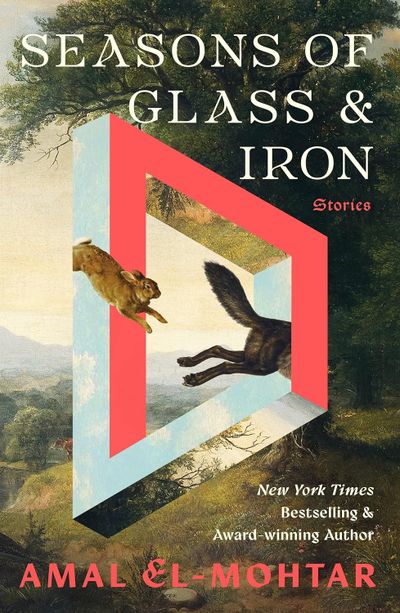
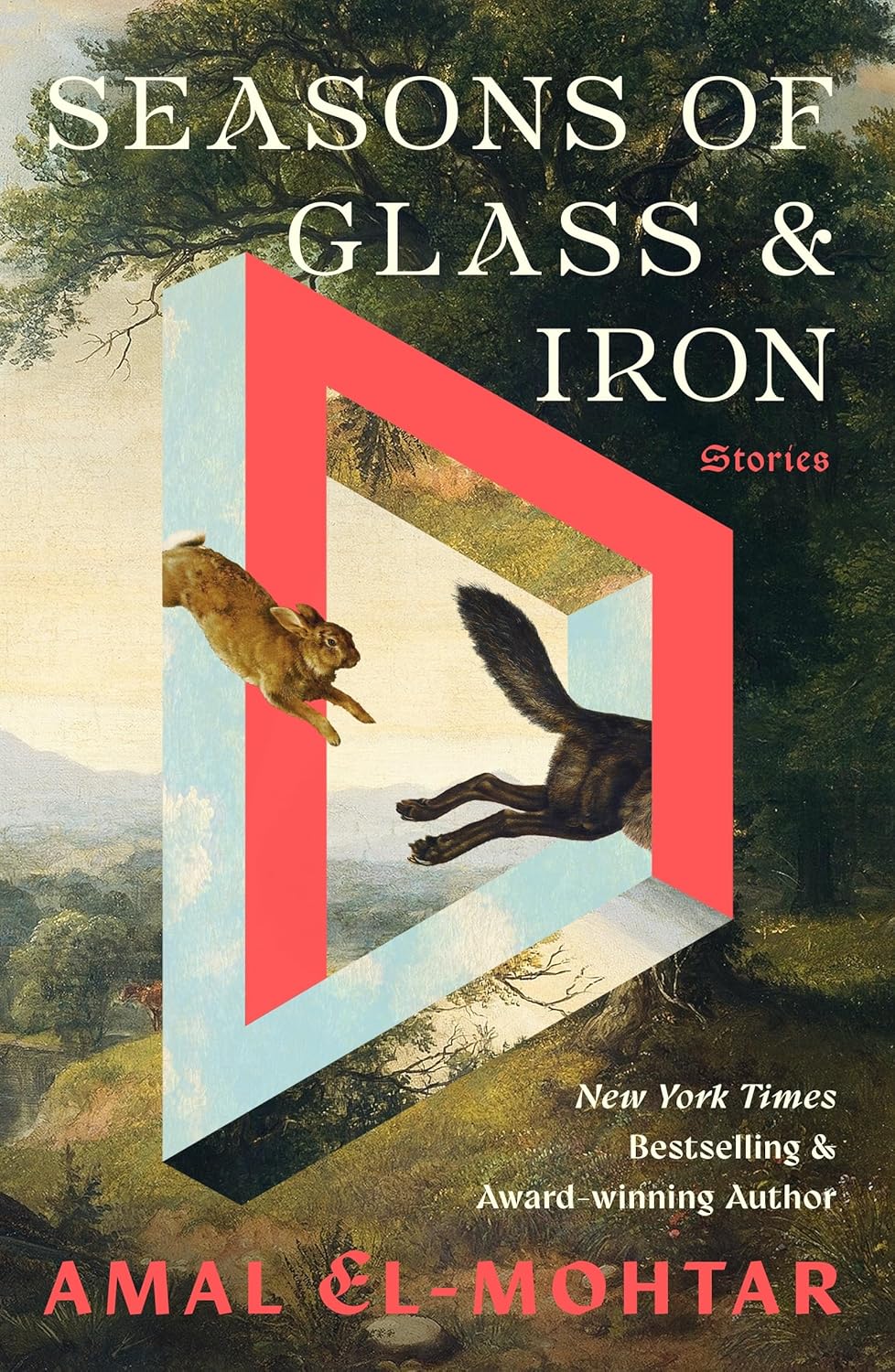
With “Seasons of Glass & Iron: Stories,” Canadian author Amal El-Mohtar has created a florilegium: a gathering of flowers, or in her case, the gathering of award-winning poetry and fiction she’s published between 2008 and 2023.
“I felt very protective of it because of just seeing in those stories who I was at various points in my life, and feeling very tender towards my youth,” El-Mohtar said. “And being a little shy honestly, of how people would encounter this, especially in the wake of newer work, or work that is very different, like (‘This Is How You Lose the Time War’) or ‘The River Has Roots,’ and it’s been so heartwarming and so moving to me to find that so far, the people who’ve read it are reacting to it as if it is new.”
On Monday, El-Mohtar will be in conversation with local author Stephanie Oakes at the Central Public Library. Fitting, considering in her preface, El-Mohtar wrote that she saw the overarching theme of the collection to be women gathering.
“I love women being friends and being lovers, in all of their shapes, across the breadth and depth of their lives,” she wrote. “Over and over, in these stories, I find myself returning to what Emily Yoshida called ‘the terrifying magic of two women in a room, talking.’ ”
El-Mohtar said her relationship with femininity wasn’t always easy.
“There was like this period of time where I equated dresses and prettiness, or just like various markers of femininity as things that were negative and that I wanted to escape because I saw them as impediments to things that I wanted to do,” El-Mohtar said.
When she moved to the United Arab Emirates to teach English in her early 20s, she unlearned her negative associations.
“All of these women who I was meeting and coming into community with were wearing these beautiful confections of individualized couture,” El-Mohtar said. “And that for them, femininity was something to bond over together, where I had come to understand it as something that was competitive, and for a specifically male gaze, and here in a place that was actually quite gender segregated, the idea that femininity was actually a performance for other women, in a way that was collaborative and kind of joyful, was revelatory and was really surprising.”
As a writer, El-Mohtar has experienced a gender divide in genres. While fantasy has always felt like a space where female authors can flourish, El-Mohtar said she had to psych herself up to write her first science fiction story. Contained in “Seasons of Glass & Iron,” El-Mohtar originally wrote the story “The Lonely Sea in the Sky” for a special issue of Lightspeed Magazine called “Women Destroy Science Fiction!”, edited by Christie Yant, who asked El-Mohtar to contribute.
“I initially said yes, and then was so stymied,” El-Mohtar said. “It was taking me so long to do it that I just kept trying to back out of it and to say, look, I really don’t want to hold up the project. I just it’s not working for me. And she simply wouldn’t let me.
“She would not let me quit, and she ended up saying, which I’ve never forgotten, and I’ve always felt really grateful for ‘I just need you to trust that I know what I’m doing when I asked you to write me a story for this anthology, and I really want you in it.’ ”
El-Mohtar said it was similarly intimidating to write her half of “This Is How You Lose the Time War,” which she co-wrote with Max Gladstone. That book won the 2019 Nebula Award for Best Novella, the 2020 Locus Award for Best Novella, the 2020 Hugo Award for Best Novella and the 2020 Ignyte Award for Best Novella. Oakes said she first encountered El-Mohtar’s work when she read “This Is How You Lose the Time War,” but has happily consumed the rest of her work since.
“It’s beautiful writing,” Oakes said of the most recent collection. “Her ability with imagery is so unique and really special. I don’t really know many other writers that can capture the sensory impression of a place or characters the way that she does … She plays around with form a bit. So there’s some that are written in letters and diary entry type things and like emails at one point, there’s one that’s kind of futuristic, that’s mostly taking place over emails.”
Oakes said she is looking forward to having a conversation with El-Mohtar about folklore.
“A lot of it is folklore you may not be familiar with already,” Oakes said. “So many of these I read, and I had to look up whether they were original ideas of hers, or if she had taken them from fairytales and myths from elsewhere. So there’s one that I believe is a Portuguese myth, one from Norway, one that she borrows from Persian mythology. And there’s a couple instances of this one, like fairytale or myth from Welsh mythology that comes into a couple of different stories. So she’s borrowing from folklore throughout the world.”
“The Truth About Owls,” has an owl character named Blodeuwedd that borrows from Welsh mythology. This story is special to El-Mohtar because it connects her to her childhood love of literacy; LeVar Burton read the story on his podcast, LeVar Burton Reads.
“I remember exactly where I was, where I learned that was where I learned that was going to happen,” El-Mohtar said. “I was in a sandwich shop in Portland, Oregon, sitting next to my agent and she just sort of leaned over to show me an email that had just come in on her phone. LeVar Burton was requesting permission to read the truth about owls on his podcast. And I was eating such a delicious sandwich, and I fully burst into tears. It was in my hands, and I was just suddenly salting it with my weeping.”
Burton was important for Mohtar for two reasons: “Reading Rainbow” and “Star Trek: The Next Generation.” “Star Trek: The Next Generation” was one of the shows that cemented El-Mohtar’s love of science fiction. She also read the novelization of the Dr. Who show, not understanding initially that it was a television show first.
“I read these when I was living in Lebanon,” El-Mohtar said. “My dad’s cousin had a huge library of books in English, and so I was reading a lot of them. And there were these books that had Doctor Who on them, and there were and the doctor in question was, I later learned, Jon Pertwee, a kind of cartoon version of him. And I had no idea that it was a TV show. And I would continue to have no idea that it was a TV show until, literally 2002 when they rebooted it with Christopher Eccleston, at which point I said, ‘Oh my god, I’m so excited. They’re making my childhood books into a TV show.’ ”
El-Mohtar grew up mostly in Canada, with the exception of a few years living in Lebanon, where her family is originally from. She’s fluent in Arabic, but the poems in this collection that were translated into Arabic were translated by her father, Oussama El-Mohtar.
One of those poems was “Song For An Ancient City,” which she wrote about encountering Damascus for the first time.
“I just fell in love with Damascus so hard, in so many ways,” El-Mohtar said. “That poem was because I had spent a day wandering the city, and there was a lot of construction and renovation happening, and I found that when I came back to our hotel room, I was covered in a thin layer of dust. And I was writing to a friend saying I didn’t want to wash it off, because it felt like I would be washing the city off, and I wish that I could just sort of bottle it and keep it. And she said that you should write a poem about that. ‘Song For An Ancient City’ was a result. And my dad really loved the poem, and unbeknownst to me, started translating it and surprised me with it.”