
Cool Critters: Big appetites, bigger attitudes fuel springtime drama at bird feeders
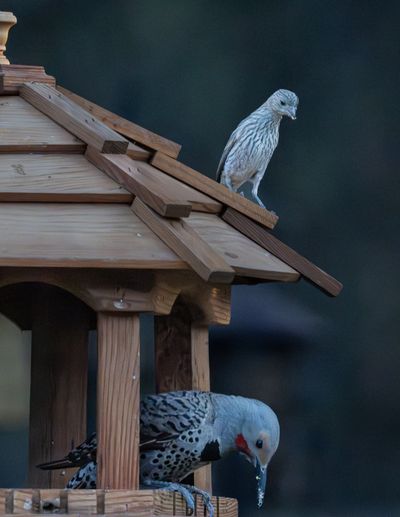
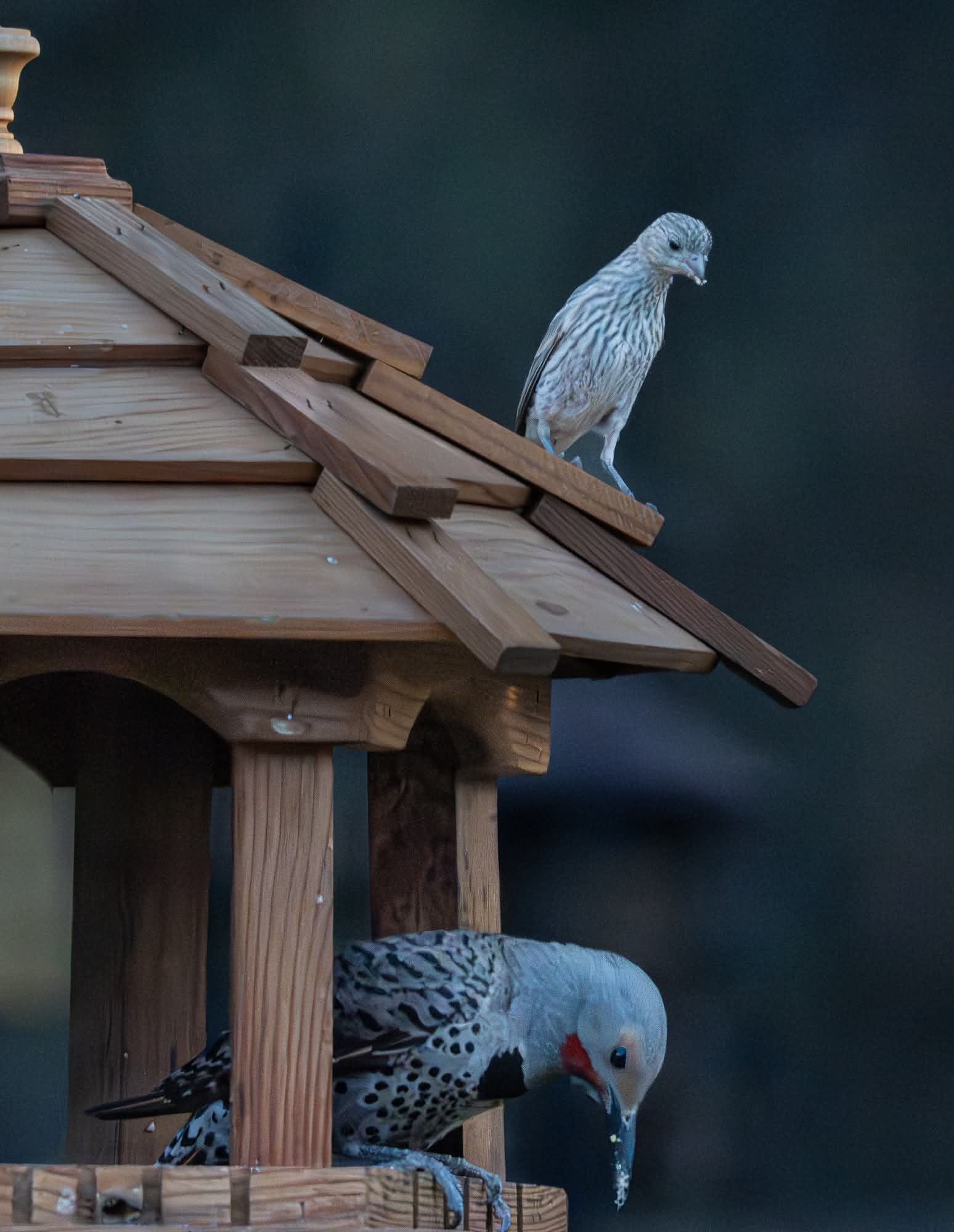
If you’ve been watching the goings-on at your backyard feeder, you may have noticed: Birds become bullies in spring.
They played nice during winter. But now they’re squabbling, lunging and chasing each other away. Sometimes they intimidate by expanding their chests and fluffing up their feathers. Don’t mess with the Terminator, they seem to be saying.
What’s behind these showdowns?
For one, more birds and more bird species are arriving from migration at a time when insects, plant seeds and berries are still scarce, said ornithologist Kathy Borgmann of the Cornell Lab of Ornithology. Drawn to a steady food source at feeder stations, the spring migrants encounter resident birds who’ve been eating there all winter long, she added.
So not only is there increased competition for food, but there’s also a range of species that wouldn’t normally compete when natural food sources are available in late spring and summer, Borgmann explained.
“Feeder bird dynamics definitely shift in early spring,” she said.
The Cornell lab where Borgmann works has spent nearly four decades collecting data on North America’s birds at feeders during winter and spring. Called Bird FeederWatch, scientists use the long-term data to better understand bird populations and behavioral interactions.
Among other things, they’ve discovered a dominance hierarchy that unfolds at bird feeders each spring. And after analyzing the pecking order of some 200 species, it’s clear that certain species rule the roost.
Most often, the bigger, heavier birds drive off the smaller birds. A 1-pound crow is more likely to get a good seat at the table than a half-ounce chickadee.
This being the case, top birdfeeder bullies include crows and ravens, magpies, jays, blackbirds, grackles and woodpeckers, according to the FeederWatch website. Meanwhile, goldfinches, black-capped chickadees and dark-eyed juncos are among the least dominant species.
Still, there are exceptions, as with most things in nature. Mourning doves, though large in stature, step aside to make room for smaller birds. And warblers are more bullyish than expected based on their small body mass.
Also, despite the fact that downy and hairy woodpeckers are smaller than their red-bellied and northern flicker cousins, they rate fairly high on the FeederWatch hierarchy scale. Researchers theorize their heavy bills intimidate some larger-sized species competing for food. Who wants to get blasted by a woodpecker’s hammering bill?
Then there’s the nuthatch. Alone, this dainty little bird gets pushed around by larger birds. But working as a team, they puff up their feathers and mob rival species to force them aside.
And finally, the FeederWatch data also revealed who bickers the most at bird feeders – and it’s not the blue jay or crow. Eliot Miller, who spearheaded the first major analysis as a postdoctoral research associate at the Cornell Lab, found that goldfinches and pine siskins are among the scrappiest.
As he told the Washington Post in 2021: “They show up in flocks and they get in tons of squabbles both with themselves and with everybody else.”
For helpful information on common feeder birds, along with types of bird feeders and food, check out the Project FeederWatch website, feederwatch.org.