
Hacky Sack mounts a comeback with Gen Z
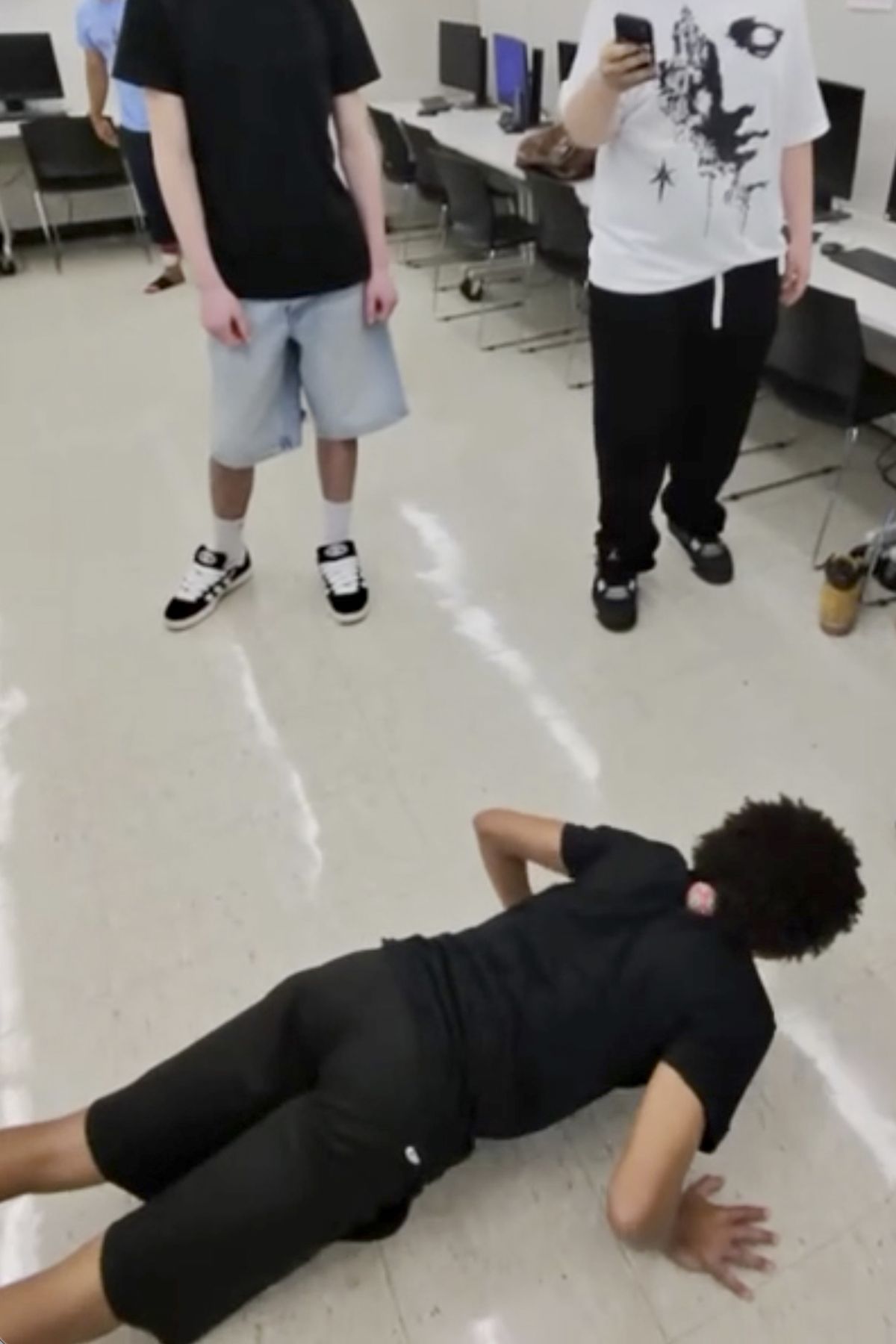
A couple of weeks ago, a gaggle of freshmen at McCallum High School in Austin, Texas, pulled out a pouch the size of a clementine and began batting it back and forth between their feet.
“It took a minute for me to realize, Wait, this is hacky sack,” said Sondra Primeaux, 56, a teacher at McCallum. “I haven’t seen this in a while.”
Now she sees it constantly. Students circle up with a hacky sack during lunchtime or get in a few kicks in the hallways after class. Primeaux has been having flashbacks to the Phish and Grateful Dead shows of her youth.
“One of the boys was like, ‘Where can I get one?’” she recalled. “I said, ‘1992.’ “
Once the domain of mellow Gen Xers in the ‘80s and ‘90s, the game is experiencing a renaissance at the hands – well, the feet – of Gen Z. High school students around the country are freshly enthusiastic about the crocheted beanbags that once hung in the air like the scent of marijuana. Parents and teachers mostly seem glad to watch young people be entranced by something other than their phones.
This time around, hacky sack mania appears to have taken off in the Northeast before spreading nationally with the help of social media. The sacks are technically called footbags – Hacky Sack is a brand name – but retailers of all kinds of thwackable bags are now racing to keep up with demand.
Young customers at Play It Again Sports in Concord, California, have been clearing the shelves of suede-paneled SandMasters ($10) and multicolored Boota bags ($6) for at least a month, said Billy Ball, 46, a sales associate.
“I’m serious. We get 15 calls a day about hacky sacks,” he said.
Munjo Munjo, a gift shop in Raleigh, North Carolina, typically sells two or three hacky sacks a week, said Jaime Aguirre, 42, an owner of the store. Last week, he sold more than 30. “We know there’s people that do it, but we thought it was all us old folks,” he said.
Teenagers tend to describe the phenomenon as a “hacky sack epidemic.” But even they have a little trouble explaining what is going on.
“It literally came out of nowhere,” said Joey Finke, a 17-year-old senior at Wolcott High School in Wolcott, Connecticut. Last month, he and some friends were inspired by TikTok videos to start kicking around a green footbag with a smiley face on it before baseball practice.
These days, the boys film rallies complex enough to please Rube Goldberg and then share them to the Instagram and TikTok accounts they created to document their “sacking” exploits. The school’s vice principal recently joined one of their circles for a few kicks.
“He was pretty good,” Finke said. “It’s kind of bringing everybody together.”
Online, hacky sack has become an elaborate inside joke, with hundreds of accounts cheekily treating the game as a varsity sport. They post interscholastic rankings and announce when students “commit” to fictional hacky sack programs at Division I colleges.
“We have a varsity and a JV team, which we made rosters for,” said Riley Walters, 18, a senior at the Potomac School in McLean, Virginia.
Her friend Nathalia Kellett, 18, uploads the group’s best tricks to the “Potomac Women’s Sack” account she runs on Instagram. Beyond the jokes, Kellett said she enjoyed the communal nature of the game and how approachable it is for new players.
At first, “I couldn’t even get contact,” she said. Now she is mastering stalls, which involve balancing a hacky sack on one’s toe or sternum.
Hacky sack is typically traced back to 1972, when Mike Marshall kicked around a handmade beanbag in an Oregon basement with his friend John Stalberger. It eventually grew into a sport with organized tournaments and a periodical called Footbag World.
While the game has maintained a core group of fans, it has been some time since it achieved anything approaching mass popularity. “We have never seen a moment like this,” said Greyson Herdman, co-owner of World Footbag, which manufactures footbags and operates a museum about the history of the sport.
He thinks the game’s appeal to Gen Z has to do with its emphasis on camaraderie. “It’s a shared experience,” he said. “I’m not trying to beat you in a game; we’re playing together.”
The old guard seems happy to welcome newcomers. Derrick Fogle, 62, a hacky sack legend in Columbia, Missouri, and member of the Footbag Hall of Fame, said he had been intrigued by the unusual serve setups he had seen among younger players.
“It would be really easy for me to look at this and say, ‘Hey, that’s not the way you play hacky sack,’” he said. But he said he would rather let a new generation make the game its own.
A group of teenage hacky sackers at Trinity-Pawling School in the Hudson Valley of New York recently sent Fogle an Instagram direct message asking him to sign on as their coach.
He accepted, and last week he mailed them a box of his old hacky sacks.
This article originally appeared in The New York Times.