
New USDA conditions are hampering state and local wildfire services. Northwest fire officials warn of dire consequences

A devastating wildfire will happen again, Ken Johnson said. “It’s just a matter of time.”
The community is at risk,” said Johnson, Spokane Valley Fire Department’s deputy fire marshal.
While there is no way to entirely prevent increasingly destructive wildfires and longer fire seasons each year, fire experts believe there is a way to become more resilient and save more homes and lives. By trimming trees, clearing brush and otherwise reducing fuel, they can change the intensity and behavior of fire.
But this year, state and local fire officials in Washington and across the western United States are facing a new obstacle: In the name of efficiency and as part of the Trump administration’s crackdown on what it calls “radical left ideology,” the U.S. Department of Agriculture imposed new terms and conditions at the end of December that have jeopardized federal funding for critical fire management work.
The order from Agriculture Secretary Brooke Rollins required all agencies within USDA, including the U.S. Forest Service, to adopt their own terms and conditions that states must agree to before receiving federal dollars. Some states run by Democrats have sued the USDA, saying the terms violate state laws, while some Republican-led states say the new requirements create an administrative burden that takes limited resources away from fighting fires and keeping residents safe.
“We were fully prepared to sign the original terms and conditions we applied under,” Johnson said. “However, after the funds were awarded this spring, when projects should have already been getting underway, we were informed there would be new terms and conditions instead.”
The conditions from USDA require states to pledge they will comply with the Trump administration’s policies on diversity, immigration, the treatment of transgender Americans and more. In March, Attorney General Nick Brown of Washington and 20 other Democratic attorneys general sued the USDA over the requirements, arguing the terms and conditions violate state laws and the U.S. Constitution’s protections of state sovereignty.
The holdup affects about 900,000 Washingtonians who rely on federally funded food stamps, officially called SNAP, according to Brown’s office. And as a result of the new terms and conditions, Washington can’t use $41 million in wildfire-related grants and agreements the state has already received from the federal government, said Washington State Forester George Geissler.
“The fuel treatments, the preparedness work, it will not happen,” Geissler said. “While we do have some state funding and have tried to provide it, it is not to the level of the funding we receive from federal agencies.”
Idaho is not involved in the lawsuit against USDA, but Idaho State Forester Julia Lauch said more than $8 million in federal funding could be in jeopardy if concerns identified by the Idaho Department of Lands aren’t resolved by early June, when contract modifications for seven existing agreements are due for renewal. Of the 11 terms and conditions to which her agency has objected, Lauch said all but four have been resolved through ongoing discussions with the Forest Service, which she said has been “very responsive” to Idaho’s concerns.
Lauch said Idaho recently signed modifications to extend a handful of Good Neighbor Authority agreements, which let states work on federal land with the Forest Service on forest management projects. The unresolved issues relate to those agreements, the frequency of reporting and a requirement that states seek federal pre-approval for any subcontracts, she said.
“We are very hesitantly signing the agreement modifications that we have to before they expire,” Lauch said. “If we did not sign them, we would lose the agreement dollars, which wouldn’t be good for the program. We would also have to cease the work that was happening through the agreements, so we signed under duress to keep the work going while we simultaneously work with the USDA and the U.S. Forest Service to reach resolution on the handful of terms and conditions that we have found issue with.”
If the outstanding concerns aren’t resolved by the time the seven additional agreements are due for renewal in June, she said, “It is possible that we would be returning money rather than signing the modifications.”
If they don’t have clarity on the new terms and conditions by summer, when the state expects to sign agreements for the next fiscal year’s funding, Lauch said Idaho may need to dedicate more resources to administration at the expense of fire management work.
Geissler said he was able to work through about 80% of the terms and conditions with the USDA, but others are at a standstill. Some of the legal language is concerning, and some new processes don’t make any sense, he said. Other fire officials say there is no guidance on how to change local policies to match the new USDA requirements. The money is there for training, volunteer fire assistance, treating federal land, and more – Geissler would just be breaking the law by accepting it.
In response to questions from The Spokesman-Review, the Forest Service said no states have signed the new terms and conditions so far, but the agency “doesn’t anticipate” any impacts on wildfire-related work, because “all agreements are currently active and will be through the fire season.”
But even if the Forest Service considers all agreements “active,” that doesn’t mean states that haven’t signed the new terms can legally use the money, fire officials in Washington said.
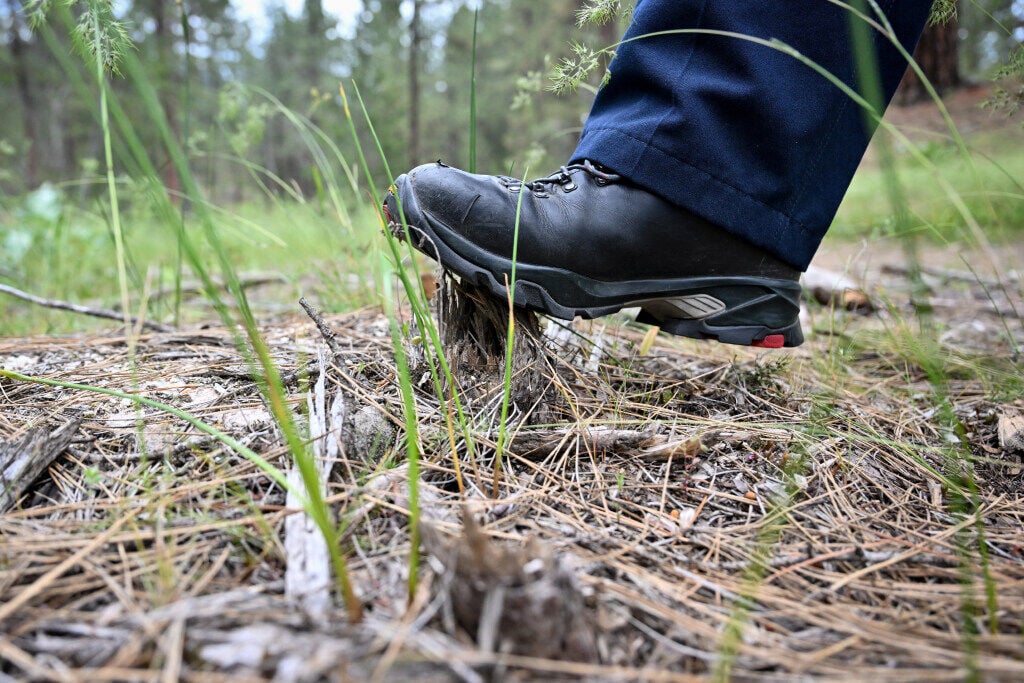
That is not the reality Johnson is facing. In response to the Forest Service’s statement, Johnson said the delay could set back important work in Spokane Valley by more than a year.
“If the guidance documents truly won’t be finalized until fall, it’s realistic to expect signatures may not happen until spring, potentially creating a year-and-a-half delay overall, significantly impacting the work we had planned,” he said. “The consequences are real. We are more likely to lose homes and potentially even entire neighborhoods. There will absolutely be an impact here in Spokane County.”
The Forest Service said it is working with the Interior Department and states to update a template used to coordinate wildfire response among federal, state and tribal governments.
“We expect that work to be completed sometime this fall,” the agency said in a statement. “In the meantime, we have been extending any agreements that were set to expire this year to allow for the template to be updated before signing new agreements.”
The risk of no fuel mitigation
Like many fire departments around the nation, Spokane Valley Fire Department applied for $5.5 million of the Community Wildfire Defense Grant managed by the USDA.
The department was notified they won the grant in September and planned to use the money to pay for a forester, someone who specializes in prepping high-risk areas for wildfire season.
On Dec. 31, when USDA changed course, it threw the fire department into limbo. Johnson called it “disappointing.”
“It’s delayed our projects we have for fuel mitigation. It is going to be a bad fire season, and we are losing this opportunity to do fuel reduction projects,” Johnson said. “Our No. 1 risk is wildland fires. Every person needs to listen and help mitigate it. Our firefighters cannot do it all.”
The risks are too large, he argues. The area around Spokane Valley includes urban growth pressing up against rural and forested areas. The mix places the community at a much higher risk of fire, especially when a majority of fires in the county are human-caused.
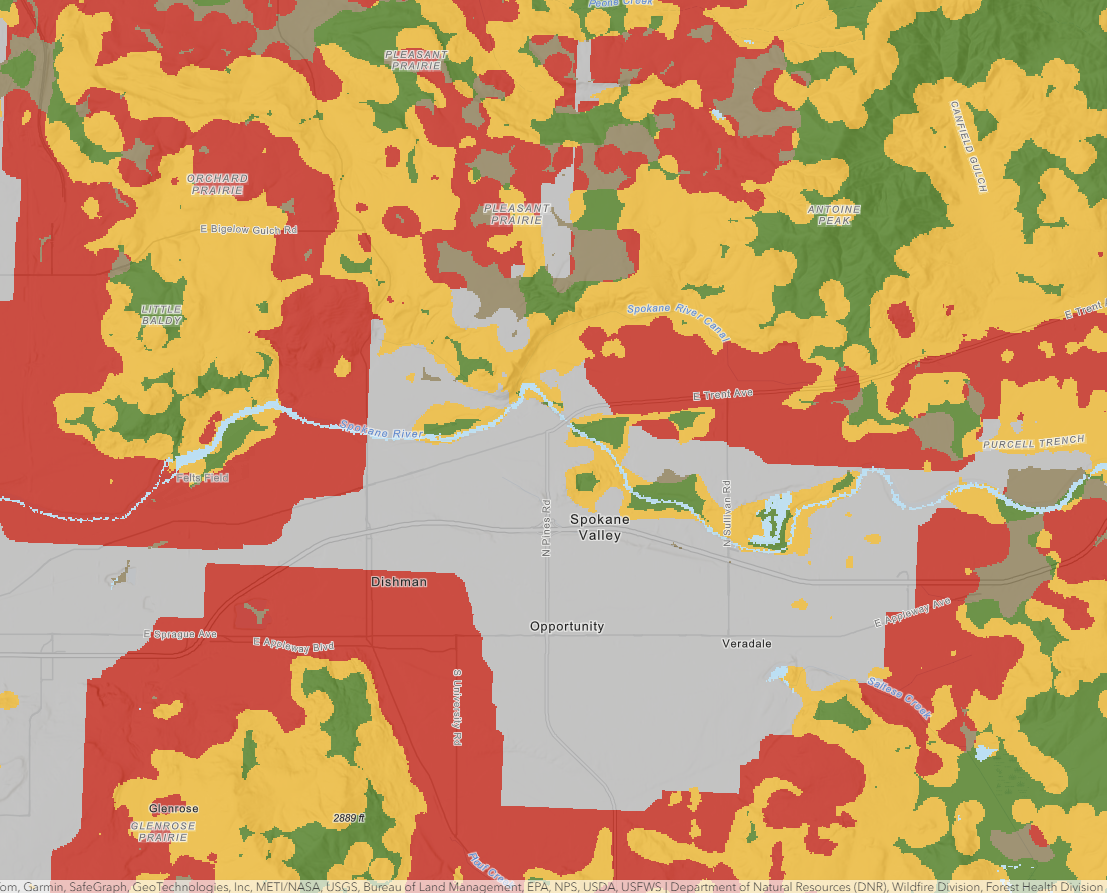
When fires destroyed areas around Medical Lake and Elk and killed two people in the summer of 2023, fire resources in the county were overwhelmed. It was a lesson on the importance of fuel mitigation, Johnson believes. Firefighters couldn’t douse burning trees in water because it evaporated. Instead of fighting the fire, the efforts were focused on evacuating people.
“Fires like this are going to continue to get worse in Spokane County. We are used to a community where our trucks put out fire. In areas with heavy fuel, people love their trees and don’t want to trim them. But they need to know, the fire will eventually come,” Johnson said. “If we could accept the original terms (of the grant), we could start our program tomorrow. This is our community. But we will not be able to afford continued community losses.”
Johnson has been in the fire service for nearly 30 years, and 20 of those have been spent writing applications for federal grants, he said. In all his time, he has never been weeks away from receiving an awarded grant only for it to be ripped away.
“If you don’t have the staffing to run these (fuel mitigation) programs, they won’t be successful,” Johnson said. “And I am not a forester. So I need to hire a guy like Nick Jeffries.”
Nick Jeffries, Spokane Fire Department’s wildland resource planner and chair of the Spokane County Wildfire Mitigation Coalition, has been the head of thousands of acres of fuel treatments in the past four years. He’s treated around 2,000 acres just by himself. His department was able to secure a $1.5 million wildfire defense grant the first time they applied more than a few years ago, but has been unable to secure additional funding since applying three more times, he said.
Thousands of additional acres would be treated and completed faster as the area creeps closer to longer and more intense wildfires in the next decade if agencies had the funding to hire specialists like him, Jeffries told The Spokesman-Review.
He knows the impact that comes from a season without a federal grant.
“It’s holding up more work, whether it be in season or not. … We should have been getting work on the ground. Everything is procrastinating it,” Jeffries said. “That is acres of fuel reduction not getting done in the county. It is pushing us further back.”
In May 2025, police said an arsonist attempted to light up the South Hill bluff on the trail below High Drive. It brought wildfire worries close to home. If the bluff’s fire had been worse, every home within a mile would likely have been at risk and people evacuated, The Spokesman-Review reported.
“Just because you live in the South Hill, doesn’t mean you’re exempt from fire,” Jeffries said. “People need to understand they are at risk.”
Testifying before the Senate Committee on Energy and Natural Resources on Wednesday, Forest Service Chief Tom Schultz told Sen. Maria Cantwell, D-Wash., that funding for fighting active fires isn’t affected and put the onus on states to end the impasse.
“The states can sign these agreements tomorrow, if they choose to sign them,” Schultz said.
When Cantwell asked how the Forest Service is working to resolve the states’ concerns, the agency’s chief said, “We’re explaining the rationale behind the terms and conditions.”
“I don’t like the terms and conditions, because the money isn’t flowing in a fire year that is growing in intensity,” Cantwell replied. “If you’re going to keep pushing on terms and conditions that stop fire preparation dollars that have historically been distributed from being distributed, I think you need to tell the committee why you’re doing that.”
No work, more fire
Wildfire seasons are now a month longer than they were 35 years ago, NASA scientists and U.S. Forest Service ecologists found in 2015.
“Our seasons have been expanding, beginning sooner and going later. From a data standpoint, we know the number of acres burned between Washington and Oregon has been doubling the last three decades,” said Spokane County District 3 Fire Chief Cody Rohrbach, who also serves on a complex incident management team in the Pacific Northwest, a team that responds to large wildfires to coordinate a firefighting plan.
Meteorologists are predicting an El Niño summer, a climate event where ocean and land surface temperatures rapidly rise, according to the World Meteorological Organization. It can produce drastic weather effects across the globe, like rainfall, droughts, fires, hotter temperatures, wind shifts and more.
In addition, the National Interagency Fire Center based in Boise is reporting “above normal significant fire potential” for most of the U.S. throughout the summer, expanding to the Inland Northwest in June.
Above-normal temperatures also are likely across most of the U.S., especially in the West.
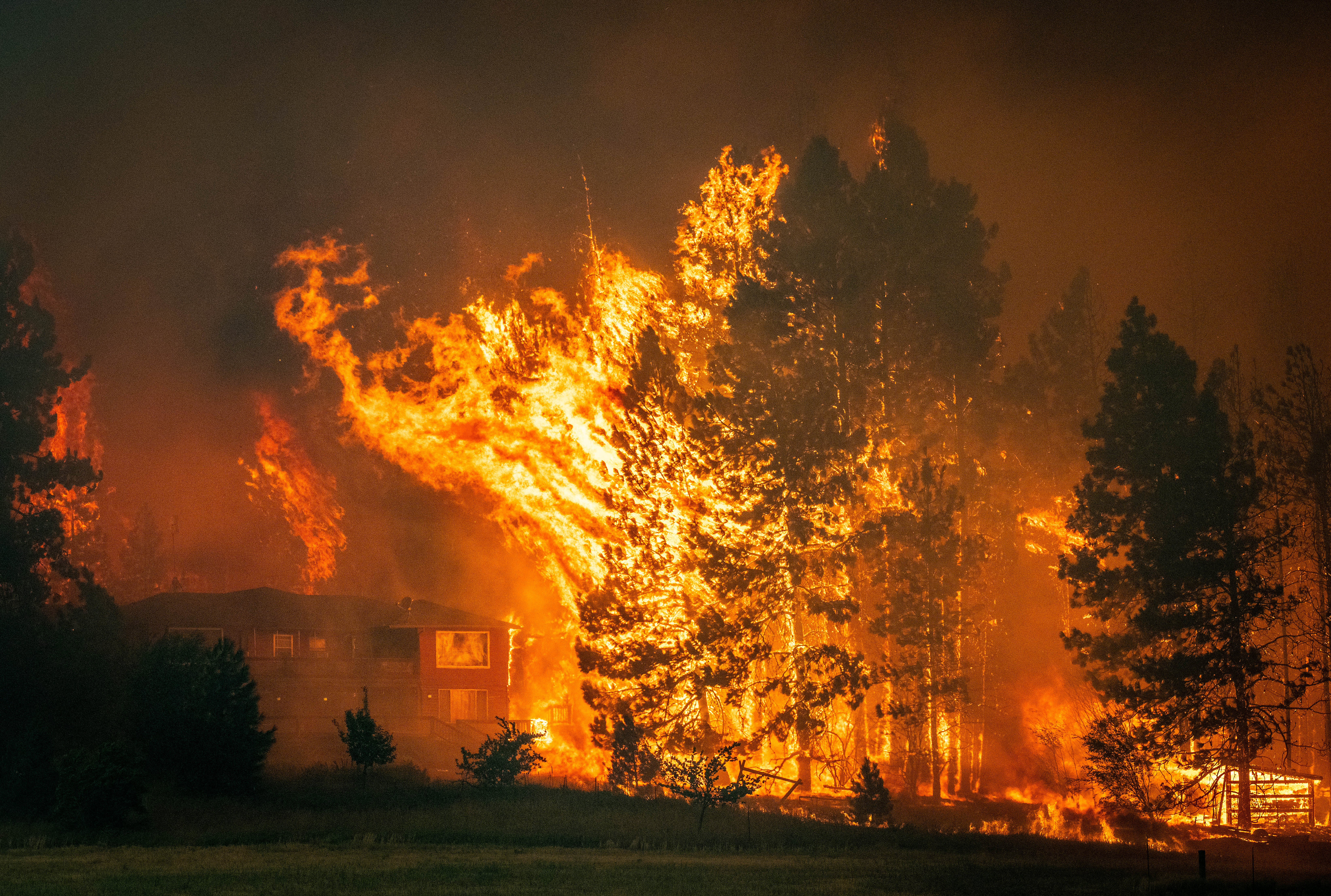
Historic amounts of dry fine fuel are cascading the Rocky Mountain areas, the center reported, calling the levels “critical.” That is typically seen in peak fire season, not during the spring.
Across the Great Basin along the Nevada-Idaho border, snowpack has reached “record low” levels and is facing exceptional drought, the center reported.
“It’s shaping up to be a challenging year. We had a dry winter. We know our high elevations have greened up sooner, which means they are likely to dry out quicker. Nationally, we had a busy start to the season,” Rohrbach said.
The National Interagency Fire Center documented 24,066 wildfires across the country as of April 30. That is 150% of the previous 10-year average.
“When you look at resource availability, the national resources may already be strained. Here, we have the largest wildland urban interface in the state of Washington. All the ingredients, everything is in place for a tough fire season,” Rohrbach said. “When you think of wildfire and what could be possible, the objective is to start addressing the wildland environment now. The time to address an emergency is before you have one.”