
Forces close in on rebels
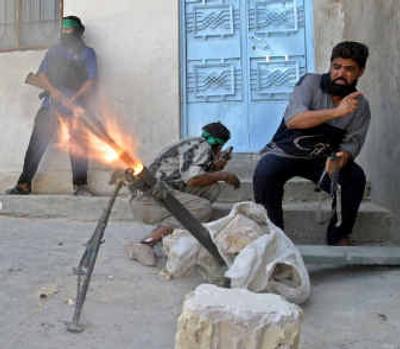
NAJAF, Iraq – Rebel cleric Muqtada al-Sadr vowed Monday not to leave this battle-torn city “until the last drop of my blood has been spilled” as U.S. and Iraqi forces tightened their chokehold on militants hiding out in one of Shiite Islam’s most sacred shrines.
Najaf Gov. Adnan Zurfi said that after five days of fighting, U.S. and Iraqi forces were in control of the city except for the area around the golden-domed Imam Ali mosque. In an indication of the intensity of the battles, U.S. troops took “operational control” of Iraqi police and National Guard units in Najaf to improve coordination, an American military spokesman said.
A senior U.S. military official said troops had cut off access to the shrine, where members of al-Sadr’s al-Mahdi militia were holed up and launching attacks. Clashes with U.S. troops came within 800 yards of the holy site.
Each side blames the other for provoking the conflict, which shattered a fragile cease-fire declared in June, and both sides have vowed to battle to the finish.
“I will continue fighting,” al-Sadr told reporters Monday, just two days after calling for restoration of the earlier truce. “I will remain in Najaf city until the last drop of my blood has been spilled.”
The cleric said his militia was fighting to drive U.S. forces out of Iraq.
The government of interim Prime Minister Iyad Allawi, a fellow Shiite, has ruled out any negotiations with armed groups, saying it intends to crush militias that refuse to lay down their weapons. Sheik Fatih Kashif Ghitaa, a member of a team of Iraqis trying to mediate the conflict, said the government shrugged off appeals to come to the negotiating table.
Caught between the uprising by al-Sadr’s poor, disaffected young Shiite followers and an ongoing Sunni Muslim-led insurgency, Allawi is eager to show an increasingly angry Iraqi public that he is strong enough to quell challenges to public security – and to his grip on power.
At the same time, he is facing accusations that he is nothing more than an American puppet. U.S. officials have taken pains to portray Allawi’s government as autonomous, stressing that American troops in Iraq now act only at the government’s request. Yet Monday’s move to give the U.S. military operational control of Iraqi police and National Guard units in Najaf is an indication of the strong role American forces continue to play.
The United States also resumed command Monday of multinational forces in Najaf province and neighboring Qadisiya province, both of which had been briefly put under the control of Polish troops.
Allawi’s tough line and the closing-in of U.S. and Iraqi forces here have fueled speculation that a final push to oust al-Sadr’s militia, if not the cleric himself, may be near. Iraqi forces raided al-Sadr’s home Saturday and came up empty-handed, but the United States says he is not being actively hunted.
Adding to the conjecture, a senior U.S. military official said Monday that Zurfi, the governor, had given American and Iraqi forces permission to strike the Imam Ali shrine if necessary. Such a move would almost certainly inflame Shiites across Iraq and around the world.
The fighting that began Thursday has left hundreds, dead in the most intense street combat since a similar uprising in Najaf in the spring. Five U.S. troops have been killed and at least 19 wounded in the fighting, the military said. In addition, four Iraqi National Guardsmen have been killed and 12 injured. With temperatures around 120 degrees, heat-related ailments have been a problem.