
A special anniversary
Fair time fun will take off Thursday, Aug. 25, with an emphasis on a special anniversary.
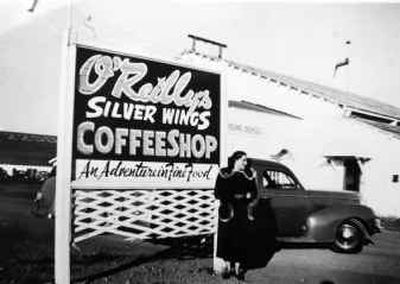
The theme this year is Hightail it to the Fair, recognizing 50 years at its location – Coeur d’Alene’s first air field.
Now, the 110 acres that used to be home to the air field are county owned and host the Kootenai County Sheriff’s Department, the Juvenile Detention Center, the University of Idaho Cooperative Extension Service, an RV dump station and the fairgrounds. The fairgrounds take up about 83 acres of the former airfield.
The North Idaho Fair has soared since its humble beginnings in 1922. Long before landing at Weeks Field, community fairs were organized by 4-H and held in Post Falls, Worley and various locations in Coeur d’Alene. The first county fair was held in the Elks Temple in 1934.
Early fair costs were financed by the Coeur d’Alene Chamber of Commerce, some years for as little as $27 for the entire fair.
The city purchased land downtown in 1937 for $19,000 to use as the fairgrounds. The land was owned by the Coeur d’Alene Mill and is now occupied by City Hall and McEuen Field. Each year, the fair added a little more to the grounds and attendance continued to grow.
But in the years before the city and county swapped the downtown property for the airfield, the event wasn’t held time and again because of funding, World War II and even a protest by farmers and businessmen over a milk ordinance in 1938.
George Evjen of Coeur d’Alene remembers the old fairgrounds as it was. He would walk about two blocks from his house on 11th Street in Coeur d’Alene to visit with friends and take part in the fair.
“I’d come home from school in the front door, go out the back door and down to the fair,” he said.
Evjen remembers spending all his free time at the grounds when the fair came around to see intricate grange hall exhibits and greased pig races. He wasn’t from a farming family like many of his friends, but he said the fair was just another way to pal around with good friends and get his boots dirty.
At 64, Evjen has only missed a few fairs when out of town, and said the fair has kept its old-fashioned community ties.
“It’s where I meet all my old friends and see people I only see once a year,” he said. “I see people I went to high school with, people I graduated with. Even old grade school friends.”
The fairgrounds were set up at Weeks Field in 1953, and the initial fair at that location was in 1954. Weeks Field was the city’s first airport and the first municipally owned airport in the United States. It had a sod runway and an old hangar that was remodeled for fair exhibits.
The airport was relocated to its current location near Ramsey Road and Wyoming Avenue in Hayden a few years earlier.
Gene Soper, a pilot since 1946, was the last to fly out of Weeks Field in 1953.
“I flew with everybody I could. I was a typical airport rat,” Soper said.
He’d often take a on a night flight from the airfield. But flights were risky at times, with only kerosene lanterns for runway lights and biting cold in open cockpits.
When talks began for a fairgrounds land swap, he said many pilots wanted to keep using the airfield and leave during fair. He was sorry to see it go, but in hindsight he said it was for the best.
“Look at how the area has grown out,” he said. “It’d scare me to death to take off out there now.”
The only original building remaining on the grounds is the Gladys Buroker Building, named from the barnstormer and flight instructor who taught at the airfield before it was relocated.
But growth in and around the fairgrounds has helped boost the fair over the last 50 years, and now the annual event includes all five northern counties, said fair manager Chris Holloway.
“This is a great location because not only can we host the fair, we also are able to host various other events,” Holloway said.
She said the fair is working to develop the fairgrounds to accommodate year-round use for various concerts, trade shows and gatherings that typically draw crowds and boost the local economy.
Events at the grounds aside from the fair generate about 13 percent of the fair’s $790,000 budget. She said increasing events on the fairgrounds in the off-season could help make the fair self-sustaining in the next few years. Right now, about 70 percent of the fair budget is income from the previous year’s fair. Kootenai County puts up the remaining 17 percent, or about $100,000, which is used for fairgrounds improvements and new buildings, Holloway said.
“We have 83 acres out here, so we have a lot of room to do things we need to do,” she said.
She added with the Government Way widening project inching north, the fairgrounds will be more accessible in the future as crowds continue to grow.
Last year, the fair had record admissions of 76,000 people, up 9 percent from 2002, and about 5,300 exhibitors including livestock.
“We’re always excited to see what the turnout is,” Holloway said.