
Talk about your late bloomer
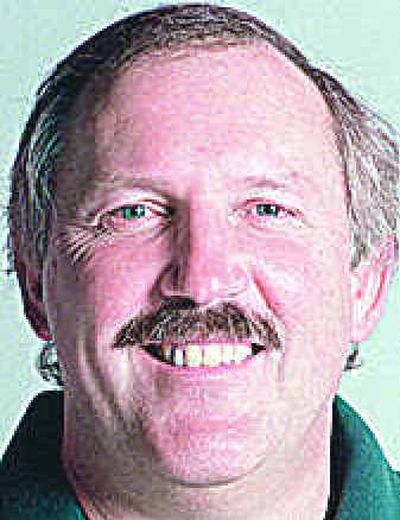
Swap golf stories with Gene Hackney, and the conversation will ultimately turn to Fred Siegel.
Siegel, who was born in 1904 and turned 100 this spring, was one of the finest amateur golfers our region has ever produced. And when I had lunch with Hackney, 84 and a pretty good stick himself at one time, earlier this week, he came well-armed, not only with his favorite Siegel stories, but with nine typed pages of a memoir Siegel has put together, as well.
“He was – and still is – one of the greatest perfectionists I’ve ever known,” said Hackney, who remembers first meeting Siegel at Indian Canyon Golf Course. “And he was also one of the best chippers and putters I’ve ever seen.”
Siegel’s considerable list of on-course accomplishments would seem to validate Hackney’s assessment of his talents. By his own estimation, Siegel won close to 100 tournaments during an amateur career that started inexplicably late, but still spanned nearly three decades.
His first tournament win came in 1950 when he captured the Indian Canyon Amateur at the age of 46. That victory, Siegel recalled, gave him reason to believe he could become a decent player – even though he had picked up a golf club for the first time only six years earlier.
Siegel, who now resides in Sun City, Ariz., near Phoenix, where he began spending winters in the early 1940s, went on to win the Hayden Lake Inland Empire Championship, then one of the most prestigious amateur events in the region, an unprecedented four straight times. In the opening round of his last Inland Empire victory, he beat local legend Rod Funseth – who went on to win tournaments on both the PGA and Senior PGA tours – 7 and 5, later disposing of Chuck Henton in the finals by another lopsided margin of 7 and 6.
In the early 1950s, Siegel won back-to-back Arizona State Amateur championships, along with many of the other top amateur events in the western part of the country. He would later win the Arizona Senior Amateur five times and the Oregon Coast and Trans-Mississippi amateurs once each. And in 1962, at the age of 58, he made it through two rounds of the U.S. Amateur at Seattle Golf Club.
The following year, Siegel was invited to play in the World Seniors at Broadmoor Country Club in Colorado Springs. He won his first six matches in the 132-player tournament, but lost in the championship match in what he calls his “most devastating defeat.”
Still, Siegel’s effort at Broadmoor was enough to earn him a ranking among the top 10 senior golfers in the world.
“It was a memorable time for me,” he wrote in the rough draft of his memoir.
The unusual way Siegel first became involved in golf is also memorable.
After making a small fortune buying and selling farm land, Siegel retired from a highly successful accounting career in 1944 at the age of 40. Two years later, after discovering that his love for fly fishing and gardening was not enough to occupy his spare time – or satisfy his competitive drive – he decided to take up golf.
He started by taking lessons at Manito Country Club from head professional Babe Henderson, who suggested if he were serious about learning the game he should head south and play with the PGA professionals on the winter circuit of their tour.
Back then, according to Siegel, all a person had to do was pay his $10 entry fee and attempt to qualify for the upcoming weekend tournament on Monday or Tuesday. So in the late fall of 1947 he bought a Lincoln Continental and a trailer small enough to pull behind it and moved into a trailer park near Phoenix Country Club, where he first met then-head professional Willie Low.
Low said the pro tour wouldn’t swing through Phoenix until January and told Siegel he should hook up with the pros on their next stop in the Oakland area – which he did. For the rest of the winter, Siegel would attempt to qualify early in the week, fail, and then spend the weekend getting acquainted with and learning from the best players in the country.
He never made it into a professional event, but by watching and listening to “mentors” like Jerry Barber, Fred Hawkins and Sam Snead, he became a solid player who would later rank among the best amateurs in the Pacific Northwest.
“He was a perfectionist in everything he did,” said Hackney, who caddied for Funseth for a short time. “He didn’t have the prettiest swing in the world, but he spent endless hours on the practice range.”
Hackney recalled one summer day when Siegel, who always seemed to have problems getting his approach shot close to the back pin placement on the downhill par-4 sixth hole at Indian Canyon, took his lunch out on the course and spent the entire afternoon sitting behind the sixth green and watching every shot that came in.
“He just wanted to figure out what you had to do to get close to the hole back there,” Hackney said, marveling at Siegel’s dedication.
Hackney was also with Siegel when he won the first of his back-to-back Arizona Amateur titles in 1951. The tournament was being contested at a new course, the Century Club, just north of Phoenix and when Siegel arrived for his practice round he told Hackney that he wanted to measure the course rather than play.
“I didn’t know what he was talking about,” Hackney admitted. “I’d never heard of measuring a course before. I had caddied for Rod (Funseth) and all he did was estimate distances.”
But Siegel insisted on walking the course, without clubs, picking the spot where he wanted to land each tee shot and then stepping off the distance from a nearby cactus or tree to the center of the green.
Afterward, he told Hackney, “Now I know what to club to hit on every approach, so all I have to do is hit it straight.”
Later, while having lunch in the clubhouse, Siegel strolled over and measured the silver trophy that was on display and awaiting a winner.
“He came back to the table and said, ‘Gene, that’s going to fit real nice under that shelf in the cabana on my patio.’ “
And then he won it.
He did the same thing the following year and was voted Arizona’s amateur athlete of the year by the state’s sportswriters.
Siegel played golf wearing ear plugs. It was his way, according to Hackney, of blocking out noises and keeping his focus on the shot he was playing.
It was that unrelenting focus and determination that turned many golfers off to Siegel. But Hackney insists he never heard his close friend speak a disparaging word about anyone or anything.
And that would seem to hold true today as Siegel struggles with Macular Degeneration, which first struck him in 1988 and has since left him legally blind.
Earlier this spring he was selected by administrators at the Sun Health Olive Branch Senior Center, where he is regularly involved with residents in discussing everything from his own disability to politics, to throw out the first pitch at an Arizona Diamondbacks baseball game.
“He an inspiration to everyone, especially others who have Macular Degeneration, because he’s done so much,” Olive Branch activities director Lois Maxwell told a local newspaper at the time. “He’s always been a great leader, he’s a very active gentleman and just the nicest guy.”
Which is hardly news to Gene Hackney, who now has one more Fred Siegel story he can tell.