
Convicts, canines profit from project
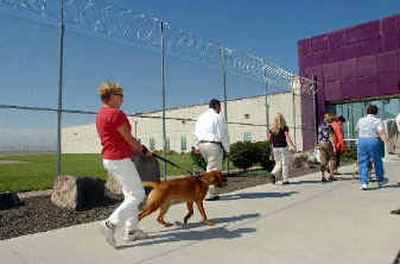
BOISE – Aiden is a 9-month-old Labrador retriever who lacks direction and focus. Archie is a playful 2-year-old with little training, but an eagerness to learn. Sasha is a 2-year-old pit bull mix who doesn’t mix well with horses and cows, but craves a home in an active family.
It could have been the end of the road for these dogs, which have been in the Idaho Humane Society shelter for up to six weeks. But instead, they’ll get a fresh chance for a good home after a few months of rehabilitation with their inmate trainers at the Idaho Correctional Center.
Aiden, Archie and Sasha are among the first eight dogs in the program.
The Inmate Dog Alliance Project of Idaho developed earlier this year after staff members from the Idaho Correctional Center asked the Idaho Humane Society to launch a program similar to “Cell Dogs,” an Animal Planet reality television show.
Inmates began taking their first training classes in mid-July.
“One of the fundamental goals of the program is to show inmates how results can be obtained by demonstrating self-control, empathy, kindness and clear communication,” program instructor Dyan Roessler said.
Along with their inmate trainers, the dogs live in “B-Pod,” a specially designed unit with an adjoining exercise yard.
Jeff Rosenthal, executive director for the Idaho Humane Society, said the inmates were carefully screened before they were selected for the program and had to have good conduct records.
“They are taking this very seriously and want it to succeed,” Rosenthal said. “They are also well aware of their responsibility toward the lives of these dogs. In fact, they appreciate the chance these dogs have of beginning a new life better than most of us.”
When their time in prison is done in three months the dogs will go back to the shelter, rehabilitated and ready for new homes.
A $22,660 grant from the Idaho Women’s Charitable Foundation will fund the program for two years. The grant covers trainers, veterinary care, training materials for the inmates and other expenses.
Rosenthal said the project has the potential to expand beyond dog training. One day Idaho inmates may help train assistance dogs. A scholarship program will be established for inmates who want to pursue a career in the animal care industry after release, he said.