
Difficult pair not in cards
WASHINGTON – The Ace of Spades was captured. The Ace of Clubs and Ace of Hearts were killed. Of the most-wanted Iraqis included in a deck of playing cards distributed last year by the U.S. military, all but 10 are in custody or dead.
The problem has turned out to be the people who weren’t in the deck.
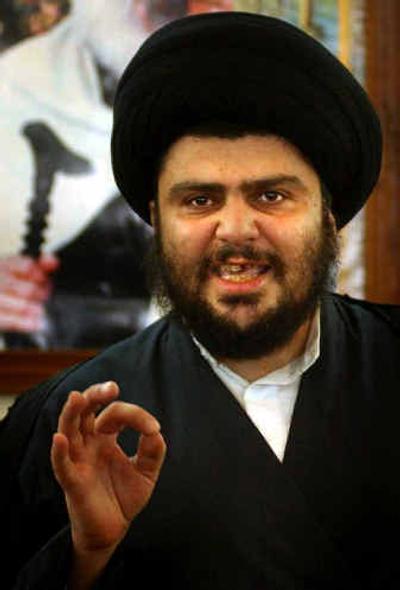
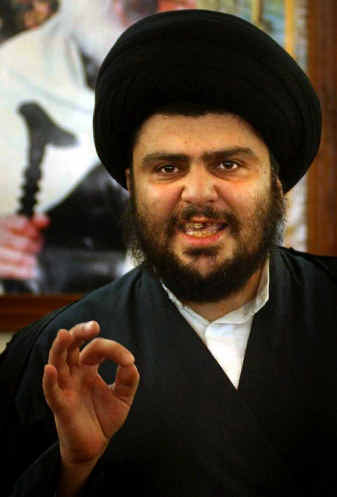
There was no card for radical cleric Muqtada al-Sadr, whose followers have been battling U.S. and Iraqi forces at a shrine in Najaf. Nor is there one for Abu Musab al-Zarqawi, a Jordanian blamed for suicide attacks, kidnappings and the killing of hostages in Iraq.
Critics call it a sign that the United States did not have a handle on the complexities of Iraq, nor on who might prove to be the biggest threat once President Saddam Hussein was gone. Despite progress on the “most-wanted” list, a bloody insurgency continues.
Supporters say the Bush administration always understood the threat was not limited to 55 people, but that it was still important to take out Saddam’s top leadership.
What’s clear is that the 52 cards – an abridged version of a list of 55 most-wanted Iraqis – reflect the achievements and frustrations of the U.S. effort so far in Iraq.
Coalition troops succeeded in capturing Saddam, the Ace of Spades, and killing his sons Odai and Qusai – the Ace of Hearts and Ace of Clubs. They captured or killed most of the top figures in Saddam’s government, preventing them from financing and organizing an armed resistance.
Yet, the U.S.-led coalition forces and the fledgling Iraqi government still are dealing with al-Sadr’s Shiite uprising and al-Zarqawi’s terrorist attacks – as well as resistance from ex-Baathists and other Sunni Muslim militants.
Deputy Defense Secretary Paul Wolfowitz suggested in June that hopes may have been too high about the benefits of capturing the top Iraqi leaders.
“If you want to see what might have been underestimated, I think there was probably too great a willingness to believe that once we got the 55 people on the black list, the rest of those killers would stop fighting,” he told the House Armed Services Committee.
A recent report on Iraqi prison abuses by the independent Schlesinger commission found that war planners at the Joint Chiefs of Staff did not expect a widespread anti-U.S. insurgency or a breakdown of civil order after the invasion of Iraq.
The cards “reflected the misunderstanding of Iraq which has been characteristic of our effort there,” said W. Patrick Lang, a former Middle East analyst for the Defense Intelligence Agency.
Iraq “is saturated in various kinds of factional and national feelings and religious enthusiasms of different kinds,” he said. “We should have known in fact that they were going to resent and be unhappy with our being there – even as they were happy that we got rid of Saddam.”
Yet Walter Slocombe, who was chief security adviser to the U.S.-led occupation authority last year, said officials always understood the threat went beyond the 55 people. There were always concerns about foreign terrorists and Shiite extremists, and a recognition that the Baathist threat ran deeper than the leadership.
“It was like the Mafia,” he said. “If you took out the top 10 people in Cosa Nostra, there was a big infrastructure underneath that and some of them were quite happy to think that they could do a better job than the old guys.”
Still, he said, “It was clearly very important to take out the top leadership,” and it did not distract from other operations.
The top person still at large is No. 6, Izzat Ibrahim al-Douri, the King of Spades. He was vice chair of the Baath Party’s highest ranking body and a confidant to Saddam. The United States has put a $10 million bounty on him.
Wolfowitz has said al-Douri is financing attacks on coalition forces. Yet some U.S. officials are uncertain of his role and say he may have health problems.
Thomas Donnelly, a national security analyst for the American Enterprise Institute, said al-Douri is “enough of a worry and a danger that he’s worth pursuing vigorously.”
Nevertheless, al-Zarqawi and al-Sadr have been the clearer threats in recent months.
Al-Zarqawi, who has ties to various terrorist groups, has been blamed for last year’s bombings of U.N. headquarters, a mosque in Najaf and Italian police headquarters. He has also been linked to the beheading of hostages in Iraq, including American Nicholas Berg.
Al-Sadr, a Shiite populist whose family opposed Saddam, launched his rebellion in March after the occupation authority closed his newspaper and announced a warrant for his arrest. His militia has seized the Imam Ali Shrine in Najaf and has fought U.S. troops and Iraqi police for three weeks. Heavy fighting continued Wednesday.
Al-Zarqawi and al-Sadr were not seen as key figures when the cards were issued in April 2003, said Peter Brookes, a former Defense Department official and analyst for the conservative Heritage Foundation.
“They were emerging threats and they had not yet emerged,” he said.