
New Toys ‘R’ Us strategy may struggle in its infancy

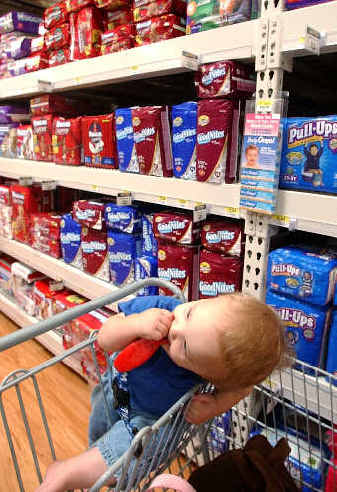
NEW YORK — As executives at Toys “R” Us Inc. mull getting out of the toy business and focusing instead on their Babies “R” Us division, their competitors are already moving fast in the world of blankets and cribs.
Wal-Mart Stores Inc. and Target Corp., which have already hurt Toys “R” Us with deep discounting on toys, are expanding their babies departments. Burlington Coat Factory has nearly 300 Baby Depot shops within its stores.
“Toys ‘R’ Us thinks that Babies ‘R’ Us will be their savior, but the question is, how are they going to meet the increased competition?” said Chris Byrne, a New York-based independent toy consultant.
Bob Waller, president of the Juvenile Products Manufacturers Association, a Mount Laurel, N.J.-based industry trade association, concurred, noting that discounters want a larger share of the $6 billion baby business, which he estimates is growing by up to 6 percent a year.
Consumers shopping for baby products recently were very price conscious — a fact retailers are well aware of.
“Price is really my main focus, just because of the way the economy is right now,” said Cara Parsons, of Bristol, Conn., shopping at Wal-Mart in Rocky Hill, Conn., for baby products. She has two children, a 2-month-old son and 3 1/2 year-old daughter.
Cindy Amato, of Fairless Hills, Pa., buys items like baby wash and shampoo for her 10-month-old at Wal-Mart because its prices are lower, but she likes to buy bigger items like carseats and strollers at Babies “R” Us.
“Not that Wal-Mart doesn’t have quality, but Babies ‘R’ Us is strictly a baby store,” she said.
Babies “R” Us — the nation’s largest baby products chain with 200 stores that’s considered the crown jewel of Toys “R” Us Inc. — has kept ahead of its competition. Last year, the division had an 11 percent sales increase, reaching $1.76 billion. Meanwhile, Toys “R” Us U.S. revenues fell 4 percent to $6.48 billion.
Unlike its discount rivals, Babies “R” Us has such amenities as expectant mother parking, which is near the front entrance of the stores, and special nursing rooms. It also offers a wider selection than that at discounters — stores typically range from 24,000 to 37,000 square feet and carry about three times the number of baby products mass merchants have, according to Sean McGowan, an analyst at the investment firm Harris Nesbitt.
A typical Babies “R” Us store has 100 different carseats and 30 different styles in baby jumpers, for example. Babies “R” Us also is fast to jump on trends — one of the latest is strollers that match the patterns and colors of cribs and other accessories.
But the discounters’ baby sections are growing. At a Target store in Brooklyn, there were more than 10 aisles of baby products, from high chairs and baby strollers to nursing accessories, with well-known brands such as Graco and Evenflo.
Some consumers prefer the logistics at Babies “R” Us.
Wal-Mart “is very large to maneuver with two children” said Jennifer Mohring of East Brunswick, N.J., who has a 4-month old son, and a 3-year-old daughter. She was at a shopping center that has both a Wal-Mart and Babies “R” Us.
And McGowan, who recently visited the baby department at a Target store in New Jersey, believes discounters’ current displays don’t offer the same kind of emotional appeal as Babies “R” Us stores, which start with an open layout that enables shoppers to see the whole store from the entrance.