
OfficeMax to study claims
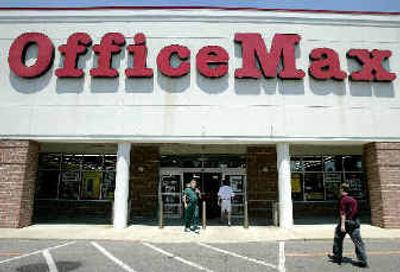
CHICAGO — OfficeMax Inc. is delaying a planned stock buyback as it investigates allegations that workers inappropriately sought promotional payments and falsified documents involving $3.3 million in claims billed to a vendor, the office products company announced Monday.
OfficeMax shares tumbled on the news, falling $1.67, or 5.1 percent, to $30.83 in late afternoon trading on the New York Stock Exchange. The stock has traded in a 52-week range of $28.58 to $38.01.
The former Boise Cascade Corp. took the name of the Cleveland-based office products seller it bought late last year for $1.2 billion in cash and stock. The sale of its paper and timber assets closed Oct. 29.
OfficeMax had earlier said it would use a portion of the proceeds of the sale to return equity to shareholders, according to Vince Hannity, a company investor relations spokesman. On Monday, the Itasca, Ill.-based company said it intends to buy back $775 million to $815 million of its common stock, although that will be delayed during the investigation.
Hannity did not have a timetable for the investigation.
“The company wants to make sure that we’ve explored these allegations thoroughly before we proceed with normal business transactions,” said Bill Bonner, another company spokesman.
OfficeMax did not identify the vendor or the employees. Bonner said the investigation had just begun, and he was unaware of any actions against employees.
Analyst Anthony Chukumba, who follows OfficeMax for Chicago-based Morningstar Inc., said the news would have a negative impact in the short term.
“In this day and age, given all the Enrons and Tycos and various corporate scandals that we have, anything that smells of impropriety, the stock market is going to punish the company,” Chukumba said.
Any long-term fallout will depend on whether the allegations are true and if they indicate a pervasive problem or the actions of a few rogue employees, he said.
Also Monday, OfficeMax announced it would realize $1.47 billion in cash, before expenses, from converting promissory notes it received when it sold the paper and timber business to a new company formed by Chicago investment firm Madison Dearborn Partners LLC.