
Boeing wins Navy contract
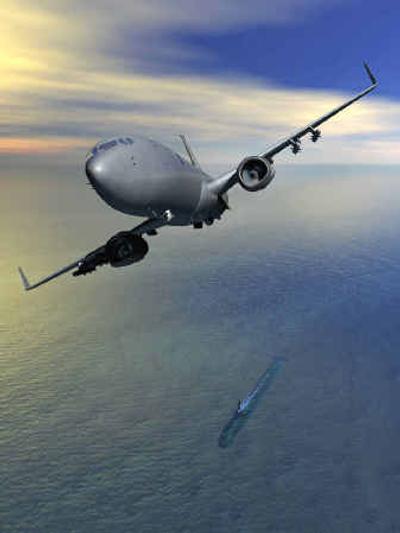
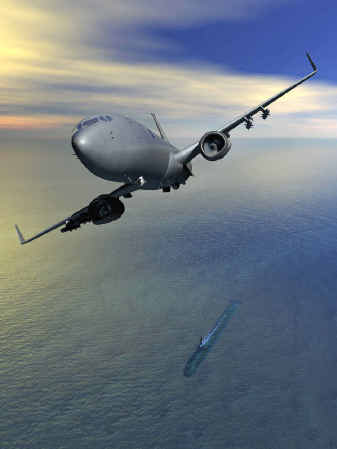
WASHINGTON – The Navy has awarded a Boeing Co. subsidiary a $3.89 billion contract to develop a long-range patrol plane to replace an aircraft that once was the sea service’s main submarine hunter, the Pentagon announced Monday.
Boeing will base the new plane on its 737 airliner. The Chicago-based company was chosen over rival Lockheed Martin for the project, which could be worth $44 billion by the mid-2030s.
The new plane, called a Multimission Maritime Aircraft, will replace Lockheed’s P-3 Orion, a venerable design that has been in use since 1962.
The P-3 production line shut down in 1990, and Navy officials said the average age of the 196 aircraft still in the inventory is 26 years. The plane developed into an airborne battlefield observation platform, flying missions in Afghanistan and Iraq.
Like the P-3, the new plane will be designed to hunt submarines and surface vessels and conduct long-range surveillance. Unlike the P-3, the plane will be a jet instead of a turboprop.
John J. Young Jr., the Navy’s assistant secretary for research, development and acquisition, said during a news conference that he expects the new plane to be ready for deployment by 2013. According to Young, Boeing said it could be finished a year sooner.
The initial $3.89 billion development contract includes money to build only three demonstrator and test aircraft, Young said. It also includes $314 million in incentives if Boeing completes work on schedule, said Thomas E. Laux, a Navy executive overseeing the program.
The production run of 108 combat-capable planes is expected to cost $20 billion; including development, production and at least 20 years of maintenance, the program will run to $44 billion.
Boeing subsidiary McDonnell Douglas of Long Beach, Calif., won the contract. The airframes will be built at the Boeing plant in Wichita, Kan., and completed in Washington state.
“This is a huge win for Boeing and its employees in Washington and around the country,” said Sen. Patty Murray, D-Wash.
Lockheed Martin had based its proposal on an extensive upgrade of the P-3. Young praised both the Boeing and Lockheed proposals but suggested Boeing’s proposals for its production line gave it the edge.
The plane will have a crew of nine and have a weapons bay capable of launching antisubmarine torpedos, air-to-surface missiles and underwater mines. It will have the ability to fly long distances, then linger over the deep sea or a coastline, the Navy said.
He also said a plane built to hunt submarines still has a role in the post-Cold War world, saying that 40 countries operate some 400 submarines.
“This continues to be a very serious threat,” he said.
Only a few of those countries are considered unfriendly to the United States. Iran, North Korea and China all have submarines.
The Navy is also planning an unmanned aerial vehicle to conduct long-range reconnaissance missions, given the P-3 fleet is nearly twice as large as the planned fleet of the new plane.
Boeing is waiting to hear whether it will be able to move forward with its deal to supply to the Air Force 100 airborne tankers based on a conversion of its 767 passenger jet. Taken together, the contracts could mean billions of dollars for Boeing at a time when its commercial airplane division badly needs the business.