
Critical surgery, optional stay time
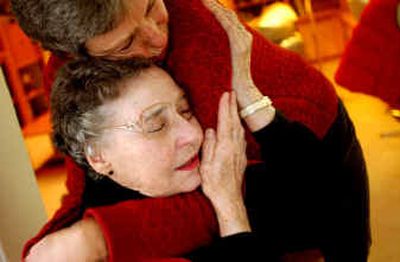
Dr. Bob Holman excised my mother’s breast cancer last month as neatly as Mom freed apples of bruises when I was a kid.
Her mastectomy – breast removal – took hardly more than an hour at Kootenai Medical Center. Three hours after Dr. Holman reported to my dad and me that he’d removed her golf-ball-size tumor and the cancer apparently hadn’t spread, Mom was wide awake and appreciating the hospital’s blood pressure machine. She falls prey to white-coat syndrome – her pressure rises when a nurse measures it holding her arm. The syndrome apparently is absent when a machine does the measuring.
“Can you imagine her going home today?” Dad asked me with no need for an answer. Doctors had injected dye into her to help detect her cancer’s spread and it had left her skin a sickly gray. The color was its only effect. But her ghostly appearance was unnerving.
I couldn’t imagine her leaving the hospital just hours after surgery. But Dr. Holman had offered her that possibility. He’d told Mom a week before her surgery that some women now go home the same day their doctor removes one or both of their breasts.
“Drive-through mastectomies, some people call them,” he said. He couldn’t suppress a grin at the bizarre name. That easy grin is one of the characteristics Mom and Dad find so appealing about him.
His matter-of-fact description of the in-and-out surgery certainly reduces the fear that accompanies a diagnosis of breast cancer.
“The physical recovery is not bad for most patients,” he said. “Anesthesia is better so there’s no lingering post-anesthetic hangover. Nausea and vomiting from anesthesia is the reason most people stay in the hospital.”
Elizabeth Moore had no vomiting or nausea after her double mastectomy with Dr. Holman last week. Elizabeth, 56, arrived at Kootenai Medical Center for surgery just after 7 a.m. She left for home five hours later.
“Dr. Holman said he liked people to stay overnight, but I said I wanted to be in my own bed,” Elizabeth said from her home in Rathdrum a day after surgery. “If you have good support at home, there’s no reason not to do it.”
Dr. Holman was skeptical when he first heard about fast-track mastectomies 10 years ago. Health maintenance organizations – HMOs – in California eliminated the overnight hospital stay for mastectomy patients to save money.
“They were fairly forceful,” he said. “It was a cost-saving attempt, but there was a backlash.”
Women who had just parted with a breast and, often, lymph nodes needed at least one night of tender loving care before they were thrust back into the role of wife, mother and worker. HMOs backed off and agreed not to force women to go home before they were ready.
But some women liked the idea of leaving the hospital to recover at home. Patient demand shifted fast-track mastectomies to the standard procedure level.
Dr. Holman began performing mastectomies in 1981. Women with breast cancer typically are given two options – removal of a lump in the breast followed by radiation, or removal of the breast.
Mastectomies have improved markedly in 20 years, due, sadly, to the high volume performed. In 1960, one in 20 women was diagnosed with breast cancer. By this year, that rate had risen to one in eight. The over-60 crowd is the most vulnerable.
Dr. Holman performed his first outpatient mastectomy a few years ago. A woman already had undergone one mastectomy and needed her other breast removed. She knew what to expect, was healthy and recovered well. The hospital called her at home to check on her. She knew to call Dr. Holman with any concerns.
“To do the surgery as an outpatient requires close coordination with the patient,” Dr. Holman said. “You just have to be willing to respond to the patient if they call.”
Now, Dr. Holman has three or four mastectomy patients every year who skip the overnight stay at the hospital. None had complications requiring their return to the hospital until Elizabeth last week.
Elizabeth, a registered nurse, had a family history of breast cancer. She’d had two surgeries for duct problems in one breast. When her doctor told her she needed a third surgery, she went to Dr. Holman and told him she wanted him to remove both her breasts. Requests for preventive mastectomies are also on the rise.
“If there’s cancer, I’m ahead of the game. If there’s not, I won’t have to go through this surgery again,” she said.
Elizabeth felt fine after her anesthesia wore off. But she woke up after a nap at home later that afternoon with a swollen right side. A clot had caused her blood to pool. She called Dr. Holman and he told her to get back to the hospital. He repaired the problem, which he said happens to about 5 percent of patients. Elizabeth stayed the night at the hospital after all.
Still, she recommends the fast-track mastectomy.
“Day surgery is wonderful,” she says. “If you have a good attitude, I don’t see why you shouldn’t do it.”
Mom didn’t consider fast-track surgery. She’s 79 with the body and health of a woman 15 years younger. I’ve thanked her plenty of times for her genes. She’s a realist, but her reality is a cheerful, supportive place. She understood the gravity of her diagnosis, but she also had faith in Dr. Holman.
For all those reasons, she chose to stay overnight at Kootenai Medical Center after her mastectomy. She had no intention of endangering her health by rushing her recovery. Two days after surgery, she showed no evidence of her hospital stay, signs to me of the great shape she’s in and medicine’s mastery of mastectomies.