
Mountain ready to peak
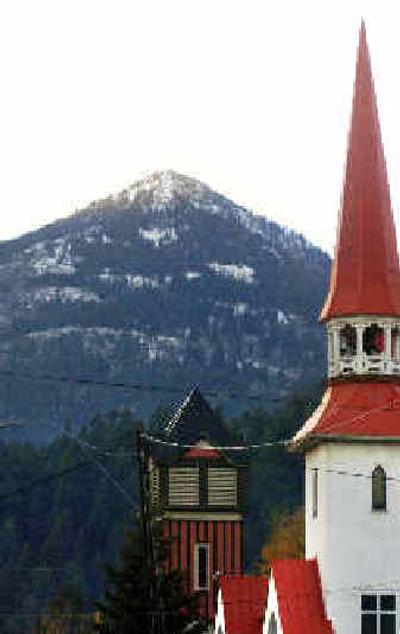
A laid-back ski area in Spokane’s back yard is about to stand up and demand your attention.
Red Mountain, just three hours north in the town of Rossland, British Columbia, has plans to expand from 1,500 to 4,200 acres during the next 15 years. Though it’s nowhere near as high, Red’s additional acreage would make it bigger than Squaw Valley in California, Big Sky in Montana and Jackson Hole in Wyoming.
“The opportunity and the curse is we have a clean piece of paper,” said Howard Katkov, the San Diego multimillionaire and entrepreneur who bought the mountain with Canadian and American investors in June. “We are designing this from the ground up.”
The resort nestled in the Monashee Mountains will add 2,700 acres of terrain, 1,400 homes, and expanded skier services. It will access an additional four peaks, for a total of six, by building five to seven new chairlifts. In the works are a new day lodge, snowshoe and cross country trails, a terrain park and additional commercial space.
Red also wants to reach beyond the ski season to attract visitors. The resort is adding programs and features aimed at becoming a year-round center of activity, with hiking, mountain biking and fishing among the attractions during warmer weather. The base expansion will include a four-acre lake, with a community park and amphitheater.
By the time it’s done, Katkov’s company, Red Mountain Ventures, will have invested more than $1 billion. Red currently receives about 120,000 skier visits a year. That’s projected to grow to 280,000 in 10 years, still keeping the ratio of skiers per acre among the lowest in the region, he said.
But Katkov, a lifelong skier, is struggling simultaneously to guard the small-town feel of Rossland, a former mining town of 4,000 people who passionately love their hometown ski hill. Katkov is adamant that the resort will not follow industry trends and establish a separate “village” at the mountain’s base that will draw business away from the town. (He jokes that the resort’s base area will instead be called “The Red Square.”) He bristles at ski industry buzzwords and developers who build so much expensive real estate that the locals can’t afford to stay.
“We call it the Clock Tower Formula, the gentrification of an old ski town. That’s what’s happened (elsewhere) that we feel is not right for this community,” said Katkov, who is 54. “People that have skied all their lives are tired of that as well. People are looking for the kind of place where they grew up skiing. And that’s what this offers — plus just kick-butt skiing.”
Katkov fell in love with Red five years ago when he visited Rossland at the urging of a friend. He bought land on a hunch, seeing the region’s potential, but had no intention of buying the mountain, he said.
After he began spending time in the town, Katkov said he realized that Rossland’s economy was stagnating and the resort wasn’t promoting itself well. He figured it would eventually be bought by a developer who might transform things for the worse. So he put together a group of Canadian and American investors to buy the mountain, both because it was a good opportunity and because he wanted to help determine its future.
The sale closed in June, but Katkov won’t say what they paid.
“We felt we were the right mindset as owners, but we have the same passion as the community,” Katkov said. His investors are “savvy businesspeople that can make this thing successful without ruining what has made this area great. That’s the challenge for us today.”
Visitors to Rossland know that the town matches the ski hill — it goes straight up. Sitting at an elevation of 3,400 feet, Rossland is so steep there’s a rope tow at the golf course. The town is about two miles from the ski resort and has a quaint main street with restaurants, sport shops, grocery stores and homes. World champion mountain bikers and extreme skiers call it home. Rossland recently was recognized by National Geographic Adventure magazine as one of North America’s “10 Great Adventure Towns to Live and Play.”
The largest employers are Teck Cominco and the regional hospital seven miles away in Trail. Rossland is an educated town, says 25-year resident Don Thompson, who’s also Red’s vice president of resort development. More than 65 percent of the adults have at least one year of college education, he said.
Rossland is a place where people like Blaine Benner came to ski for a season and never left. Benner runs Adrenaline Adventures, a 4-year-old outdoor recreation company that offers outings in skiing, hiking, rafting and other sports. Working with Red Resort this winter, Benner will run the Red Express, a shuttle offering daily service to Spokane International Airport for $90 Canadian each way (about $74). Benner’s company also will offer a shuttle between Rossland and the mountain this winter.
Benner, a former bartender and ski bum, moved to Rossland seven years ago because he heard the skiing was good. He stayed because he loves the town’s lifestyle. His business plan, written in 2000, projected that Red Mountain would be sold and development would begin in 2006.
“Having found this when I did, I knew it was inevitable that something was going to happen here. It’s actually happening quicker than I thought,” said the 36-year-old. “We’re all feeling there’s a future in Rossland. It was the first time in my life I came across something where I got to the canvas before there was any paint on it.”
But the brushes have been dipped.
Crews are hard at work on the mountain’s first phase of development. This year, skiers will see a new terrain park, updated lodges with improved menu selections, an improved grooming program, 30 percent more tree skiing, resulting from extensive alder cutting, a new guest center and enhanced ski school. Red is also expanding beginner terrain, adding snowshoe and cross country trails and creating a Red Carpet moving walkway on the beginner slopes for skiers who haven’t mastered chairlifts.
Red recently placed 13th in Skiing Magazine’s ranking of the top 25 North American resorts. The magazine touted Red’s “pillow-drop skiing,” its glades and the fact that it’s reaching out to families. The ranking put it ahead of places like Steamboat in Colorado, Lake Louise in Alberta and Sun Valley in Idaho. And that’s despite having one of the lower peak elevations, at slightly less than 7,000 feet. None of the five resorts in the Spokane-Coeur d’Alene area were listed.
Opening Red up to families by expanding beginner terrain is a primary goal, Katkov said. The resort is heavy on the advanced and expert terrain now, with a past marketing campaign bragging “steep, deep and cheap.” Steep and deep are good, Katkov says, and Red’s lift ticket remains competitive, at $48 Canadian (about $40). But he wants skiers of all skill levels to feel welcome and comfortable.
Accompanying the mountain improvements — and financing them — will be new single-family homes at mid-mountain and condominiums and town homes at the base. The condominiums will start at about $350,000 Canadian (about $290,000) for units averaging 1,100 square feet in size, Katkov said. Though expensive for the average buyer, a condo that size would go for more than $1 million at most large ski resorts, Katkov said. Single-family homes will start at about $750,000 Canadian.
Real estate costs about $1,000 a foot at Whistler, Vail and Jackson, Katkov said. “Employees cannot buy housing in those areas. It’s gone nuts. We don’t want that to happen here,” he said. But, he added, Red also has contiguous communities, including the town of Rossland, that offer affordable housing.
Crews are scheduled to break ground in May on a 30,000-square-foot day lodge, double the size of the current one. Other developers have already begun building about 600 housing units and they appear to be selling out as fast as they’re built. One Web site advertised 10 new units, with only two available.
That’s indicative of the ripple effect Rossland has felt since the sale of Red was announced in September 2003. The Rossland Chamber of Commerce has received 23 business inquiries since the sale closed in June, said President Lindsay Wong. And 13 new businesses have moved to Rossland since January, she said. The assessed value of housing in Rossland has increased 30 percent since the sale closed, Katkov said.
“There’s really no (housing) inventory,” Thompson, Red’s vice president, said. “It’s really energized the market. (Before), the land values weren’t there for people to have enough equity to improve their homes. So there’s a lot of improvements going on.”
Benner said he bought his three-bedroom, two-bathroom home four years ago for $114,000 (in Canadian dollars) and recently a Realtor appraised it at $170,000. Lucie Fortier, Red’s marketing manager, said she bought her home in 1998 for $104,000 and it’s now worth $145,000.
Dan Haley, who grew up in the area then moved away, recently bought the town’s 100-year-old former municipal building. It housed the fire station, police station, jail and city hall, but has been vacant for several years. His renovations have transformed the jail cells into washrooms, the indoor police horse stables into small office spaces and he welcomed his first tenant — a coffee and tea company — just three weeks ago. He’s hoping to lease other space.
“All of a sudden there’s jobs happening again. It’s opened up a huge amount of opportunities for the young people,” Haley said. “I’ve always believed in this little town. I’ve always loved it, eh?”
But every small town expansion brings concerns that the feeling of the area will change. Lyn Profili runs the Sunshine Café in the center of town. She said she’s happy for the people who’ve always believed in Rossland’s potential, but she’s not interested in having crowds pour in.
“It is going to be a little Whistler. But hey, good for us, I guess,” said Profili, who said she’s likely to move. “All those people who’ve been wanting something here for so long, good for them. I’ll come back and visit.”
Therein lays Katkov’s challenge. He’s fully aware that what he’s doing is like being entrusted to raise someone else’s child.
“This is the most emotional purchase I’ve ever made,” Katkov said. “I’ve never been so exposed.”
Before he bought the mountain, no one asked him what he did for a living. Now he spends about one week a month in Rossland and when he drives down the street, people stop him to talk about the plans. Several hundred people attended each of two community meetings held to announce the expansion. Border patrol agents ask for the latest report when he crosses.
Unaccustomed as he may be to the attention, Katkov is well-versed in building businesses. He founded a law firm and land development firm in Southern California. In 1990, he was asked to join the board of a small start-up cosmetics firm called Sassaby. He soon became CEO and developed a line of cosmetic organizers targeted at teenage girls. The line, called jane, became one of the fastest growing brands in the mass market and was sold to cosmetics giant Estee Lauder in 1997 for “$50 million to $100 million,” Katkov said.
Katkov remained president of the cosmetics company until he joined the board of another start-up, dock3, in 2001. The company offers workplace services to about 12 million employees nationwide, offering dry cleaning, parcel shipping, photo development and other errands for busy people. Katkov said his role with dock3 at this point is largely advisory and his full attention is on Red Resort.
“This town and the people that come here to visit love to recreate,” Katkov said. “Our attitude is, if you don’t like to get your knees skinned, just go somewhere else. No furs, no dogs stuffed in your breast, we just want to come on out and go for it. We figure there are 1,400 other people in the world who want to buy our real estate that have the same kind of lifestyle.”