
Bridge
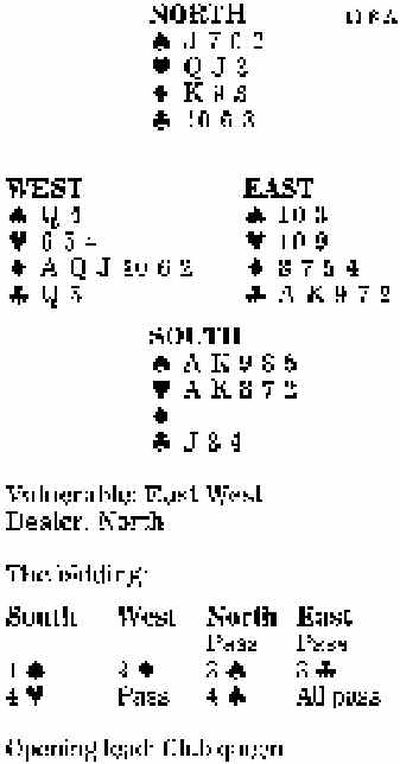
One of the best loved of American postwar bridge experts was Harry “Fishy” Fishbein of New York City. Ironically, he is probably best known for having created a defense to pre-empts that he did not use much himself and that he had a very low opinion of in later years, but which still lives on around the world.
However, Fishy was also equally well-known in bridge circles for his sartorial excesses. He wore a different colored beret each day at tournaments and always had a good story ready for anyone who would listen. See what you think of this play he made in the West seat, defending against four spades.
Fishbein led the club queen in response to his partner’s bid, then continued a club to East’s king. When East played the club ace, what do you think Fishy discarded? Yes, you’ve got it. He deposited the diamond ace on the table!
The idea was to ensure that his partner did not play a diamond and to jolt him into playing a fourth round of clubs to promote the spade queen to the setting trick. Fishy knew that a club would definitely beat four spades, but a diamond shift might not, since the auction had suggested that declarer might have a diamond void. Was he ever right!
A lesser player might have discarded the deuce of diamonds to tell the same story, but such an unimaginative discard never crossed Fishy’s mind. He wanted to give his partner a discard he wouldn’t forget.
Bid with the aces
South holds:
| •A K 9 8 5 | |
| •A K 8 7 2 | |
| •—- | |
| •J 8 4 |
| South | West | North | East |
| 1 • | Pass | 1 NT | Pass |
| 2 • | Pass | 2 • | Pass |
| ? |
Answer: Rebid three hearts. Partner has not shown a spade fit, but has given preference – perhaps under duress. Your sequence now shows real extra values and a 5-5 pattern, letting partner choose which major to play in and at what level.