
Vets work together, open emergency clinic
It was 8 p.m. when Cy the Rottweiler started nonstop vomiting. Brigitte Westbrook, Cy’s owner, knew her veterinarian had gone home for the day.
Cy was seriously sick, so Brigitte called her vet’s office anyway to leave a recorded plea for help. Instead, she heard a message with a Post Falls phone number to call for immediate emergency pet care. Brigitte called the number. North Idaho Pet Emergency answered, encouraged Brigitte to bring Cy right in and gave her directions to the storefront clinic.
“They were standing outside waiting for us when we arrived,” says Bonnie Gonyer, Brigitte’s daughter. “They cared about us as well as the dog. If anything happens to my animals, I’d call them first.”
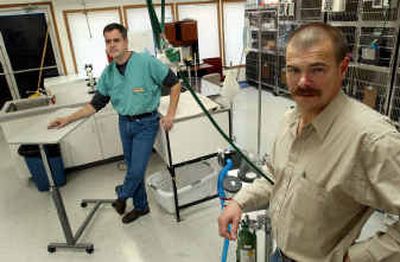
North Idaho Pet Emergency is Kootenai County’s first all-night emergency room for dogs and cats. Its nondescript glass door in the Whistle Stop Plaza on Seltice Way disguises the wee-hour revivals that happen inside. When a car hits a dog at 11 p.m., the dog’s owner doesn’t have to wake his veterinarian and wait until she can get to work. Pet Emergency offers on-staff veterinarians from 5 p.m. to 8 a.m. every weekday, from 5 p.m. Fridays to 8 a.m. Mondays and every holiday.
“Before the emergency clinic opened, if we had a critical care patient in the clinic we went home at 6 (p.m.) and hoped it would be OK in the morning,” says Hayden Pet Medical Center veterinarian Kendall Bodkin. Now at 6 p.m., Kendall tells Pet Emergency veterinarian David Gray about any critical cases to ensure round-the-clock care.
The clinic grew from frustration as much as need. Someone asked veterinarian Dave Gerber at a meeting last year when Coeur d’Alene planned to open an emergency clinic. Dave understood the need. He had sold his medical office a decade earlier so he could see his daughters again. They had been growing up without him.
While Dave was in practice, pet owners would call him at 3 a.m. to deliver their dog’s pups or stitch a wound. After attending to those emergencies, Dave practiced regular hours in his office. He knew the demand came with the job when he trained in animal medicine. But he’d reached his limit.
“If you take the job seriously, you put it ahead of your kid’s birthday party. My kids were 12 and 15, and I didn’t even know them,” he says.
Dave mentioned the emergency clinic idea to Kendall, word spread and 20 veterinarians eventually gathered to make it happen. David Gray was a veterinarian for Kootenai Animal Hospital and had worked in a 24-hour emergency pet clinic in Sacramento, Calif. He liked emergency medicine and offered to serve as the clinic vet.
The start of an emergency clinic appealed to 42 veterinarians in Kootenai County and Eastern Washington, even though an emergency clinic operates in Spokane. The veterinarians not only backed the idea, they contributed financially. Idaho Independent Bank lent money so the group could remodel space in the Whistle Stop Plaza into a reception area, two exam rooms, a treatment area and surgery room.
The veterinarians set up a lab and bought all the equipment necessary for most emergencies. They added a comprehensive pharmacy with medicines they need to treat emergencies. They equipped the clinic to develop X-ray film in five minutes. David Gray can even reach a cardiologist via telemedicine and receive a report back within an hour. The veterinarians hope eventually to add a blood bank.
Kendall waded through all the tiresome paperwork to organize the project and was rewarded with a veterinary community that finally communicated. In Kootenai County’s history, veterinarians typically ran their own practices and kept to themselves. The emergency clinic depended on their cooperation to work well and to everyone’s approval.
For instance, Kendall wanted a consensus on the prices to charge for services. By discussing the issue together, veterinarians got to know one another and have a better understanding of other practices. They agreed the clinic would charge $75 for an office visit.
The clinic opened in April and a patient arrived for help within its first 30 minutes in business. In its first six month, the clinic has attended to 1,600 pet emergencies.
“We’ve seen more than we anticipated,” Kendall says. “And we’ve seen everything.”
David Gray is the only vet on staff now, but the clinic is working on hiring a second. David responds to any emergency, from delivering pups to transfusing blood. Pets don’t stay at the emergency clinic. Owners retrieve them after their emergency care. David calls the animals’ primary doctors with details of his work and those veterinarians take care of follow-up treatments.
“Dr. Gray did more than he needed to do,” says Bonnie, remembering her experience with Cy. “They kept updating us, didn’t leave us to worry. When we took Cy to his vet the next morning, Dr. Gray had already called and told them what was going on.”
Kendall rides motorcycles with his kids on weekends now or takes off on family trips. He chaperoned at his son’s high school homecoming dance last week and can’t stop smiling about it. He never believed he’d have such a chance. He no longer has to take two cars on family outings in case a pet emergency calls him away.
“I can spend Christmas with my family this year,” he says.
David Gray is just as pleased. He’s working in the area of pet medicine he prefers. The strange schedule also fits his family.
“I have a young son and I see him more because I’m home days,” he says. “It’s working well.”
For vets as well as pets.