
The road began here
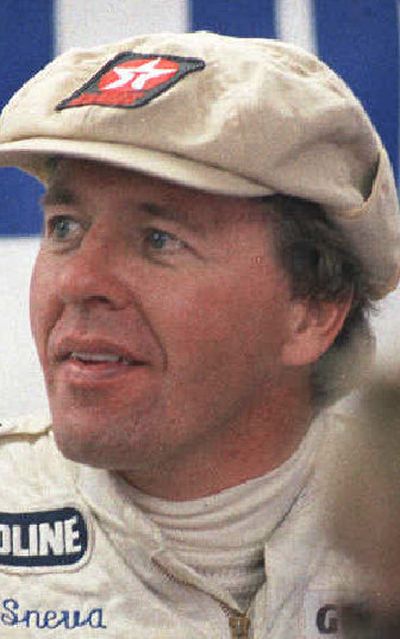
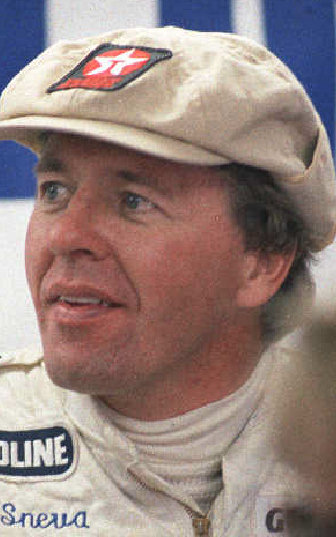
Tom Sneva was driven by himself to be the best at whatever he did, be it school sports or driving a race car.
That effort over the years has paid off in a rewarding racing career that included, 13 Indy Car wins, a pair of national championships and the crown jewel of racing – winning the Indianapolis 500.
For his accomplishments, the former Spokane resident, who now lives in Phoenix, will be inducted into the Motorsports Hall of Fame of America in Detroit tonight.
Joining the one-time school principal as 2005 inductees are former NASCAR champion Benny Parsons; Hurley Haywood, the first to win LeMans and Daytona in the same year; drag racer “TV Tommy” Ivo; Danny Foster, winner of the 1947 and 1948 Gold Cup hydroplane races; motorcycle champ Jay Springsteen; John Holman and Ralph Moody, NASCAR car owners and builders; and Troy Ruttman, who at 22, was the youngest Indianapolis 500 winner.
A little irony creeps into tonight’s festivities in that both Sneva and Parsons were the first drivers to crack the 200-mph barrier in their respective classes. Sneva did it at Indy in 1978, Parsons in a stock car at Talladega, Ala., in 1982.
Fellow racers know the drive that Sneva possessed. Along with talent and a lead foot, “The Gasman,” as Sneva was nicknamed, harnessed it all together in a racing career that spanned some 20 years and began in his backyard at the old Spokane Interstate Fairgrounds Speedway.
One of Sneva’s toughest competitors over the years in Northwest racing circles was Canadian American Modified Racing Association (CAMRA) driver Norm Ellefson. “He was a dandy,” said Ellefson. “He never gave an inch. You had to earn it.”
Last time Ellefson raced Sneva was in the Fall of 1971 at the Fairgrounds.
“I beat him,” said Ellefson. “Of course, he had a tire going down.”
That race came down to the last lap, Ellefson recalled.
“I went high and then turned down underneath him. We were side-by-side down the backstretch. He was wheel-wanging me all the way,” Ellefson said, referring to the practice of banging wheel-to-wheel in an attempt to intimidate another driver.
“Oh, the stuff I taught him,” Ellefson said with a chuckle.
Current late model racer Ron Turner raced a rear-engined Jim Tipke car against Sneva. Like other drivers, Sneva had a big target on him.
“Tom was always the one we were going to beat,” Turner said.
Turner, a rookie in the class at the time, recalled one night at the Fairgrounds during the midseason championships, when Sneva and Ellefson were racing hard for the lead and crashed. “I drove around them and finished second to Bud Gorder.”
CAMRA was a great training ground said Ellefson.
“They inverted the whole starting field putting the fast guy in the back,” said Ellefson.
CAMRA, in Ellefson’s estimation, was the equivalent of Triple-A baseball for race car drivers.
“We ran with good people (in CAMRA),” Ellefson said. Notable drivers included Billy Foster, the first Canadian to qualify for Indy and Portland’s Art Pollard who ran many years at Indy before he died in a 1973 crash.
That training, and tough competition, paid off for Sneva when he moved on to the big time.
“He amazed people back East at how well he did in traffic,” Ellefson said.
Talent maybe drove Sneva more than anything else because not all the cars he jumped into were good ones.
“He had his share of bad ones,” said Tom’s dad, Edsol Sneva of Spokane. “He made them go faster.”
“Cars that were not all that good, Tom made ‘em good,” said his dad, who still builds cars and crews for son Blaine, a driver in the Northwest Modifieds who lives in Coeur d’Alene.
After a particular bad night of struggling with a car Sneva drove, Ellefson went over to Tom’s mom, Joan, one night in the pits. He comforted her and told her not to worry, saying “He’ll win Indy some day.”
And, of course, after runner-up finishes in 1977, 1978 and 1980, that prediction came true in 1983.
When Tom went to Indy with a Tipke car in 1973, things at the Brickyard were decidedly different than they are today.
“Back then you had to show then that you were a good race car driver, not the size of your wallet,” said Edsol.
Car owner Carl Gillhausen had a number of cars. One, however, a rear-engine sprint car, “just sat there, because no one could make it go fast,” Edsol said.
“Tom called him after we got back from Indy and asked if he could come back and drive the car.”
Everyone who was anyone had been in the car, according to Edsol: “It was either one second slow or it crashed.”
Sneva took over driving at the halfway point of the season and went on to win six times and finish second twice in nine races. The rear-engine sprint car was subsequently outlawed.
“He was never satisfied. He always thought it could go faster,” Edsol said.
Sneva’s career started in the mid-1960s at the Spokane Interstate Fairgrounds Speedway. The kids built a 1937 Chevy and Tom drove it in the Jalopy class. Sneva won back-to-back modified championships in 1970 and 1971.
Edsol’s gift to his son that pushed him to the top wasn’t an inherited ability but something more simple: Help building race cars. Some that worked well and others that challenged Sneva’s ability.
Always wanting to push the envelope, Edsol then moved Tom into a Corvair. “We never succeeded. We were barely competitive.”
“I helped more with Tom than the others,” Edsol admitted. But it was done for a good reason. With five boys, Edsol’s theory was “to get one of them back to Indy and that would make a chance for the others.” Son Jerry was the only other one to find that door open.
Years of work have paid off and it’s a good feeling that Edsol Sneva has today.
“This makes me feel like I’m walking on water, I’ve enjoyed every minute of it,” said Edsol.
Sneva’s mom, Joan said “It’s wonderful, of course,” especially now that her son is retired from racing. “The first time it was bad watching Tom race. After a while, however, you have confidence.”
Racing has been part of Joan’s life for over 50 years. She and Edsol have been married for 57 years.
“It was quite an experience. I went back every year Tom raced,” she said.
Blaine is nine years younger than his 57 year-old brother. They never raced competitively against each other. However, Blaine noticed the drive that drove big brother to greatness on the track.
Tom, who was en route to Detroit and could not be reached for this story, played baseball, basketball and football at Lewis and Clark High School.
“As a point guard he was not very tall, as a running back he was not very big. But he worked hard,” Blaine recalled.
As the oldest of five boys, Tom was the first guy to do a lot of things. “Tom was the first guy to go water skiing barefoot,” Blaine said.
“He had a drive that most people do not have.”
And that drive took him a long way.