
Ex-teacher’s sentence overturned
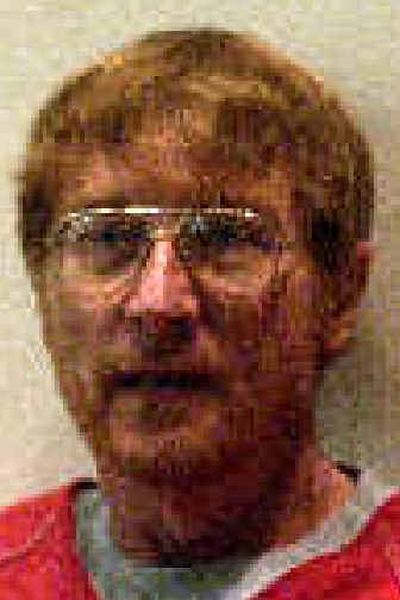
An appellate court overturned the indecent-liberties sentence of a former Nine Mile Falls special education teacher Thursday without providing the guidance that lawyers had hoped to receive.
The Spokane division of the Washington Court of Appeals said, as expected, that a U.S. Supreme Court decision last June invalidates the above-standard sentence former Lakeside High School teacher Carl John Schubert received in September 2003.
What the Washington appellate court didn’t say is whether there is any way Schubert can still get above-standard punishment on grounds that he abused a position of trust and authority.
Schubert, 60, is the second member of his family to benefit from far-reaching appellate rulings that have created turmoil in Washington courts. Earlier this month, Schubert’s daughter, Stephanie Tanner, had five years shaved off her 17-year sentence for second-degree murder because of a Washington Supreme Court ruling.
The court said Tanner and scores of other people were improperly convicted of second-degree murder on grounds that a victim died during the course of an assault. Tanner pleaded no contest in 1994, when she was 25, to a charge that she suffocated her infant son with plastic wrap in 1989.
Spokane police investigated the death when a second infant son of Tanner’s was hospitalized with a suspicious breathing problem. Doctors determined that Tanner suffered from a rare attention-seeking personality disorder called Munchausen syndrome by proxy.
Deputy Pend Oreille County Prosecutor Tony Koures said Thursday he will try again to win a longer-than-standard sentence for Schubert. Schubert was tried in Pend Oreille County because the molestation occurred there during a camping trip.
If Schubert won’t cut a deal, Koures said, he will pursue a course that could send the case back to the Court of Appeals for a ruling on the question the court ducked this time.
That question is whether a trial judge can empanel a jury to consider aggravating factors that would support an above-standard sentence.
The Supreme Court said last June in a Grant County case that defendants are constitutionally entitled to have a jury determine all facts used to justify above-standard sentences.
Washington’s sentencing law allowed judges to determine aggravating factors, and now-retired Pend Oreille County Superior Court Judge Larry Kristianson did so in Schubert’s case.
A jury was unable to reach a verdict on a second-degree rape charge, but convicted Schubert of indecent liberties. Kristianson then declared Schubert’s crime a “despicable” violation of trust.
Kristianson noted that Schubert’s victim, now 21, had the mental ability of a 5- to 7-year-old.
Schubert’s standard sentencing range was 15 to 20 months in prison. A state corrections officer called for a four-year sentence and Koures sought 61/2 years, but Kristianson imposed the statutory maximum of 10 years.
Koures said he will ask a judge to empanel a new jury and impose an above-standard sentence if the jury finds aggravating factors. If a trial judge refuses to empanel a jury, Koures said he will appeal that decision back to the Court of Appeals in Spokane.
That’s a possibility a three-judge panel of the court discussed in November when it heard Schubert’s appeal.
Koures called for guidance on whether an above-standard sentence is still possible and, if so, how it could be accomplished. He urged the Spokane-based Division III of the state Court of Appeals, one of three divisions, to follow the lead of Division I.
A Division I court has ruled in a Snohomish County case that a trial judge may empanel a special post-conviction jury to consider aggravating factors. That decision isn’t binding on Eastern Washington trial courts that answer to Division III.
At least one of the three judges who heard Schubert’s appeal was openly skeptical of trying to fix Washington’s defective law by empanelling post-conviction juries without specific authority from the Legislature.
“That’s fairly aggressive judging, isn’t it?” Judge Frank Kurtz said.
Kurtz and his fellow judges, Stephen Brown and Dennis Sweeney, noted they could avoid the issue at least temporarily by simply remanding the Schubert case to a trial judge.
Schubert’s Spokane attorney, Doug Phelps, wasn’t available for comment Thursday, but he argued to the Court of Appeals that a standard-range sentence should be mandatory.
Charging Schubert with aggravating factors after his trial would constitute double jeopardy and would violate Schubert’s right to know before trial what charges he faced, Phelps argued on appeal.
Phelps asserted during Schubert’s trial that Kristianson had no right to impose an above-standard sentence. He cited a June 2000 U.S. Supreme Court decision that led to last summer’s decision that Washington’s sentencing procedures were unconstitutional.
Phelps represented Ralph H. Blakely, the Grant County man whose case led to last summer’s ruling.