
Ebbers conviction alters landscape
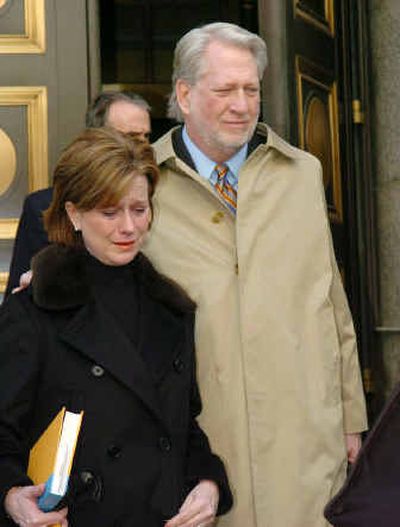
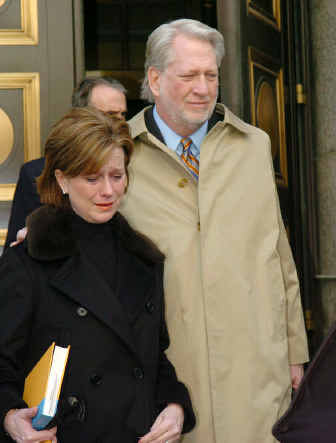
HOUSTON – Jurors didn’t buy Bernard Ebbers’ claim that he knew nothing of the massive accounting fraud that sank WorldCom. And his conviction Tuesday may give pause to other former CEOs, including the men who ran Enron Corp., who also say they were ignorant of dirty dealings at the companies they once ran.
“This is a pretty good message to any of the CEOs who are currently in trial, like HealthSouth’s Richard Scrushy, or awaiting trial, like (Enron’s) Ken Lay and Jeff Skilling, that the ‘I was above it all’ defense just is not going to fly with juries,” said Gary Brown, former special counsel for the Senate Committee on Governmental Affairs during its investigation of Enron’s collapse.
Jurors, he said, “are everyday people who are held accountable in their positions and they’re just not going to buy – most of the time – a guy making hundreds of thousands of dollars a year not being knowledgeable of what’s going on in their company.”
Lay, Enron’s former chairman, has repeatedly said he knew nothing of the company’s shady accounting practices during the time when he publicly encouraged employees to buy stock – and even as Enron was spiraling into bankruptcy in late 2001. Lawyers for ex-CEO Skilling and co-defendant Richard Causey, the former top Enron accountant, also say their clients committed no crimes. The trio will go to trial in January.
Charna E. Sherman, a partner with Squire Sanders & Dempsey in Cleveland, a law firm that specializes in white-collar crime, said the verdict was a definitive rejection of Ebbers’ defense that he was really a coach who led and encouraged executives under him, and that he knew nothing about finance and accounting.
“The message to others awaiting like trials as well as those running other corporate giants is clear: If you play in big leagues, but only intend to coach, expect to get benched to the nearest federal prison,” she said.
But Samuel Buell, a University of Texas law professor and former member of the Justice Department’s Enron Task Force, warned against treating the Ebbers verdict as a referendum of sorts on the “I didn’t know” defense.
“It’s not as if one jury will look to another jury’s verdict for guidance,” said Buell, who helped win a conviction against former Enron auditor Arthur Andersen LLP in June 2002.
Rather, he said, the Ebbers verdict shows that those jurors examined evidence that corroborated testimony from the star witness, former WorldCom finance chief Scott Sullivan, who they found believable despite his admitted involvement in the fraud.
“This is just proof of the fact that a jury is willing to find that a person cooperating with testimony is sufficient to support a verdict provided there’s enough other evidence to corroborate, no matter what the defendant says,” Buell said. “I’d expect the juries in HealthSouth or Enron to do the same thing.”
Lay’s lead criminal lawyer, Michael Ramsey, declined comment, as did Andrew Weissmann, head of the Enron Task Force.
Upon being indicted on charges of conspiracy and fraud in July last year, Lay launched a blitz of television appearances and other media interviews unusual for a criminal defendant. As recently as Sunday, he was laying out his defense: He trusted the wrong people whose crimes undermined his unsuccessful efforts to save the company.
Lay, who resigned from Enron in January 2001, blames Enron’s collapse on former finance chief Andrew Fastow, who pleaded guilty to two counts of conspiracy for running varied schemes to puff up a wobbly Enron’s appearance of success while skimming millions of dollars for himself on the side.
Fastow, like Sullivan in the Ebbers case, is expected to be a key witness against Lay and his co-defendants.
Scrushy is on trial in Birmingham, Ala., on federal charges of leading a conspiracy to inflate HealthSouth earnings to make it appear that the rehabilitation company was meeting Wall Street estimates. Prosecutors contend Scrushy pocketed millions from the fraud. Scrushy’s lawyers argue that their client’s former subordinates ran the fraud on their own and hid it from him as they got promotions and raises.