
To share or not to share
Recording industry executive Andy Gershon sees opportunity in the online file-sharing networks that most of his rivals decry as havens for music pirates.
As president of V2 Records – home to such established acts as The White Stripes and Moby – Gershon mines such Internet distribution channels for new fans and revenues.
“The cat is so far out of the bag and so far gone that it’s pointless to keep fighting it,” he says. “I might as well make as many people fans of our music, whether they illegally download it or not.”
A number of mostly independent recording artists and labels have embraced the freewheeling digital distribution that the Internet affords.
And many worry that a victory by major recording companies in a landmark file-sharing case before the U.S. Supreme Court could short-circuit the very technologies that they believe are making a more level playing field of the music business.
The nation’s high court is scheduled to hear arguments Tuesday on whether the entertainment industry can hold file-sharing software firms Grokster Inc. and StreamCast Networks, which distributes Morpheus, liable for what computer users do with the technology.
Lower courts have sided with the software makers, which assert their so-called peer-to-peer technology is as legitimate as a videocassette recorder or a copy machine.
Several artist rights associations, music publishers and well-known musicians, including Don Henley, Sheryl Crow and the Dixie Chicks, are backing the major recording labels.
From 1999 to 2004, the total value of the U.S. recording industry fell $2.4 billion, to $12.1 billion – a decline the industry blames primarily on file-sharing.
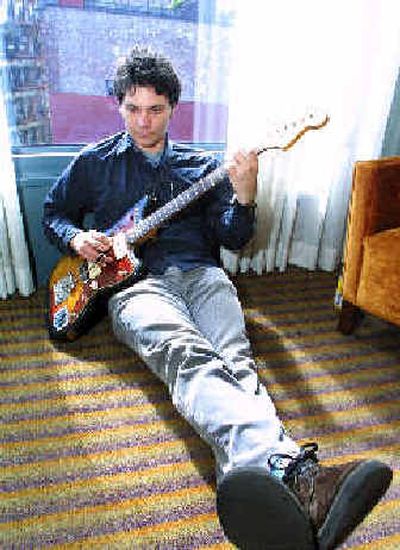
But some artists, including Wilco frontman Jeff Tweedy, see an upside.
“I look at it as a library. I look at it as our version of the radio,” Tweedy said. “It’s a place where basically we can encourage fans to be fans and not feel like they’re being exploited, which is basically what the whole industry is geared to do.”
Tweedy encourages fans to tape Wilco shows and has distributed tracks over the Internet for free months before releasing them on CDs.
About 20 independent recording artists, including musician/producer Brian Eno, rockers Heart and rapper-activist Chuck D, filed a legal brief with the Supreme Court in support of Grokster and StreamCast, saying file-sharing and related technologies help expose new audiences to their music.
For Sananda Maitreya, who also joined in the brief, online music distribution gives him the freedom he says he lacked when he was signed with a major label in the 1980s under his former name, Terence Trent D’Arby.
Back then, Maitreya recalls, committees had to sign off on any music released.
“The Beatles could not have faced that criteria and come up with anything other than the most mediocre, conservative music,” he says.
Sovereign Artists Inc. has promoted and sold tracks by Heart using the online Weed file-sharing format, in which listeners can hear a song for free several times before having to buy it. Maitreya and the rap group Fine Arts Militia, featuring Chuck D, also have released albums through Weed.
John Beezer, president of Weed creator Shared Media Licensing Inc. in Seattle, estimates that fewer than 100,000 tracks have been sold in the 18 months since the software went into use.
Beezer said more than 7,000 artists have offered their songs through Weed, and the vast majority aren’t signed with recording labels. But even for unsigned bands, the potential to cheaply target the pool of music fans on file-swapping networks can be tantalizing.
Kevin Martin, vocalist for the 1990s band Candlebox, credits a file-sharing song promotion involving the Yoo-hoo drink brand with generating interest in his new L.A.-based band, Kevin Martin and the Hiawatts.
“We’re not doing 10,000 records a week,” he said, “but to see yourself go from 15 records to 62, it’s pretty exciting.”