
Energy industry ‘just printing money now’
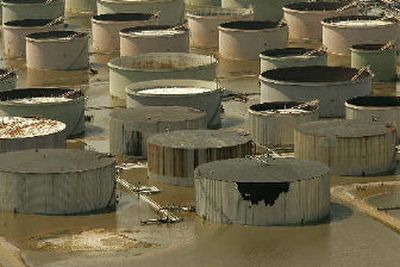
DALLAS — Offshore oil platforms were destroyed, refineries were flooded and gas stations were sporadically out of fuel.
Although hurricanes Katrina and Rita created compounding headaches for energy companies over the summer, the storms ultimately benefited them because, as supplies tightened, prices for gasoline, diesel and jet-fuel soared. Exactly how much money was made will become clearer next week, when the industry begins to detail its third quarter performance, though analysts are expecting huge profits.
“They are just printing money right now,” said oil analyst Fadel Gheit at Oppenheimer & Co. in New York. “They are making so many trips to the bank because they can’t take all the money there at one time.”
Exxon Mobil Corp., Chevron Corp., BP PLC, ConocoPhillips Co., and Royal Dutch Shell PLC are expected to report a $9 billion, or 43 percent, increase in their combined third-quarter profits, according to analysts’ estimates compiled by Thomson Financial. Last year, these five companies earned $20.7 billion in the July-September period.
The windfall isn’t limited to the major integrated companies that produce, refine and sell energy at the retail level.
Independent oil and gas producers, as well as independent refiners, are also expected to report double-digit profit increases. And despite indications of a slowdown in the growth rate for energy demand, the fourth quarter is already shaping up to be another good one for the industry — in part because production of oil and natural gas in the Gulf of Mexico remains hindered.
The back-to-back hurricanes have already cost the region more than 11 percent of its annual oil production (about 60 million barrels so far) and nearly 8 percent of its yearly natural gas production (about 305 billion cubic feet so far). More than 60 percent of the Gulf’s daily oil production and more than 50 percent of its daily natural gas production remain offline and some 2 million barrels of refining capacity remain out of service, experts say.
However, Gheit said that because most energy producers “are covered by insurance for physical damage as well as business interruption, the negative impact on earnings is expected to be minimal.”
The companies also benefited from rising prices for gasoline, diesel and jet fuel after the hurricane-related closure of refineries and pipelines, which instantly constrained supplies.