
Skilling: ‘I’m absolutely innocent’
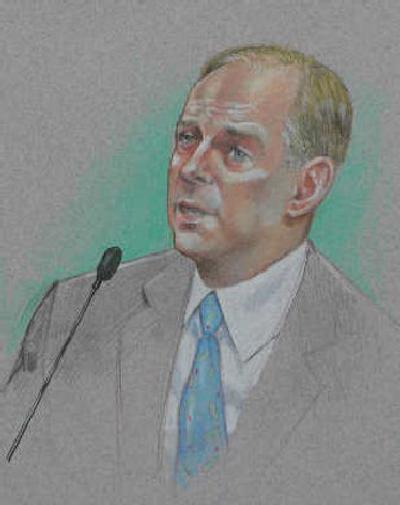
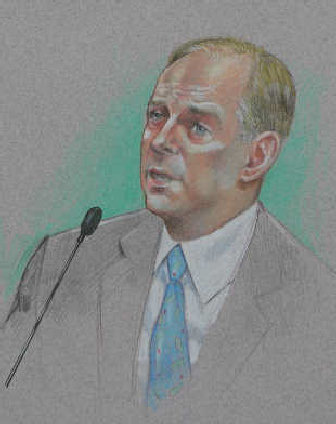
HOUSTON — Former Enron Corp. Chief Executive Jeffrey Skilling told jurors in his fraud and conspiracy trial Monday that he abruptly resigned from the energy trading company a few months before it collapsed because he was worn out and troubled by its falling share price — not because he knew disaster loomed.
“I am absolutely innocent,” Skilling said right after he swore to tell the truth while testifying in his own defense Monday.
Then he let jurors know what’s at stake for him:
“I guess in some ways my life is on the line, so I’m a little nervous.”
As he testified, he became more relaxed and conversational, with no hint of the swaggering bravado for which he was known when he ran what was once the nation’s seventh-largest company. Known for his plainspoken manner as he led Enron’s transformation from a staid pipeline company into an energy giant, Skilling addressed jurors directly, his eyebrows raised slightly, looking earnest and alert.
At times he appeared self-deprecating, even telling jurors that he was admitted to Harvard Business School “by some huge mistake.” Later, he sounded like a business professor, giving jurors a mini-seminar on Enron’s businesses and gas and electricity markets.
He repeated what he said twice before congressional panels in 2002, that Enron was “in very good condition in the middle of August (2001) when I left.”
His lawyer, Daniel Petrocelli, asked if he had had any clue that Enron would flame out in scandal less than four months later.
“Not in my wildest dreams, no. It’s almost inconceivable now what happened,” the ex-CEO said.
“Would you have left if you thought the company was going to experience the events that later transpired?” Petrocelli asked.
“No,” Skilling replied matter-of-factly.
The 52-year-old ex-CEO’s testimony kicked off the 11th week of the federal trial. His co-defendant, Enron founder Kenneth Lay, aims to testify later this month.
Both are accused of repeatedly lying to investors and employees about Enron’s financial health when they allegedly knew fraudulent accounting propped up a facade of success. Enron careened into bankruptcy proceedings in December 2001, six weeks after announcing unprecedented losses and a massive equity writedown that generated intense scrutiny from once-adoring Wall Street and regulators.
The two men say there was no fraud at Enron other than that committed by former Chief Financial Officer Andrew Fastow and a few others, who skimmed millions from secret schemes, and that bad publicity coupled with lost market confidence sank the company.
“I know of no reason Enron would have to resort to fraud,” Skilling said.
In staccato fashion, Petrocelli asked Skilling if he ever destroyed documents or computers, set up offshore accounts to hide money, or did anything to hide past behavior or dealings. Each time, Skilling said, “No,” sometimes accentuating his answer by leaning forward.
“Did you leave town?” Petrocelli asked.
“I went to Fredericksburg,” Skilling replied, eliciting courtroom laughter at his referral to a small town a few hours’ drive away.
Skilling is charged with 28 counts of fraud, conspiracy, insider trading and lying to auditors, while Lay faces six counts of fraud and conspiracy.
If convicted of all counts, Skilling faces a maximum of 275 years in prison and tens of millions of dollars in fines — though an actual prison term would likely exceed two decades. Lay faces a maximum of 45 years in prison if convicted of the six counts against him.
Petrocelli was to continue questioning his client today.