
Idaho wants to kill wolves to help elk
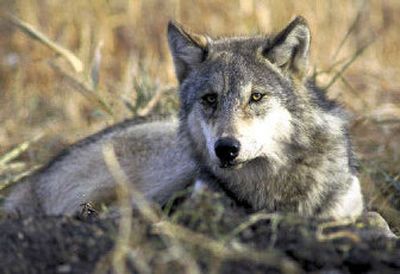
Wolves eat elk.
That’s one of the few undisputed facts surrounding an Idaho proposal to kill wolves in hopes of helping the Clearwater River region’s fast-shrinking elk herd.
Last week, the state’s Fish and Game Department submitted a plan to the federal government to kill up to three-quarters of the estimated 60 gray wolves roaming the rugged mountains of north-central Idaho. The state intends to continue shooting the wolves to keep pack sizes down for the next five years.
This would lessen pressure on elk, but critics say it would do little to boost herd size and could actually derail the state’s quest to remove Endangered Species Act protection for gray wolves. The real problem for the elk is habitat loss, not predation by wolves, said David Gaillard, with the Montana-based Predator Conservation Alliance.
“This is exactly what the public fears most about state management of wolves and other endangered species,” he said. “If you want to invite lawsuits, if you want to tarnish the image of sportsmen, go ahead with this proposal.”
The Clearwater and Lolo river basins once had some of the nation’s biggest elk herds, numbering an estimated 16,500 animals in 1989. Today, that’s down to about 4,200, according to state data.
Idaho’s 71-page proposal to cull the Clearwater wolf packs acknowledges a range of factors in the decline but singles out predation as having an “unacceptable impact” and for preventing the elk herd from making a recovery. The state biologist who coordinates Idaho’s carnivore program could not be reached for comment this week.
Much of the proposal is based on a study of 64 collared cow elk in the region. Twenty-six elk died during the study period, from 2002 to 2004. Nine of the deaths were blamed on wolves, four were killed by cougars, three were killed by undetermined predators, one died of an unknown cause and the remaining nine were hit by vehicles, shot by hunters or killed by disease.
Called ‘Short-term Band-Aid’
Curt Mack, the wolf recovery coordinator for the Nez Perce Tribe, said the elk need help, but he’s not convinced killing wolves is the answer. “The tribe is trying to avoid going out and removing a bunch of wolves if the problem is not wolves.”
Massive wildfires in the early part of the 20th century and later logging by the U.S. Forest Service helped create ideal elk habitat in the Clearwater by allowing grasses and forage to grow, Mack said. But the burned areas and clear-cuts have since returned to mature forest, and there’s less food for the elk.
Unless all wolves are killed – not likely, given the federal effort to help nurse the species back to health – Mack said he worries the state’s plan would be expensive and ineffective in the long run. “Once that program is terminated, wolves would very quickly recolonize that area,” he said. “Lethal control is just a short-term Band-Aid.”
Thirty-five wolves were reintroduced to Idaho in 1995. Today, an estimated 512 roam parts of the state. Another 100 pups are expected to be born this year, according to the data from the Fish and Game Department. Because of their prolific breeding, the agency points out that even if 75 percent of the Clearwater packs are killed, there would still be a net increase in wolf numbers.
More study possible
U.S. Fish and Wildlife Service scientists have begun reviewing the request, said Jeff Foss, the agency’s Boise field office supervisor. The review is expected to take at least two months and additional studies could be required, he said.
Idaho Gov. Dirk Kempthorne was recently nominated to head the U.S. Department of Interior, which oversees the Fish and Wildlife Service. Kempthorne has long fought for more state control on wolf management, and his office has expressed support for culling the Clearwater packs. But the final decision on Idaho’s wolf proposal will be made by Dave Allen, the Fish and Wildlife Service’s regional director based in Portland, Foss said.
Along with the science, the federal agency will also consider public opinion when it makes the decision, Foss said.
The Fish and Game Department received 42,419 comments on the proposal. A state analysis concluded that roughly 38,000 comments were the result of a mass e-mail opposition campaign initiated by the Defenders of Wildlife group. In its proposal, the state questions whether the campaign represents an equal number of separate, but shared opinions or “the opinion of one organization expressed roughly 38,000 times.”
The remaining comments ran roughly 2-to-1 against killing the wolves, according to the state analysis. Included in the comments were numerous threats from people on both sides to boycott Idaho potatoes depending on the decision.