
Horsepower and beyond
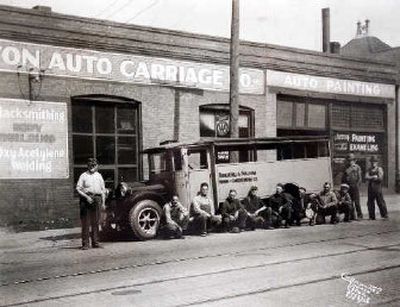
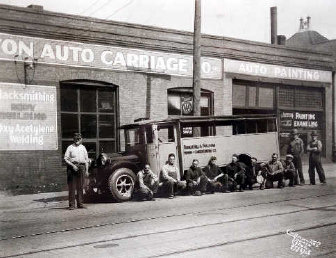
Washington Auto Carriage spent the last 100 years transitioning from making four-wheeled motorized carriages to outfitting four-wheel-drive pickup trucks.
The business, which began as a blacksmith shop making horseshoes, carriages and shackles for Walla Walla prisoners, now installs factory equipment for fleets of trucks operated by local companies.
With annual sales of several million dollars, Washington Auto Carriage can boast of a 10,000-fold increase in income since the day its doors opened in 1906.
Throughout the decades, Clif King, who owns the company with Mel Maki and a silent partner, said the business looked for ways to meet their customers’ changing needs.
The company’s long history began with a German immigrant named Carl Eldenburg, who started Washington Auto Carriage Works at Second Avenue and Browne Street in downtown Spokane, in 1906. In 1954, the business was moved to its current location at 5301 E. Broadway.
“Even in the 1940s they were still doing repairs to horse-drawn carriages,” King said.
Eldenburg passed the company to three sons. Eventually a single son owned the store, which he sold to another family. In 1986, the business was purchased by King and his partners.
In the early days, Washington Auto Carriage Works created some of the first versions of school buses to hit the area. The company also put together a $15,000 fire truck for Fire District 9 in 1955.
As assembly lines made mass manufacturing possible, the small business shifted its focus from making carriages out of motors and chassis — and improvising on all the rest — to installing factory parts and equipment and servicing vehicles operated by area companies.
“It was all custom work in 1906. It’s very little custom work now,” King said.
But even as it modernized, the owners resisted trends that they considered unfriendly to their customers— such as using an automated phone system.
“We just got voice-mail a year or two ago. We’re not into sending people into telephone land,” said Cindy Cloe, administrative manager.
The local store has 16 employees, some who’ve worked there as long as 38 years. They install specialty flatbeds, snowplows, cranes, tool boxes and other equipment. Clients include Spokane International Airport, Fairchild Air Force Base, truck dealers, contractors and even Nabisco. Other customers have been RVers with axel and suspension problems and boaters whose trailers need repair. The business also has two satellite shops in the Seattle area, employing 10 people.
King said in the past people could wait days or weeks for their carriages to be repaired. But today time is money and he said the emphasis is on speedy service.
“The economy today moves at a much faster pace than it did in 1906.”