
Nutritional support
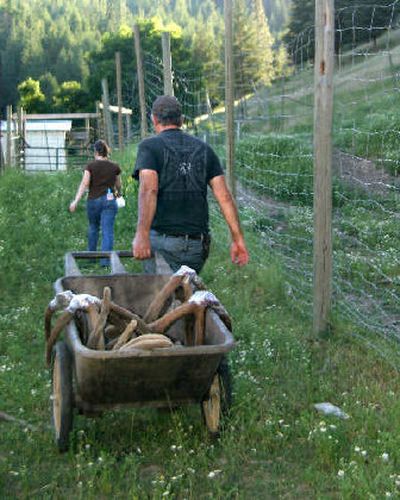
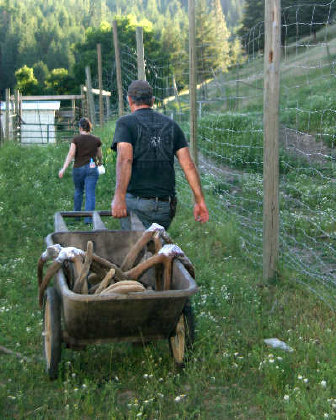
Traditionally, the end of June is harvest season at elk ranches across the United States and Canada, but the ranchers aren’t after meat. They’re after velvet, the fuzzy greenish-brown skin that covers a bull elk’s antler while in the growing stage.
“It is in this stage, that the antler is a living growing organism,” says Gary Queen, manger of the Rose Lake Elk Ranch, “and this is what makes it so accessible to the body.”
While in velvet, a bull’s antlers can grow from 1 to 1 1/2 inches a day, yielding huge racks 40 inches wide and 50 inches tall that cause motorists to stare in disbelief as Queen’s animals graze peacefully along State Highway 3 at his elk ranch.
Velvet antler has long been known as an aphrodisiac – it’s a tradition that goes back 2,0000 years in Chinese medicine – but Queen says it has many more uses. Velvet antlers are known for promoting endurance, stamina and strength and improve blood circulation – “all properties that are needed for that aphrodisiac feeling,” Queen explained, “and these same properties just make one feel better, it revitalizes the entire body.”
Additionally, velvet antler is well-known for providing the body with nutritional support for joint structure and movement. Many people with limited mobility find using elk antler supplements help improve their range of mobility.
Harvesting velvet antlers was once a thriving lucrative business for many elk ranches. Velvet antlers were once sold to the Asian market for $70 to $100 or more a pound before the market crashed. A bull elk produces 20 to 40 pounds of antler every year.
But when the market crashed, “many ranches stopped harvesting velvet and started selling them as shooter bulls or trophy animals,” Queen says.
Once plagued with temporomandibular joint disease, arthritis of the jaw, and aches and pains that come with age, Queen, in 1999, found that regular use of velvet antlers took away his pain and gave him renewed stamina. It made him a firm believer in the product.
For the last several years Queen has been making his own line of nutritional supplements from the antlers of registered Rocky Mountain elk. He has as many as 70 bulls on his ranch and has found that freeze-drying the antler retains more nutrients, which result in a higher potency supplement.
By producing his own supplements, Queen has been able to increase distribution and distributors across the United States. His distributors include chiropractors and veterinarians.
“Harvesting of the antler is done in a humane way,” says Queen. Bulls are restrained, a tourniquet is placed at the base of the antler to constrict the blood and nerve supply, and the antler is sawed off.
“It does not hurt the animal,” he said.
After being harvested, the antler is immediately flash-frozen, like a meat or a fish product, at zero degrees Fahrenheit. Then it is put in the freeze-dryer for four to five weeks.
Then the velvet skin is stripped off and the antler is pulverized to fine powder. Samples are sent off for testing at a laboratory looking for anything that may be detriment to human health. After passing the test, the product is capsulated and is ready to use.
Queen also manages the 144-acre elk ranch for the animals’ other benefits, including low-cholesterol and low-fat meat, breeding stock, trophy harvest and the hard antlers that artists use.
Queen can be found selling elk products, including herbal supplements, lotion, pet treats and elk meat, every Wednesday and Saturday at the Coeur d’Alene Farmers’ Market.