
Chavez says he’ll seek end to presidential term limits
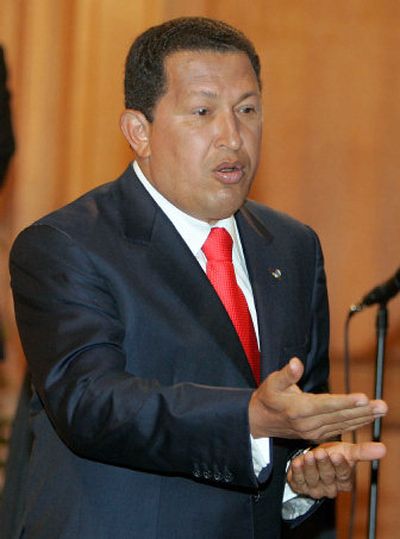

CARACAS, Venezuela – The United States had better get used to its Latin American nemesis, Venezuelan President Hugo Chavez. If, as expected, he wins re-election to a new six-year term today, he says he will seek a change in the constitution that would enable him to serve indefinitely.
As many as 14 million Venezuelans go to the polls today to choose between Chavez and Manuel Rosales, the scrappy governor of Zulia state. Rosales started his campaign late, but has fared better than many expected in re-energizing a badly fragmented, dispirited opposition. Still, surveys show Chavez ahead by margins ranging from four to 22 percentage points.
Rosales’ only hope of victory lies in capturing large numbers of undecided voters.
Many U.S. citizens know Chavez through his diatribes against President Bush. But the key to his support lies in the redistribution of Venezuela’s immense oil windfall. He now is spending one-third of Venezuela’s annual $130 billion in economic output on social outreach, public works and food and housing subsidies, and he is expected to reap the electoral dividends.
Chavez claims to have added 4 million people to the payrolls since he took office, the vast majority through social outreach programs called “missions,” worker-owned cooperatives and public works programs.
Those government-supported jobs could vanish with a decline in the price of oil, critics say, adding that private investment, industrial output and the creation of new, skilled jobs have declined under Chavez’s socialist policies.
“What we are seeing is state-led growth, very vulnerable in the medium and long term to a downturn in oil prices,” said Michael Penfold, a political scientist at a graduate studies college here known by its Spanish initials IESA. “We are far more dependent on oil than 12, 15 years ago and that’s what worries me.”
Whiskey and new car sales are at record levels and polls show most Venezuelans generally feeling optimistic and happy with Chavez’s stewardship, according to the Datanalysis company. Fueled by public spending, the Venezuelan economy has grown at an annual rate of 10 percent for the last three years, said economist Francisco Vivancos of the University of Central Venezuela.
Venezuela has emerged from an economic crisis after a strike of oil workers starting in 2002 nearly brought crude exports to a halt. The strike followed the unsuccessful effort to oust Chavez.
Despite the political problems between the two countries, Venezuela is the fourth-largest exporter of oil to the United States.
If Chavez has a weakness among his supporters, it’s widespread dissatisfaction with his foreign policy, which has included giveaways of oil to Cuba and other Caribbean nations; discounted heating oil to poor Americans; medical subsidies in Mexico and Central America; bond purchases in Argentina and foreign aid to Bolivia.
Rosales has argued in his campaign that charity should begin and end at home.
A career politician, the 53-year old Rosales has said he would give poor Venezuelans a cash withdrawal card called “Mi Negra” to access the nation’s oil wealth directly. He also would expand the missions, making them available to everyone.
Chavez’s anti-U.S. rhetoric also rubs some of his supporters the wrong way, given familial and cultural ties to the United States.
Chavez said Thursday that if he wins he will call an assembly to make revisions to the constitution that would allow him to serve an unlimited number of terms. Without that change, Chavez would have to leave office at the end of his new term.