
Sale of generic drugs gives boost to pharmacies
NEW YORK — Often in business, one industry’s loss is another’s gain.
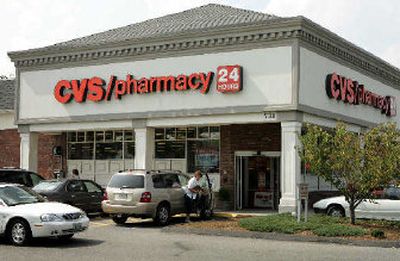
As the pharmaceutical industry suffers through a period of extensive losses of patents on key drugs, retail pharmacies are reaping the benefit because they earn substantially more money dispensing generic medicines than brand names.
Walgreen Co. recently announced that higher sales of generic drugs helped push up its first-quarter profit 5 percent, besting Wall Street’s estimates and increasing its stock price. Sales of generic drugs were driven higher by nonbranded versions of Sanofi-Aventis Group’s allergy medication Allegra, Walgreen said.
Benefits from patent losses are expected to accelerate because the pharmaceutical industry entered a period of intense patent losses last year. Lehman Brothers estimates that branded drugs with total sales of $70 billion in 2005 through 2010 will face generic competition. This year, Lehman anticipates the industry will relinquish $11.8 billion in sales to generics as numerous drugs, including two of the top ten selling drugs in the United States – Merck & Co.’s cholesterol pill Zocor and Pfizer Inc.’s antidepressant Zoloft – lose exclusivity.
The patent losses come at a particularly fortuitous time for retail pharmacies because the industry is facing Medicaid cuts that analysts say will crimp profits. The new Medicare drug benefit is also expected to negatively affect earnings initially, although opinions are divided about its long-term impact.
“Without a doubt the generic benefit will offset what else is going on in the industry,” said Meredith Adler, an analyst at Lehman Brothers. Still, she doesn’t see the benefits from increased generic use outweighing the Medicare and Medicaid changes at least until 2008 for Walgreen or CVS Corp., two of the biggest chains.
Drugstores earn an average of $11 in gross profit per prescription on a generic drug, while brand name treatments carry an $8.50 gross profit, according to Mark Husson, an analyst at HSBC Securities. Adler estimates the average gross profit is $5 more for generics than for brand-name drugs.
That’s because health care providers such as insurers and pharmacy benefit managers provide drug stores with financial incentives of good reimbursement rates to dispense generic drugs. Their reasoning: using generic drugs saves vast amounts of money because they are substantially cheaper than their brand-name counterparts. Also contributing to the higher profit margins among generics are low acquisition costs and rebates manufacturers provide to the stores, according to a report by Scott A. Mushkin, an analyst at Bank of America Securities
Physicians aren’t always aware that generic drugs are available, so pharmacists often call doctors to see if they approve of a switch. Such transactions cost money, which is one reason for the incentives, said CVS Corp. chief financial officer David Rickard.
Zocor and Zoloft lose patent protection in June so Rickard said the benefit from those switches won’t really manifest themselves until late in the year, with the primary effect coming in 2007. Lehman says the pharmaceutical industry will lose another $14.9 billion to generics next year, lead by Pfizer Inc.’s blood pressure drug Norvasc.
Cuts to Medicaid, the health-care program for the poor funded by the federal and state governments, are slated to begin in 2007 so the generic benefit is well-timed, Rickard said. He added that it is difficult to assess the full extent of the Medicaid cuts because drug stores may be able negotiate higher fees from the states to compensate for losses in federal funding.
Still, Rickard believes the boost in profits from generics will compensate for losses caused by Medicaid changes.
Medicare, the program for the elderly and disabled, added a prescription drug benefit that began this year. Now individuals who were receiving drug benefits from Medicaid but are also eligible for Medicare will get their medications through the latter. Known as “dual eligibles,” they were automatically enrolled in a Medicare plan beginning January 1 if they didn’t choose one. That’s bad news for pharmacies because Medicaid pays better than Medicare.
Rickard said that will hurt profits in the first half of the year. However, he said as more individuals sign up for the drug benefit it should help profits. That’s because one-third of people picking up a prescription buy something else while in the store.
“I think economically the Medicare drug benefit is good for the industry,” Rickard said.
Adler doesn’t disagree with Rickard’s logic, but says the program is just too new and there are just too many variables involved in the program to deem it a positive yet.
However, in 2008, the 16 cents of earnings per share Walgreen will earn from generics will be more than 12 cents per share it will lose from Medicare and Medicaid. And the 16 cents per share CVS will earn from generics will outweigh the 13 cents loss per share from Medicare and Medicaid.
“Without the impact from generics, things would have looked a whole lot worse,” Adler said.