
First female leader in Africa sworn in

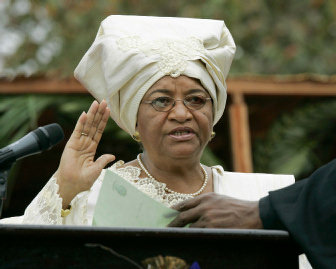
MONROVIA, Liberia – Africa’s first elected female head of state, Ellen Johnson Sirleaf, was sworn in Monday as war-battered Liberia’s new president, promising a “fundamental break” with the West African nation’s violent past and pledging to rebuild.
With U.S. Navy warships offshore for the first time since the civil war’s end two years ago, and first lady Laura Bush and Secretary of State Condoleezza Rice on hand in a show of support, the moment was met with thunderous applause from thousands of guests.
“We know that your vote was a vote for change, a vote for peace, security … and we have heard you loudly,” the 67-year-old Sirleaf said in her inaugural speech. “We recognize this change is not a change for change’s sake, but a fundamental break with the past.”
U.N. Secretary-General Kofi Annan sent congratulations, saying Sirleaf had a “historic mandate to lead the nation toward a future of lasting peace and stability.”
Founded by freed American slaves in 1847, Liberia was prosperous and peaceful for more than a century, bolstered by abundant timber and diamond wealth. But back-to-back civil wars from 1989 to 2003 brought the country to its knees, killing 200,000 people and displacing half the nation’s population of 3 million.
It is now one of the world’s poorest countries, ranked 206th in terms of per capita income out of 208 countries on 2004 World Bank list.
Today, not even the capital has running water or electricity: The rich rely on generators, the poor on candles. Unemployment is 80 percent. “We have all suffered. The individual sense of deprivation is immense,” Sirleaf said.
She acknowledged the task of rebuilding would be coupled with high expectations, but she called for patience.
“The task of reconstructing our devastating economy is awesome,” she said. “There will be no quick fix, yet we have the potential to promote a healthy economy in which Liberians and international investors can prosper.”
Ensuring Liberia remains peaceful, though, will be Sirleaf’s most pressing – and perhaps most difficult – task.
George Weah, the soccer star who lost the November runoff, was backed by most of the country’s top warlords and faction leaders. He grudgingly accepted defeat and attended the inauguration.
Another crucial task: assuring the future of 100,000 ex-combatants who laid down arms last year. Many of them are prowling the streets, unemployed.
For now, Sirleaf’s government is backed by 15,000 U.N. troops.