
Guiding principle is safety
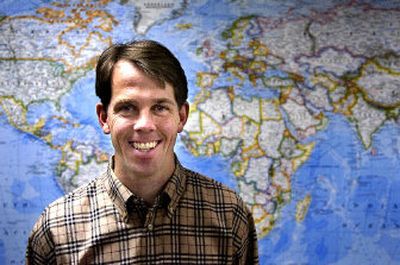
At 2 a.m. last July 7, Jeff Thomas was awakened by phone call from one of his employees. Four bombs had exploded that morning in downtown London, where his company, Spokane-based Ambassadors Group Inc., had sent 500 students and teachers on travel tours.
Thomas, Ambassadors’ CEO, called the next several hours “a surreal nightmare.”
The nightmare scenario wasn’t due to confusion, however, or to frustrated efforts trying reach travel guides overseas. It came from the uncanny similarity to a six-hour disaster drill the company conducted two months earlier.
In that May 2005 drill, the company’s Spokane office had to respond to a series of terror bombings in London.
That simulated crisis, said Thomas, is part of an ongoing effort by Ambassadors Group to develop what he believes are the safest overseas-travel practices in the tour-operator industry. Safe travel was a major concern for Ambassadors even before the terror attacks of Sept. 11, 2001. After those attacks, “We realized we could not just say we’re a safer company,” said Thomas. “We had to go beyond and show people what concrete steps we’re taking to ensure safety. Parents now are not afraid to ask, ‘Are we willing to trust sending our daughter or son with you for three weeks?’ “
During 2005 the company, which is traded publicly on the Nasdaq exchange, sent about 30,000 students on “People to People” trips. About 80 percent of those trips were overseas. The company expects to send at least that many abroad this year, mostly during the spring and summer. Ambassadors reported revenue of about $51 million in 2004.
In addition to the annual readiness drill, the company now also hosts an industry conference, inviting speakers to talk about travel safety.
Ambassadors keeps constant watch on State Department travel advisories, monitoring health and safety concerns in any areas of the world where it sends students. A few years ago it halted all student trips to Egypt and the Middle East.
Thomas said tour groups overseas now routinely carry cell phones or satellite phones, and use Internet-based devices in order to insure communications if a problem occurs.
And when teachers take students on walking tours, the practice now is to have one teacher posted on each flank of the group, instead of at the front or back of the pack, added Thomas.
“A lot of what we’re doing is common-sense, keeping track of little things. A lot of it revolves around hotels, making sure they’re in safe areas,” Thomas said.
By the time of the second London bombing, on July 21, 2005, Ambassadors had stopped using public transportation, moving all student groups to chartered coaches and high-speed river launches, said Thomas.
The company’s overseas student trips run about three weeks; the most common destinations are Europe, South Africa, Australia and New Zealand. Ambassadors charges parents about $4,500 for each trip, which covers travel, meals and lodging.
A key part of the trips is a three-day home stay during which the students spend time with a host family overseas.
The one blemish on Ambassadors’ safety record is a 1999 incident in which an American junior high school student said he was molested by a home stay host during a trip to Scotland.
Last year, without acknowledging negligence, Ambassadors paid about $690,000 to the parents of the student after the family sued the company. Ambassadors in turn has sued a United Kingdom tour provider, EIL Ltd., saying it broke its contract when it placed the student in a home with a single male and not with a married couple as it had promised to do.
Because of that alleged failure, Ambassadors now is seeking damages against EIL. The suit was filed in October 2005 in Spokane’s U.S. District Court. Two weeks ago, attorneys for EIL filed a response denying wrongdoing in the 1999 incident.
Ambassadors no longer contracts with EIL and only used the company as a contractor for at most two years, said Thomas.
Home stays will remain an important part of Ambassadors’ tours “because they are one of the things that distinguish us from our competitors,” he said.
Michael Palmer, executive director of the Student Youth Travel Association, a Detroit-based nonprofit group for travel operators in the United States and Canada, said safety has been the primary concern among parents for decades. “But it certainly became a renewed interest since 9/11,” Palmer said.
“The overseas travel industry has gone through a lot of changes. And Ambassadors is one of the companies that is doing a good job of looking ahead, being prepared for any number of problems that can happen,” he said.
Since late 1999 Ambassadors has hired a safety expert, David Perl of U.K.-based Docleaf, Inc., to serve as a company safety and security consultant. Among Perl’s duties is to evaluate the annual crisis simulation and make other suggestions.
Beforehand, Ambassador employees only know what day the simulation will happen, not what the scenario will be.
The test last May involving the London bombings convinced the company that the sooner they can respond to a crisis, the better they can manage the crisis and make good decisions, Thomas said.
When the actual bombings occurred in July, Ambassadors had a response team at its Spokane office by 3 a.m. They learned that participants in the London tours were all safe and set about deciding whether to cancel other tours set to travel to London that day.
The company brought in extra employees to answer the several thousand calls that came in from parents. It also recorded messages on its phone system reporting that all the student groups in England were safe and pointing callers to a Web site for more information.
After the bombings the company also called the home of every student on a trip to England. “For many, we were the first news they got of the (London) bombings,” said Thomas.